
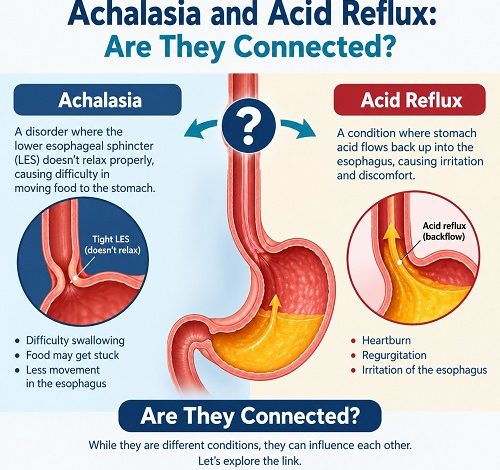
Achalasia and acid reflux are two digestive conditions that can cause discomfort in the chest, difficulty swallowing and symptoms that affect daily life. Although they may seem similar, they develop for different reasons and require different approaches to diagnosis and treatment. Understanding the relationship between achalasia and acid reflux can help people recognise their symptoms and seek appropriate medical advice.
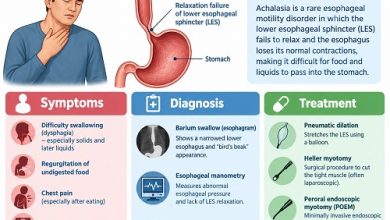
Achalasia is a rare disorder that affects the oesophagus, the muscular tube that carries food from the mouth to the stomach. It occurs when the oesophagus does not move food down normally and the lower oesophageal sphincter (LES), a muscular valve between the oesophagus and stomach, fails to relax properly.
Acid reflux occurs when stomach contents flow backwards into the oesophagus. When reflux becomes frequent and Achalasia causes troublesome symptoms or complications, it may be diagnosed as gastro-oesophageal reflux disease (GERD).
Both conditions can cause chest discomfort and regurgitation, but the underlying mechanisms are different. People with achalasia may also experience reflux-like symptoms before or after treatment, making it important to distinguish between the two conditions.
What Is Achalasia?
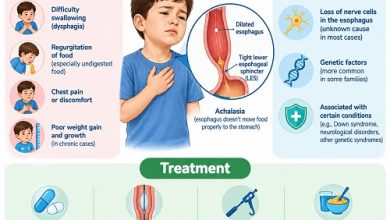
What Is Achalasia? Achalasia is an oesophageal motility disorder. It affects the nerves and muscles responsible for moving swallowed food towards the stomach.
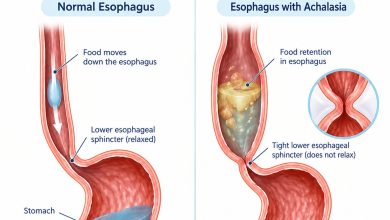
Normally, swallowing triggers coordinated muscular contractions known as peristalsis. At the same time, the lower oesophageal sphincter relaxes to allow food and liquid to enter the stomach.
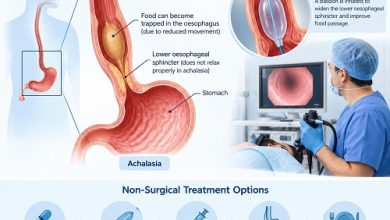
In achalasia, these processes become impaired. The oesophagus loses some or most of its normal peristaltic activity, and the lower oesophageal sphincter does not relax adequately. Consequently, food and liquid can accumulate in the oesophagus instead of passing easily into the stomach.
Common Achalasia symptoms include:
- Difficulty swallowing both solid food and liquids.
- Regurgitation of undigested food or saliva.
- Chest discomfort or pain.
- A sensation that food is stuck in the chest.
- Coughing, particularly at night.
- Unintentional weight loss.
- Symptoms that worsen when lying down.
Achalasia develops because of damage to the nerve cells that control oesophageal movement. Its exact cause is not fully understood in most cases.
Although some symptoms resemble acid reflux, achalasia is not simply a condition in which the stomach produces too much acid. Its primary problem is impaired swallowing and the failure of the lower oesophageal sphincter to relax properly.
What Is Acid Reflux and GERD?
Acid reflux occurs when stomach contents move upwards into the oesophagus. The stomach produces acid to help digest food, but the oesophagus does not have the same protective lining as the stomach.
The lower oesophageal sphincter normally acts as a barrier that helps prevent stomach contents from moving backwards. When this barrier becomes weak or relaxes inappropriately, reflux may occur.
Occasional reflux is common. However, frequent reflux that causes troublesome symptoms or complications may indicate GERD.
Common Achalasia symptoms of acid reflux include:
- Heartburn, often described as a burning feeling behind the breastbone.
- A sour or bitter taste in the mouth.
- Regurgitation of stomach contents.
- Discomfort after meals.
- Symptoms that worsen when lying down or bending over.
- Chronic cough or throat irritation in some people.
GERD can sometimes cause inflammation of the oesophagus, known as oesophagitis. In some cases, it may lead to narrowing of the oesophagus or other complications.
Unlike achalasia, GERD usually involves the backward movement of stomach contents through an inadequately functioning reflux barrier. The two conditions can overlap in their symptoms, but their underlying causes differ.
Are Achalasia and Acid Reflux Connected?
Yes, achalasia and acid reflux can be connected, but the relationship is more complicated than it may first appear.
Achalasia primarily prevents food and liquid from passing normally into the stomach. This can cause food, saliva and other contents to remain in the oesophagus. When these contents return to the mouth, the experience may feel similar to acid reflux.
However, regurgitation caused by achalasia does not necessarily mean that stomach acid is flowing backwards. The material may consist mainly of retained food and saliva.
There are three important ways these conditions can be related.
1. Achalasia can cause reflux-like symptoms
Food and liquid can collect in the oesophagus when the lower oesophageal sphincter fails to relax properly. The retained material may later move upwards, especially when a person bends over or lies down.
This can cause regurgitation, an unpleasant taste, coughing and chest discomfort. These symptoms may be mistaken for GERD.
In some cases, retained material can ferment or become more acidic over time. Therefore, a sour taste or burning sensation does not always establish that conventional acid reflux is the cause.
2. Reflux can develop after achalasia treatment
Treatments such as Heller myotomy and peroral endoscopic myotomy (POEM) aim to reduce the resistance at the lower oesophageal sphincter. This allows food to pass more easily into the stomach.
However, relaxing or cutting the muscles that normally help maintain the barrier against reflux can make it easier for stomach contents to move upwards.
As a result, reflux after achalasia treatment is a recognised concern, particularly after procedures that weaken the lower oesophageal sphincter.
3. Both conditions can occur in the same person
A person with achalasia may also have genuine acid reflux or develop GERD after treatment. Symptoms alone cannot reliably establish which condition is responsible.
For this reason, doctors may recommend investigations to determine whether symptoms are caused by retained oesophageal contents, acid reflux, persistent obstruction or a combination of these problems.
Correct diagnosis is important because treatments that help GERD do not necessarily correct the underlying swallowing problem associated with achalasia.
Achalasia vs Acid Reflux: Key Differences
Although both conditions can cause regurgitation and chest discomfort, several features can help distinguish them.
Achalasia
- Difficulty swallowing both solids and liquids is common.
- Food or saliva may return to the mouth without the typical burning sensation of heartburn.
- Symptoms can include a sensation of food sticking in the chest.
- Undigested food may be regurgitated hours after eating.
- The main problem is impaired oesophageal movement and failure of the lower oesophageal sphincter to relax.
Acid reflux and GERD
- Heartburn is a common symptom.
- A sour or bitter taste may occur when stomach contents rise into the throat.
- Symptoms may worsen after large meals or when lying down.
- Swallowing may remain normal unless complications develop.
- The main problem is the backward movement of stomach contents into the oesophagus.
These differences are useful clues, not a substitute for medical assessment. Some people with achalasia experience burning discomfort, while others with GERD have symptoms without obvious heartburn.
Why Does Heartburn Occur in Achalasia?
Heartburn is usually associated with acid reflux, but people with achalasia may report similar sensations for several reasons.
First, food and liquid can become trapped in the oesophagus. Pressure, irritation and distension of the oesophageal wall may produce discomfort that resembles heartburn.
Second, retained food and saliva can change while they remain in the oesophagus. This may contribute to an unpleasant or acidic taste.
Third, genuine acid reflux may occur alongside achalasia. This is particularly relevant after treatment that reduces the pressure of the lower oesophageal sphincter.
Finally, inflammation or irritation of the oesophagus can contribute to burning discomfort. A clinician may need to investigate these possibilities rather than assume that every burning sensation is caused by GERD.
People who experience persistent heartburn, increasing regurgitation or worsening swallowing difficulties should discuss their symptoms with a healthcare professional.
Reflux After Achalasia Treatment
Treatment for achalasia aims to improve the passage of food into the stomach. Although these procedures can provide significant relief, some people develop reflux symptoms afterwards.
Heller myotomy
Heller myotomy is a surgical procedure in which the surgeon cuts selected muscle fibres of the lower oesophageal sphincter to reduce resistance and improve swallowing.
A partial fundoplication, which uses part of the stomach to create a barrier against reflux, is often performed alongside Heller myotomy. This can reduce the risk of postoperative GERD while allowing food to pass into the stomach.
Nevertheless, reflux can still occur, and some people may need further assessment or treatment.
Peroral endoscopic myotomy (POEM)
POEM is an endoscopic procedure in which a specialist creates a passage within the oesophageal wall and cuts the muscles responsible for the obstruction.
It is an effective treatment for many people with achalasia. However, because POEM does not routinely include a fundoplication, reflux is a recognised postoperative concern.
Some people develop symptoms of heartburn or oesophagitis, while others have reflux that causes few noticeable symptoms. Doctors may therefore recommend follow-up assessment, and sometimes endoscopy, even when symptoms are mild.
Pneumatic dilation
Pneumatic dilation uses an inflatable balloon to stretch the lower oesophageal sphincter. It can improve swallowing by reducing resistance at the junction between the oesophagus and stomach.
Reflux may occur after dilation, although the likelihood varies between individuals.
Medicines after treatment
Doctors may prescribe proton pump inhibitors (PPIs) or other acid-reducing medicines when GERD or acid-related oesophageal inflammation is suspected or confirmed.
These medicines reduce stomach acid, but they do not restore normal oesophageal movement or correct persistent obstruction caused by achalasia.
Anyone experiencing symptoms after treatment should discuss them with their treating specialist rather than starting, stopping or changing Achalasia medication independently.
Natural Remedies for Achalasia
A Natural Cure for Achalasia is a common search among people looking for ways to manage swallowing difficulties and improve digestive comfort. Achalasia is a rare oesophageal disorder that affects the movement of food from the mouth to the stomach. Although natural remedies cannot cure achalasia or restore normal oesophageal muscle function, certain lifestyle measures may help manage symptoms.
Helpful Natural Approaches
1. Eat smaller meals: Eating small, frequent meals may make swallowing more manageable and reduce discomfort after eating.
2. Choose soft foods: Soft, moist foods may be easier to swallow than dry or tough foods. Individual food tolerance varies, so seek advice from a healthcare professional if swallowing is difficult.
3. Eat slowly: Chew food thoroughly, take small bites and allow sufficient time between mouthfuls.
4. Remain upright after meals: Sitting or standing upright after eating may help reduce regurgitation. Avoid lying down immediately after meals.
5. Maintain good nutrition: Achalasia can cause weight loss and nutritional deficiencies. A registered dietitian can help you choose suitable foods and maintain adequate nutrition.
How Is the Connection Diagnosed?
Distinguishing achalasia from acid reflux can require several investigations. The choice depends on the person’s symptoms, previous treatment and clinical findings.
Upper gastrointestinal endoscopy
An endoscopy allows a specialist to examine the oesophagus and stomach using a flexible camera. It can identify inflammation, retained food, narrowing and other abnormalities.
Endoscopy can also help exclude other conditions that may cause swallowing difficulties.
Oesophageal manometry
High-resolution oesophageal manometry measures pressure and muscle coordination within the oesophagus.
It is an important test for diagnosing achalasia because it can identify impaired peristalsis and abnormal relaxation of the lower oesophageal sphincter.
Barium swallow
During a barium swallow study, a person drinks a contrast liquid while X-ray images show how it moves through the oesophagus.
Achalasia may produce a dilated oesophagus with narrowing near its lower end and delayed passage of contrast into the stomach.
Ambulatory reflux monitoring
In selected cases, doctors may use pH or pH-impedance monitoring to investigate suspected reflux. These tests help assess acid exposure and, depending on the technique, the movement of liquid or gas through the oesophagus.
Interpreting these results in achalasia requires care because retained food and fermentation can complicate the assessment of acidity. Testing should be selected and interpreted by clinicians familiar with oesophageal motility disorders.
Further assessment after treatment
If swallowing difficulties persist or return after achalasia treatment, doctors may investigate whether the oesophagus still empties poorly, whether the treatment effect is insufficient, or whether reflux or another complication is present.
The correct diagnosis guides the choice of treatment.
How Can Achalasia and Acid Reflux Be Managed?
Management depends on whether symptoms result from achalasia, GERD or both conditions. A treatment plan should address the underlying cause rather than relying on symptom relief alone.
Managing achalasia
Achalasia treatments aim to improve the passage of food into the stomach. Options may include:
- Pneumatic dilation: A balloon stretches the lower oesophageal sphincter to help food pass more easily.
- Heller myotomy: Achalasia Surgery reduces resistance at the lower oesophageal sphincter.
- POEM: An endoscopic procedure that cuts selected oesophageal muscle fibres.
- Botulinum toxin injection: This can temporarily relax the lower oesophageal sphincter, particularly in people who are not suitable for more definitive procedures.
The most appropriate option depends on the type of achalasia, the person’s overall health, previous treatments and specialist assessment.
Managing acid reflux
When genuine acid reflux is present, doctors may recommend measures such as:
- Eating smaller meals rather than large portions.
- Avoiding lying down for approximately three hours after eating.
- Raising the head of the bed if nighttime reflux occurs.
- Identifying foods or drinks that consistently trigger symptoms.
- Maintaining a healthy weight where appropriate.
- Taking prescribed acid-reducing medicines as directed.
Common medicines include proton pump inhibitors and H2-receptor blockers. These reduce acid production but do not treat the underlying muscle dysfunction associated with achalasia.
People with swallowing difficulties should seek individual dietary advice because standard reflux recommendations may not be suitable for everyone.
Dietary Tips for People With Achalasia and Acid Reflux
Food choices can influence symptoms, but diet alone cannot cure achalasia or reliably prevent GERD.
Consider the following practical measures, where appropriate:
Eat slowly. Take small bites and allow enough time to chew thoroughly. Avoid rushing through meals.
Choose suitable food textures. Softer foods and liquids may be easier to swallow for some people. However, individual tolerance varies, and persistent swallowing difficulties need medical assessment.
Stay upright after eating. Remaining upright can help reduce nighttime regurgitation and may lower the risk of food entering the airways.
Avoid personal reflux triggers. Fatty meals, chocolate, caffeine, spicy foods, citrus fruits and tomato-based foods can worsen symptoms in some people, but universal avoidance is not necessary.
Maintain adequate nutrition. Achalasia can lead to reduced food intake and unintentional weight loss. A dietitian familiar with swallowing disorders can help people meet their nutritional needs.
Take care at bedtime. People who regurgitate retained food may need specific advice about evening meals, sleeping position and aspiration prevention from their specialist.
Seek urgent medical attention if food becomes completely stuck, you cannot swallow saliva or you experience severe chest pain or breathing difficulties.
Can Acid Reflux Make Achalasia Worse?
Acid reflux does not usually cause achalasia, and there is no established evidence that ordinary GERD directly produces the nerve dysfunction responsible for the condition.
However, the two conditions can complicate each other’s management.
For example, reflux-related inflammation may cause additional discomfort and, in some cases, swallowing difficulties. Meanwhile, untreated achalasia can cause retained food and poor oesophageal emptying, which may produce symptoms that resemble reflux.
If a person assumes that all symptoms are caused by excess stomach acid, they may delay treatment for the underlying swallowing disorder.
Similarly, treating achalasia without considering postoperative reflux can leave some symptoms unresolved.
A proper assessment helps clinicians distinguish between these problems and choose the most appropriate treatment.
When Should You See a Doctor?
Consult a healthcare professional if you experience persistent heartburn, recurrent regurgitation, difficulty swallowing or unexplained weight loss.
Arrange prompt medical assessment for new or worsening swallowing difficulties, particularly if symptoms progress or food frequently returns into the mouth.
Seek emergency care for severe or sudden chest pain, especially if it spreads to the arm, back, neck or jaw, or occurs with sweating, breathlessness or faintness. Do not assume that chest pain is digestive in origin.
Urgent assessment is also necessary if you cannot swallow saliva, have difficulty breathing or develop signs of aspiration, such as significant breathing problems after regurgitation.
Early assessment can help identify Achalasia complications and prevent delays in appropriate treatment.
Frequently Asked Questions
1. Can achalasia be mistaken for acid reflux?
Yes. Both conditions can cause regurgitation and chest discomfort. Achalasia can cause retained food and saliva to return into the mouth, whereas GERD involves the backward movement of stomach contents. Medical testing may be necessary to distinguish them.
2. Does achalasia cause heartburn?
Achalasia can cause burning discomfort that resembles heartburn. The sensation may result from retained oesophageal contents, irritation or genuine acid reflux occurring alongside the condition.
3. Is acid reflux common after achalasia surgery?
Reflux can develop after achalasia treatment because procedures that relax the lower oesophageal sphincter may weaken its protective barrier. The likelihood depends on the procedure and individual factors.
4. Can proton pump inhibitors treat achalasia?
No. Proton pump inhibitors reduce stomach acid and can help manage GERD, but they do not correct the impaired oesophageal movement or failure of the lower oesophageal sphincter to relax.
5. Can lifestyle changes cure achalasia?
No. Lifestyle measures may help manage eating difficulties and reduce certain symptoms, but achalasia generally requires specialist assessment and may need procedural treatment.
6. Can you have achalasia and GERD at the same time?
Yes. Although the conditions have different underlying mechanisms, they can coexist. This is particularly important when evaluating persistent symptoms after achalasia treatment.
Conclusion
Achalasia and acid reflux are connected through overlapping symptoms and, in some cases, treatment-related complications. However, they are distinct digestive conditions with different underlying causes.
Achalasia affects the movement of food through the oesophagus and the relaxation of the lower oesophageal sphincter. GERD involves the backward movement of stomach contents and may cause heartburn, regurgitation and oesophageal inflammation.
Reflux after achalasia treatment is an important consideration, particularly following procedures that reduce pressure at the lower oesophageal sphincter. Nevertheless, not every episode of regurgitation or burning discomfort indicates acid reflux.
Accurate diagnosis, appropriate specialist treatment and practical dietary measures can help people manage their symptoms and protect their digestive health. Anyone experiencing persistent swallowing difficulties, recurrent regurgitation or ongoing heartburn should seek medical advice to establish the cause and receive suitable care.
Medical disclaimer
This article is for general educational purposes only. It does not provide a diagnosis or replace professional medical advice, examination or treatment. Consult a qualified healthcare professional about symptoms, medicines and treatment options. Seek urgent medical attention for severe chest pain, breathing difficulties or an inability to swallow saliva.