
Achalasia is a rare disorder of the esophagus that can make eating and drinking difficult. People with achalasia may experience difficulty swallowing, regurgitation, chest discomfort, and the sensation that food is getting stuck after swallowing. Although there is currently no treatment that restores normal esophageal nerve function, several treatments can help relax the lower esophageal sphincter and improve the movement of food into the stomach.
One increasingly established treatment is POEM for achalasia, which stands for peroral endoscopic myotomy. This minimally invasive procedure uses an endoscope passed through the mouth to access and cut selected muscles in the lower esophageal sphincter. By reducing the resistance at the junction between the esophagus and stomach, POEM can make it easier for food and liquids to pass into the stomach.
If you or someone you know has been diagnosed with achalasia, understanding how POEM works, what happens during the procedure, and what to expect during POEM recovery can make the treatment process less uncertain.
What Is Achalasia?
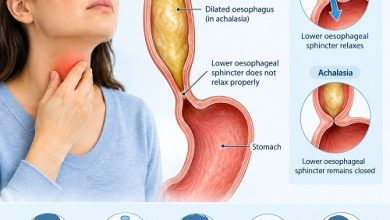
What Is Achalasia? Achalasia is a disorder of the esophagus, the muscular tube that carries food and liquid from the mouth to the stomach.
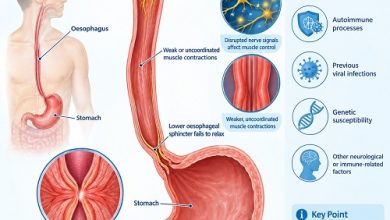
Normally, swallowing triggers coordinated contractions in the esophagus while the lower esophageal sphincter (LES) relaxes to allow food to enter the stomach. In achalasia, the nerves responsible for these functions become impaired. As a result, the esophagus may not contract normally, and the LES may fail to relax adequately.
This can cause food and liquid to remain in the esophagus rather than moving smoothly into the stomach.
Common symptoms of achalasia include:
- Difficulty swallowing food or liquids
- Regurgitation of undigested food or saliva
- Chest pain or pressure
- A sensation of food sticking in the chest
- Coughing, particularly at night
- Unintentional weight loss in some people
- Heartburn-like symptoms
- Difficulty eating certain foods
Symptoms can develop gradually, so some people may initially attribute them to acid reflux or another digestive condition.
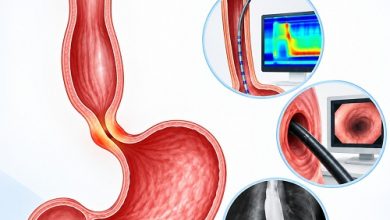
Doctors may use tests such as upper endoscopy, esophageal manometry, and a timed barium swallow to evaluate swallowing function and confirm the Achalasia diagnosis.
What Is POEM for Achalasia?
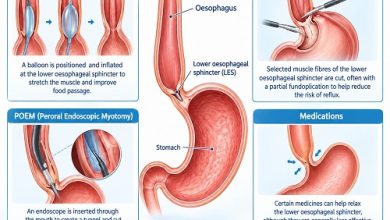
POEM for achalasia is an endoscopic treatment designed to reduce the tightness of the lower esophageal sphincter.
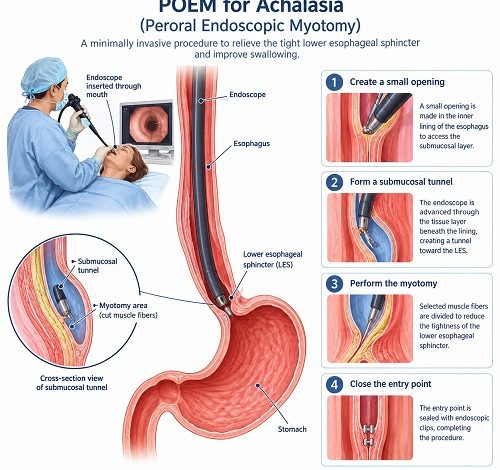
POEM stands for peroral endoscopic myotomy. Unlike traditional open surgery, the procedure does not require an external abdominal or chest incision. Instead, the doctor uses an endoscope—a flexible tube with a camera and specialized instruments—to reach the esophageal wall through the mouth.
The doctor creates a small opening in the inner lining of the esophagus and forms a tunnel within the wall. Through this tunnel, the physician reaches the muscle layers and cuts selected muscle fibers, including the muscles responsible for the abnormal tightness at the lower esophageal sphincter.
The entry point is then closed, usually using endoscopic clips.
The goal is to reduce resistance at the lower esophageal sphincter so that swallowed food and liquids can pass more easily into the stomach.
How Does Peroral Endoscopic Myotomy Work?
Understanding the basic steps can help patients know what to expect.
1. Preparation and anesthesia
POEM is generally performed in a hospital or specialized endoscopy center. Patients are typically instructed not to eat or drink for a specified period before the procedure.
The procedure is performed under general anesthesia, meaning you are asleep and monitored throughout the treatment.
Before the procedure, the medical team reviews your medical history, medications, allergies, and relevant test results.
2. The endoscope enters through the mouth
The physician carefully passes a flexible endoscope through the mouth and into the esophagus.
Because there is no external incision, POEM avoids the larger surgical access used in some traditional forms of achalasia surgery.
3. A small opening is created
The physician makes a small entry point in the inner lining of the esophagus.
Through this opening, the endoscope can enter the tissue layer beneath the surface lining.
4. A submucosal tunnel is created
The doctor carefully advances the endoscope through the tissue beneath the esophageal lining, creating a tunnel toward the lower esophageal sphincter.
The tunnel usually extends beyond the sphincter and into the upper portion of the stomach. The exact length and approach can vary depending on the patient’s anatomy and type of achalasia.
5. The muscle is divided
Once the tunnel provides access to the appropriate muscle layers, the physician performs the myotomy.
“Myotomy” means cutting selected muscle fibers. During POEM, the doctor cuts the muscles responsible for the excessive resistance at the lower esophageal sphincter.
The length and depth of the myotomy can be tailored to the patient’s condition.
6. The entry point is closed
After completing the myotomy, the endoscope is withdrawn toward the original entry point.
The opening in the esophageal lining is closed with endoscopic clips or another closure technique.
This seals the entry site without requiring an external surgical incision.
Why Is POEM Used to Treat Achalasia?
The main purpose of POEM is to improve the passage of food and liquid from the esophagus into the stomach.
Because the underlying nerve damage associated with achalasia cannot currently be reversed, treatment focuses on reducing the functional obstruction caused by the lower esophageal sphincter.
By cutting the relevant muscle fibers, POEM can reduce sphincter pressure and improve swallowing.
Research and clinical experience have established POEM as an important treatment option for achalasia. It can be particularly useful in certain patients, including people with spastic forms of achalasia, although the best treatment varies from person to person.
A gastroenterologist with expertise in esophageal disorders can help determine whether POEM is appropriate based on diagnostic testing and individual circumstances.
POEM vs. Other Achalasia Treatments
POEM is one of several available treatments for achalasia.
Other options may include:
Pneumatic dilation
Pneumatic dilation uses a specially designed balloon to stretch and disrupt muscle fibers in the lower esophageal sphincter.
It is performed endoscopically and does not involve traditional surgery.
Laparoscopic Heller myotomy
Heller myotomy is a surgical procedure in which the surgeon cuts the muscles of the lower esophageal sphincter through small abdominal incisions.
It is often combined with an anti-reflux procedure because reducing the pressure of the lower esophageal sphincter can increase the risk of gastroesophageal reflux.
Botulinum toxin injection
Botulinum toxin, commonly called Botox, can be injected into the lower esophageal sphincter to temporarily relax the muscle.
This option may be considered for people who are not good candidates for more definitive treatments, although its effects generally do not last as long as those of procedures such as POEM or pneumatic dilation.
The choice between these approaches depends on factors such as age, overall health, achalasia subtype, previous treatments, anatomy, and the expertise available at the treating center.
What to Expect Before POEM
Your doctor may perform several tests before recommending POEM.
Esophageal manometry is particularly important because it measures the pressure and movement of the esophagus and can help classify achalasia into different subtypes.
An upper endoscopy may also be performed to examine the esophagus and stomach and exclude other Achalasia causes of swallowing problems.
A barium swallow or timed barium esophagram may provide additional information about how quickly material moves through the esophagus.
Before the procedure, your doctor will also give you instructions about fasting, medications, and what to bring on the day of treatment.
Make sure your medical team knows about all medications and supplements you take, particularly blood-thinning medications.
What Happens Immediately After the Procedure?
After POEM, you will be taken to a recovery area while the effects of anesthesia wear off.
Your healthcare team may monitor you for signs of complications and assess your ability to begin drinking or eating.
Many centers perform an imaging study, such as a contrast swallow examination, after POEM to check for leakage before advancing the diet. The exact protocol varies between hospitals and physicians.
Initially, your diet may consist of liquids. You will gradually transition to soft foods and then to a regular diet according to your doctor’s instructions.
Some patients experience temporary chest discomfort, throat irritation, bloating, or mild abdominal discomfort after the procedure.
Understanding POEM Recovery
POEM recovery is generally shorter than recovery from traditional surgery because the procedure is performed through the mouth rather than through an external incision.
However, recovery varies from person to person.
During the first few days, patients may be advised to follow a liquid or soft diet. Your doctor will provide specific instructions about when to advance your diet.
You may also be prescribed medications, including acid-suppressing medication, depending on your individual situation.
It is important to follow the discharge instructions carefully and attend scheduled follow-up appointments.
Although swallowing may improve relatively quickly, the esophagus may take time to adjust to the improved passage of food. Some symptoms may therefore continue temporarily after treatment.
When Can You Return to Normal Activities?
The timing depends on your overall health, the details of your procedure, and your doctor’s recommendations.
Because POEM does not involve a large external incision, many people can return to normal daily activities relatively quickly.
Your healthcare team will tell you when it is appropriate to resume:
- Normal eating
- Exercise
- Work
- Driving
- Other routine activities
Avoid returning to strenuous activities sooner than recommended, even if you feel well.
Potential Benefits of POEM
One of the main benefits of POEM for achalasia is that it provides a minimally invasive way to reduce lower esophageal sphincter pressure.
Potential benefits include:
- Improvement in difficulty swallowing
- Reduced regurgitation
- Better passage of food into the stomach
- No large external surgical incision
- Potentially shorter recovery than traditional surgery
- Ability to tailor the length of the muscle incision
- Use in different achalasia subtypes
However, no procedure guarantees complete or permanent relief of every symptom.
Some patients may continue to experience symptoms after treatment or develop new symptoms, particularly acid reflux.
Risks and Possible Complications
Like any medical procedure, POEM has potential risks.
Possible complications include:
- Bleeding
- Infection
- Leakage from the entry site
- Pneumoperitoneum, meaning air or gas outside the gastrointestinal tract
- Pneumomediastinum, meaning air in the central area of the chest
- Aspiration
- Chest or abdominal discomfort
- Gastroesophageal reflux disease (GERD)
One of the most important longer-term considerations after POEM is acid reflux.
Because the lower esophageal sphincter is intentionally weakened, stomach contents may be more likely to move back toward the esophagus.
Your doctor may recommend acid-suppressing medication and follow-up testing if reflux symptoms or other concerns develop.
Is POEM Considered Surgery?
Although POEM is often discussed alongside achalasia surgery, it is technically an endoscopic procedure rather than conventional open or laparoscopic surgery.
The distinction is important because POEM reaches the target muscle through the mouth and esophageal wall rather than through external incisions.
Nevertheless, POEM is still an advanced therapeutic procedure that requires specialized training and experience. Patients should seek evaluation from a qualified gastroenterologist or medical center experienced in treating achalasia.
What Is Eating Like After POEM?
Diet progression after POEM varies by medical center and patient.
Immediately after treatment, you may be instructed to consume clear liquids or other liquids. A soft diet may follow before gradually returning to more solid foods.
As swallowing improves, it can help to:
- Eat slowly
- Chew food thoroughly
- Take smaller bites
- Drink adequate fluids
- Follow your doctor’s dietary instructions
- Pay attention to symptoms such as persistent difficulty swallowing or regurgitation
Do not assume that persistent or worsening symptoms are simply part of recovery. Contact your healthcare provider if you have concerns.
Long-Term Follow-Up After POEM
POEM treats the muscular obstruction associated with achalasia, but it does not reverse the underlying nerve damage.
Long-term follow-up can therefore be important.
Your doctor may monitor symptoms such as swallowing difficulty, regurgitation, chest discomfort, and reflux. Additional testing may be recommended if symptoms return or do not improve as expected.
Some patients may require treatment for reflux after POEM, even if they did not previously experience typical heartburn.
Follow-up plans should be individualized based on your symptoms, test results, and medical history.
When Should You Contact Your Doctor?
After POEM, seek medical advice promptly if you experience concerning symptoms such as:
- Severe or worsening chest pain
- Significant abdominal pain
- Fever
- Difficulty breathing
- Persistent vomiting
- Vomiting blood
- Black or bloody stools
- Inability to swallow liquids
- Symptoms that suddenly become worse
Your healthcare team will provide specific emergency instructions before you leave the hospital.
Treatment Options for Achalasia
Achalasia is a rare disorder that affects the esophagus and makes it difficult for food and liquids to pass into the stomach. It occurs when the lower esophageal sphincter does not relax properly and normal esophageal movement is impaired. Although there is currently no proven Natural Cure for Achalasia that can reverse the underlying nerve damage, several treatments can effectively manage Achalasia symptoms and improve swallowing.
Treatment depends on the severity of symptoms, the type of achalasia, overall health, and previous treatments. Common options include pneumatic balloon dilation, which stretches the lower esophageal sphincter, and Heller myotomy, a surgical procedure that cuts the tight muscle. Another minimally invasive option is peroral endoscopic myotomy (POEM), which uses an endoscope to cut the affected muscle.
Botulinum toxin injections may also provide temporary symptom relief, particularly for people who may not be suitable candidates for more invasive procedures.
Lifestyle measures, such as eating slowly, chewing food thoroughly, drinking enough fluids, and remaining upright after meals, may help manage symptoms but do not cure achalasia.
If you are experiencing persistent swallowing difficulties, regurgitation, or unexplained weight loss, consult a gastroenterologist. Proper diagnosis and individualized treatment are essential for managing achalasia effectively.
Frequently Asked Questions About POEM for Achalasia
Is POEM painful?
The procedure itself is performed under general anesthesia, so you should not feel the procedure while it is being performed. Some people experience chest, throat, or abdominal discomfort afterward.
How long does POEM take?
The procedure duration varies depending on the patient’s anatomy, achalasia subtype, and complexity of the myotomy. Your treating physician can provide a more specific estimate.
How long is POEM recovery?
Recovery varies, but because POEM is performed endoscopically, many patients can resume normal activities sooner than they might after traditional surgery. Diet progression and activity restrictions should follow your treating team’s instructions.
Can achalasia return after POEM?
POEM can provide long-lasting symptom relief, but symptoms can recur or persist in some patients. Long-term follow-up is important, particularly if swallowing difficulties return.
Can you eat normally after POEM?
Many patients are eventually able to eat a broader range of foods after recovery. However, diet progression should be gradual and follow the instructions provided by your healthcare team.
Does POEM cause acid reflux?
Acid reflux is a recognized potential consequence of POEM because the procedure reduces the pressure of the lower esophageal sphincter. Some patients require medication or monitoring for reflux afterward.
Final Thoughts
POEM for achalasia is an advanced minimally invasive treatment that uses peroral endoscopic myotomy to relax the lower esophageal sphincter and improve the passage of food from the esophagus into the stomach.
The procedure involves creating a small entry point in the esophageal lining, forming a submucosal tunnel, dividing selected muscle fibers, and closing the entry site with endoscopic techniques. Compared with traditional achalasia surgery, POEM does not require a large external incision and can offer an effective treatment option for appropriately selected patients.
Understanding POEM recovery, dietary progression, potential complications, and long-term follow-up can help patients prepare for treatment.
If you have achalasia, the right treatment depends on your individual diagnosis, achalasia subtype, medical history, and preferences. A gastroenterologist experienced in esophageal disorders can discuss whether POEM, pneumatic dilation, Heller myotomy, or another approach is appropriate for you.
Medical note
This article is for general educational purposes and does not replace advice from a qualified gastroenterologist or surgeon. The suitability of POEM depends on factors such as the type and severity of achalasia, previous treatments, medical history, and findings from diagnostic tests.