
Many people believe that whispering is a safe alternative to speaking when their voice becomes hoarse or uncomfortable. They may avoid normal conversation but continue whispering because they think it puts less pressure on their vocal cords. However, this is not always true, particularly for people who have vocal cord nodules.
Whispering with vocal cord nodules can sometimes increase voice strain, especially when a person whispers forcefully, for long periods or without taking breaks. Although whispering does not always cause direct damage, it can involve muscle tension around the larynx and make existing voice symptoms more uncomfortable.
Vocal cord nodules are small, usually benign growths that develop on the vocal folds due to repeated irritation or mechanical stress. They commonly affect people who use their voices frequently, including teachers, singers, public speakers, call-centre workers and performers.
If you already have vocal cord nodules, protecting your voice is an important part of recovery. This includes knowing when to speak, when to rest and whether whispering is appropriate.
What Are Vocal Cord Nodules?
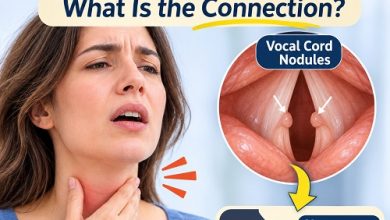
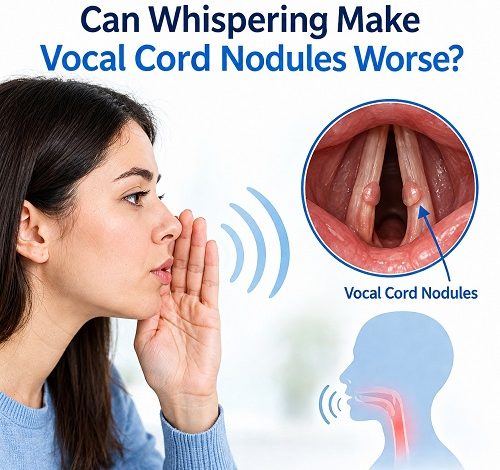
What Are Vocal Cord Nodules? Vocal cord nodules are small, non-cancerous lesions that develop on the vocal folds inside the larynx (voice box). They usually form when repeated vocal stress causes irritation and tissue changes.
The vocal folds are two flexible bands of tissue that vibrate when air passes through them. These vibrations produce the sound of your voice.
When you repeatedly shout, speak loudly, sing without proper technique or use your voice for extended periods, the vocal folds experience mechanical stress. Over time, this can contribute to the development of nodules.
Common Vocal Cord Nodules symptoms include:
- Persistent hoarseness.
- A rough, breathy or weak voice.
- Vocal fatigue after speaking.
- Difficulty reaching high notes when singing.
- Frequent throat clearing.
- A sensation of something stuck in the throat.
- Difficulty projecting your voice.
- Changes in voice quality throughout the day.
Vocal cord nodules often develop on both vocal folds, typically in corresponding areas where the folds make contact during vibration.
Early assessment and appropriate voice therapy can help prevent ongoing irritation and improve voice function.
Can Whispering Make Vocal Cord Nodules Worse?
Yes, whispering can sometimes make symptoms worse, particularly when it involves excessive effort or prolonged vocal activity.
Normal speaking involves controlled vibration of the vocal folds. During whispering, the vocal folds generally remain apart or do not vibrate in the usual way. Air passes through the narrowed opening to produce a whisper.
Although whispering reduces the usual vocal fold vibration, it does not necessarily mean that your voice-producing muscles are resting.
Some people tighten their throat, neck and surrounding muscles to produce a whisper. This can increase muscular tension and contribute to discomfort, vocal fatigue and inefficient voice production.
For someone with vocal cord nodules, forceful whispering may therefore be less helpful than gentle, comfortable speaking under the guidance of a voice specialist.
The important distinction: Whispering is not automatically harmful, but prolonged, strained whispering is not a reliable way to protect your voice.
If your healthcare professional recommends vocal rest, ask whether that means avoiding both speaking and whispering.
Why Can Whispering Cause Voice Strain?
Whispering changes the way air moves through the larynx. Unlike normal speech, it generally does not involve regular vocal fold vibration. However, the muscles surrounding the vocal folds still help control airflow and sound production.
There are several reasons why whispering may cause problems for people with vocal cord nodules.
1. Increased Muscle Tension
Some people tighten their throat muscles when trying to whisper clearly. They may push air through the throat or squeeze the surrounding muscles to make their words understandable.
This effort can create unnecessary tension around the larynx.
If you already have vocal cord nodules, additional muscle tension may contribute to vocal discomfort and fatigue.
2. Forceful Whispering
A quiet whisper is different from a loud, forced whisper.
When you try to whisper across a room, communicate in a noisy environment or speak for an extended period, you may use excessive muscular effort.
Forceful whispering can place additional demands on the voice-producing system. It may also encourage unhealthy voice habits that interfere with recovery.
3. Prolonged Voice Use
Even when you are whispering, you are still using your voice-producing system.
If you whisper throughout the day instead of taking breaks, you may not give your larynx enough time to recover from irritation and fatigue.
For this reason, reducing unnecessary communication is often more helpful than replacing every conversation with whispering.
4. Poor Breathing and Voice Coordination
Some people hold their breath or use shallow breathing while whispering. They may also force air through the throat rather than allowing comfortable airflow.
This can increase tension in the neck and throat muscles.
Learning appropriate breathing and voice-production techniques through a speech-language pathologist can help reduce these habits.
Does Whispering Put More Pressure on Vocal Cords Than Speaking?
The answer depends on how you whisper and how you speak.
During normal speech, the vocal folds come together and vibrate in a controlled manner. During whispering, they generally do not vibrate in the same way.
However, whispering is not necessarily a completely relaxed activity.
A gentle, effortless whisper may involve relatively little vocal effort, whereas a loud or forced whisper may increase tension in the surrounding muscles.
A 2024 study published in European Archives of Oto-Rhino-Laryngology investigated the effects of ten minutes of forceful whispering in ten healthy participants. Researchers found only minor changes in some voice measurements and no statistically significant changes in several other parameters.
However, this small study involved healthy participants, not people with vocal cord nodules. Therefore, its findings cannot establish that forceful whispering is safe for someone with an existing vocal fold condition.
The practical recommendation is to avoid forceful whispering and follow the voice-use instructions provided by your ENT specialist or speech-language pathologist.
Can Whispering Prevent Vocal Cord Nodules From Healing?
No. Whispering is not a proven treatment for vocal cord nodules.
Some people assume that because whispering reduces normal vocal fold vibration, it automatically allows nodules to heal. However, recovery depends on several factors, including the severity of the lesions, ongoing voice habits and appropriate treatment.
If you continue whispering for long periods, particularly with excessive effort, you may maintain unhealthy patterns of voice use.
Instead, recovery may involve:
- Reducing unnecessary speaking.
- Avoiding shouting and singing during periods of irritation.
- Following an appropriate vocal rest plan.
- Attending voice therapy sessions.
- Staying adequately hydrated.
- Addressing contributing conditions such as acid reflux.
- Avoiding repeated throat clearing.
According to the National Institute for Health and Care Excellence’s evidence resource, InformedHealth.org, vocal cord nodules may improve with voice rest and voice therapy. Surgery is rarely required.
The goal is to reduce harmful vocal habits while developing healthier ways to produce sound.
What Is Vocal Rest and Why Is It Important?
Vocal rest means reducing or temporarily stopping activities that place unnecessary demands on your vocal folds.
It is often recommended for people experiencing hoarseness, vocal fatigue, inflammation or certain vocal fold injuries.
For people with vocal cord nodules, vocal rest can help reduce additional irritation associated with excessive voice use.
There are two main types of vocal rest.
1. Complete Vocal Rest
Complete vocal rest means avoiding voice production as instructed by your healthcare professional.
Depending on the medical instructions, this may include avoiding:
- Normal speaking.
- Whispering.
- Singing.
- Shouting.
- Humming.
- Other deliberate vocal exercises.
Some patients require complete silence for a specific period, particularly after certain vocal procedures or injuries.
Do not decide independently how long to remain silent. Your ENT specialist should determine the appropriate duration.
2. Relative Vocal Rest
Relative vocal rest means reducing the amount of speaking without necessarily avoiding all communication.
For example, you might:
- Speak only when necessary.
- Keep conversations short.
- Avoid long telephone calls.
- Take regular breaks between conversations.
- Avoid speaking in noisy environments.
- Use written messages instead of unnecessary conversations.
This approach may be suitable for some people with vocal cord nodules, depending on their symptoms and treatment plan.
The Sean Parker Institute for the Voice at Weill Cornell Medicine explains that voice rest can reduce swelling associated with vocal trauma, while voice therapy addresses the underlying patterns that contribute to the problem.
What Should You Do Instead of Whispering?
If you have vocal cord nodules and need to communicate, consider alternatives that do not require unnecessary vocal effort.
1. Use Text Messages
Text messages are one of the easiest ways to reduce unnecessary speaking.
Instead of whispering during long conversations, use messaging applications, emails or written notes.
This can be particularly helpful at work, at home and in situations where you need to communicate frequently.
2. Speak at a Comfortable Volume When Permitted
If your doctor has not prescribed complete vocal rest, use a comfortable, natural speaking voice.
Avoid trying to make your voice unusually quiet or unusually loud.
Do not force your voice if it feels uncomfortable. If speaking causes pain, increased hoarseness or fatigue, stop and follow your clinician’s advice.
3. Use Voice Amplification
Teachers, trainers and public speakers may benefit from microphones or personal amplification systems.
These devices help reduce the need to raise the voice to communicate with large groups.
They are particularly useful for people whose occupations require frequent speaking.
4. Reduce Telephone Conversations
Telephone conversations can encourage people to speak for longer periods without noticing vocal fatigue.
Consider replacing unnecessary calls with text messages or emails.
If a call is essential, keep it brief and follow your prescribed voice-use limits.
5. Communicate Through Written Instructions
If you regularly need to explain tasks, give instructions or answer questions, written communication can reduce your daily voice demands.
This is useful for teachers, customer service representatives, managers and other professional voice users.
Common Symptoms That May Indicate Excessive Voice Strain
If whispering or speaking makes your symptoms worse, pay attention to changes in your voice.
Common warning signs include:
| Symptom | What it may indicate |
| Increased hoarseness | Ongoing irritation or voice fatigue |
| Throat discomfort | Excessive muscular effort or irritation |
| Weak voice | Changes in vocal fold function |
| Breathiness | Incomplete vocal fold closure |
| Voice breaks | Difficulty maintaining consistent voice production |
| Reduced vocal range | Changes affecting vocal fold vibration |
| Difficulty speaking for long periods | Reduced vocal endurance |
These symptoms do not automatically mean that your nodules have increased in size. However, persistent or worsening symptoms deserve medical assessment.
7 Effective Ways to Protect Your Voice When You Have Vocal Cord Nodules
Good vocal hygiene can help reduce unnecessary irritation and support treatment.
1. Drink Enough Water
Hydration supports normal mucus production and helps maintain the moisture of the tissues lining the vocal tract.
Drink water regularly throughout the day rather than waiting until you feel thirsty.
Avoid relying on caffeinated drinks as your main source of hydration.
2. Avoid Shouting and Screaming
Shouting creates forceful contact between the vocal folds and can increase mechanical stress.
Avoid shouting at sporting events, speaking loudly across rooms or competing with background noise.
Use alternative ways to get someone’s attention.
3. Stop Frequent Throat Clearing
Repeated throat clearing can irritate the vocal folds.
If you feel mucus or irritation in your throat, try taking a sip of water or swallowing gently instead.
If the sensation persists, discuss possible causes such as allergies, postnasal drip or reflux with your healthcare professional.
4. Avoid Smoking and Secondhand Smoke
Tobacco smoke contains irritating substances that can affect the larynx and surrounding tissues.
Avoid smoking and exposure to secondhand smoke to support better respiratory and vocal health.
5. Manage Acid Reflux
Acid reflux may contribute to throat irritation and voice symptoms in some people.
If you experience frequent heartburn, regurgitation or persistent throat symptoms, discuss them with your doctor.
Depending on your symptoms, your healthcare professional may recommend dietary changes, lifestyle adjustments or appropriate treatment.
6. Take Regular Vocal Breaks
If your work involves frequent communication, schedule short periods of voice rest throughout the day.
Avoid unnecessary conversations during breaks and reduce prolonged telephone use.
These habits can help prevent vocal fatigue.
7. Follow Professional Voice Therapy
A speech-language pathologist with experience in voice disorders can teach techniques that improve vocal efficiency.
Voice therapy may include:
- Breathing coordination.
- Relaxed voice production.
- Resonant voice exercises.
- Appropriate speaking pitch.
- Reduction of excessive throat muscle tension.
- Techniques for avoiding vocal strain.
The exercises should be selected according to your condition. Avoid starting intensive vocal exercises without professional guidance.
How Are Vocal Cord Nodules Diagnosed?
If you experience persistent hoarseness, voice fatigue or difficulty speaking, consult an ear, nose and throat (ENT) specialist.
The doctor may recommend the following assessments.
1. Medical History
Your doctor may ask about:
- How long you have experienced hoarseness.
- Whether your voice becomes worse after speaking.
- Your occupation and daily speaking habits.
- Whether you sing or speak professionally.
- Smoking history.
- Symptoms of acid reflux or allergies.
- Previous voice problems or throat injuries.
This information helps identify possible causes of vocal irritation.
2. Laryngoscopy
Laryngoscopy allows the doctor to examine your vocal folds using a specialised instrument.
A flexible or rigid scope may be used to identify nodules, swelling, inflammation or other abnormalities.
3. Videostroboscopy
Videostroboscopy provides a detailed assessment of vocal fold vibration.
It can help specialists evaluate the size, location and characteristics of vocal fold lesions and assess how well the vocal folds come together during speech.
Accurate Vocal Cord Nodules diagnosis is important because other conditions, including vocal fold polyps, cysts and inflammation, can cause similar symptoms.
What Are the Treatment Options for Vocal Cord Nodules?
Vocal Cord Nodules Treatment depends on the severity of the nodules, the symptoms and the factors contributing to their development.
Most people begin with non-surgical approaches.
1. Voice Therapy
Voice therapy is one of the main treatments for vocal cord nodules.
A qualified speech-language pathologist can help you change speaking habits that contribute to repeated vocal trauma.
Therapy may focus on reducing excessive muscle tension, improving breathing coordination and developing more efficient voice production.
2. Vocal Rest
Your doctor may recommend complete or relative vocal rest depending on your condition.
Rest can reduce swelling caused by excessive voice use, but it does not necessarily remove established nodules.
It is important to follow the recommended duration rather than continuing prolonged silence without medical guidance.
3. Treating Underlying Conditions
Some people experience additional irritation because of allergies, respiratory infections or acid reflux.
Managing these conditions may help improve associated throat and voice symptoms.
However, medication should be used only when there is an appropriate medical indication.
4. Surgical Treatment
Surgery is not usually the first treatment for vocal cord nodules.
It may be considered when persistent lesions cause significant voice problems despite appropriate conservative treatment.
A specialist should explain the potential benefits, risks and recovery requirements before surgery.
Voice therapy and appropriate vocal habits remain important after treatment to reduce the risk of further vocal injury.
Natural Treatment for Vocal Cord Nodules
Vocal cord nodules are small, non-cancerous growths that develop on the vocal cords due to repeated voice strain, excessive talking, shouting, or improper voice use. They can cause hoarseness, a breathy voice, vocal fatigue, and difficulty speaking clearly. Although medical treatment may be necessary, several natural approaches can help support vocal health and recovery.
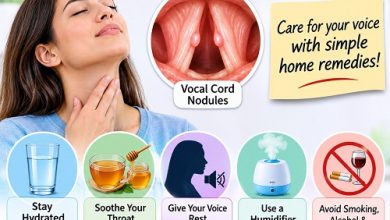
Natural Remedies for Vocal Cord Nodules mainly focus on reducing irritation and allowing the vocal cords to heal. Voice rest is one of the most important steps. Avoid shouting, whispering, prolonged conversations, and unnecessary throat clearing.
Drinking plenty of water helps keep the vocal cords hydrated. Warm herbal teas and soothing drinks may provide comfort, while avoiding excessive caffeine, smoking, and alcohol can help reduce irritation. Using a humidifier may also prevent throat dryness.
Practising gentle breathing techniques and following professional voice therapy exercises can improve vocal habits and reduce strain. Avoid performing vocal exercises without guidance from a speech and language therapist.
If hoarseness persists for more than four weeks, consult an ENT specialist for an examination. Natural remedies cannot remove established nodules, but healthy voice habits and professional treatment can support recovery and help prevent further vocal damage.
Common Mistakes to Avoid When You Have Vocal Cord Nodules
Some everyday habits can interfere with vocal recovery.
Avoid these common mistakes:
- Whispering throughout the day because you believe it completely rests your vocal folds.
- Speaking loudly when your voice feels weak.
- Singing through hoarseness.
- Continuing long conversations despite vocal fatigue.
- Repeatedly clearing your throat.
- Ignoring persistent voice changes.
- Starting vocal exercises without professional guidance.
- Assuming that nodules will disappear without changing harmful voice habits.
Remember that reducing vocal strain is about changing how you use your voice, not simply changing normal speech into whispering.
When Should You See an ENT Specialist?
Do not ignore persistent voice changes, especially if your symptoms interfere with everyday communication.
Arrange an ENT assessment if you experience:
- Hoarseness that does not improve.
- Repeated loss of voice.
- Persistent vocal fatigue.
- Difficulty speaking or singing.
- Pain when using your voice.
- A significant change in your usual speaking voice.
- Symptoms that continue despite reducing voice use.
Seek urgent medical attention if you experience breathing difficulties, noisy breathing or significant difficulty swallowing.
The American Academy of Otolaryngology–Head and Neck Surgery recommends laryngeal examination when dysphonia has not improved or resolved within four weeks, or sooner when there is concern about a serious underlying cause.
Frequently Asked Questions (FAQs)
1. Is whispering harmful if you have vocal cord nodules?
Whispering is not automatically harmful, but forceful or prolonged whispering can increase muscle tension and vocal effort. People with vocal cord nodules should avoid strained whispering and follow their specialist’s voice-use recommendations.
2. Is whispering better than speaking with vocal cord nodules?
Not necessarily. A comfortable speaking voice may involve less unnecessary muscular effort than a forced whisper. However, people prescribed complete vocal rest should avoid both speaking and whispering.
3. Can whispering increase vocal cord inflammation?
Forceful whispering may contribute to laryngeal muscle tension and discomfort. However, direct evidence that whispering increases inflammation in people with established vocal cord nodules is limited.
4. How long should I rest my voice if I have vocal cord nodules?
There is no universal recovery period. Your ENT specialist or speech-language pathologist should recommend an appropriate voice-rest schedule based on your symptoms and the severity of your condition.
5. Can vocal cord nodules disappear naturally?
Some nodules may improve with reduced vocal strain and appropriate voice therapy. However, established nodules do not always disappear completely, and improvement varies between individuals.
6. Can I use my phone if I have vocal cord nodules?
Yes, but lengthy telephone conversations may increase voice use. Consider text messages or emails when possible, and keep essential calls short if your treatment plan permits speaking.
7. Does whispering damage vocal cords permanently?
Occasional whispering does not automatically cause permanent damage. However, repeated forceful whispering and other unhealthy voice habits may contribute to ongoing voice problems.
8. Should I completely stop talking if I have vocal cord nodules?
Not everyone needs complete silence. Some people benefit from relative vocal rest and voice therapy, while others may require complete vocal rest for a specific period. Follow your clinician’s instructions.
Conclusion
Whispering with vocal cord nodules is not always a safe alternative to normal speaking. Although whispering generally reduces regular vocal fold vibration, forceful or prolonged whispering can increase muscle tension and contribute to voice strain.
If you have vocal cord nodules, focus on reducing unnecessary voice use, avoiding shouting, staying hydrated and following an appropriate vocal rest plan.
Voice therapy can also help you develop healthier speaking habits and reduce the behaviours that contribute to repeated vocal stress.
Most importantly, do not assume that whispering will help your vocal folds recover. Consult an ENT specialist for an accurate diagnosis and a personalised treatment plan. With appropriate care, many people can improve their voice quality and return to comfortable everyday communication.
Medical Disclaimer
This article is intended for educational and informational purposes only. It does not replace professional medical advice, diagnosis or treatment. Vocal cord nodules require appropriate assessment by an ENT specialist. Consult a qualified healthcare professional before starting vocal exercises or changing your prescribed vocal rest routine.
Medical References
The following medical and scientific resources support the article:
- American Speech-Language-Hearing Association (ASHA) – Voice Disorders: Vocal hygiene, voice conservation and treatment approaches.
ASHA – Voice Disorders. - National Library of Medicine (NCBI Bookshelf) – Overview: Vocal Nodules. Information about causes, symptoms and treatment.
Overview of Vocal Nodules. - Sean Parker Institute for the Voice, Weill Cornell Medicine – Nodules: Voice rest and voice therapy.
Vocal Nodule Treatment. - European Archives of Oto-Rhino-Laryngology (2024) – Does Forced Whisper Have an Impact on Voice Parameters? Scientific research examining forced whispering and vocal function.
Read the 2024 Research Study. - American Speech-Language-Hearing Association (2025) – Protect Your Voice This Back-to-School Season. Practical voice-protection recommendations.
ASHA Voice Protection Guidelines. - American Academy of Otolaryngology–Head and Neck Surgery (2018) – Clinical Practice Guideline: Hoarseness (Dysphonia), Update.
Clinical Practice Guideline.