
Your voice plays an important role in everyday communication, professional activities, and personal expression. Whether you are a teacher, singer, public speaker, coach, or someone who talks frequently at work, maintaining a healthy voice is essential. However, repeated vocal strain, excessive talking, and improper voice use can increase the risk of developing vocal cord nodules.
Understanding vocal cord nodules prevention can help you protect your voice, recognize early warning signs, and develop habits that support long-term vocal health.
Vocal cord nodules are generally benign, callus-like growths that develop on the vocal folds, often following repeated friction or excessive vocal strain. They can cause hoarseness, vocal fatigue, and difficulty producing certain sounds. Fortunately, adopting healthy vocal habits and learning proper speaking techniques can help reduce the risk of these problems. Practical prevention strategies, effective vocal hygiene practices, and essential voice care tips to help you maintain a clear, comfortable, and healthy voice.
What Are Vocal Cord Nodules?
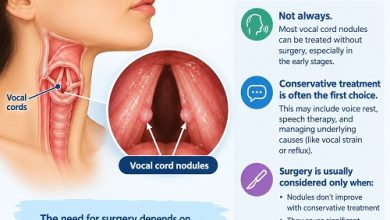
What Are Vocal Cord Nodules? Vocal cord nodules, also called vocal fold nodules or singer’s nodules, are small, noncancerous growths that develop on the vocal folds inside the larynx, commonly known as the voice box.
The vocal folds are two flexible bands of tissue that vibrate when air passes through them, producing sound. Repeatedly forcing the voice, shouting, or speaking for extended periods without adequate rest can place excessive mechanical stress on these tissues. Over time, this stress may contribute to the development of nodules.
Vocal cord nodules are particularly common among people who rely heavily on their voices, including singers, teachers, fitness instructors, call center workers, and public speakers. Children who frequently shout or use their voices forcefully may also develop them.
Common Vocal Cord Nodules symptoms include:
- Persistent hoarseness or a raspy voice.
- Vocal fatigue after speaking or singing.
- A rough, breathy, or weak voice.
- Difficulty reaching higher singing notes.
- Frequent throat clearing.
- A sensation of throat discomfort or strain.
- Difficulty projecting the voice comfortably.
These symptoms can have several Vocal Cord Nodules causes, so they do not automatically mean that nodules are present. An appropriate medical assessment is necessary to identify the underlying problem.
Why Is Vocal Cord Nodules Prevention Important?
Preventing vocal cord nodules is important because vocal problems can affect communication, professional performance, and quality of life.
For singers, even a small change in vocal function may affect pitch, tone, and endurance. Teachers may struggle to speak clearly throughout the school day, while professionals who spend hours on telephone calls may experience increasing discomfort and fatigue.
Early prevention focuses on reducing unnecessary vocal strain before it becomes a persistent problem. It also encourages people to recognize when their voices need rest instead of continuing to speak through discomfort.
Although not every case of vocal cord nodules can be prevented, healthy voice habits can reduce avoidable risks. If nodules develop, treatment often includes voice therapy and changes in vocal behavior.
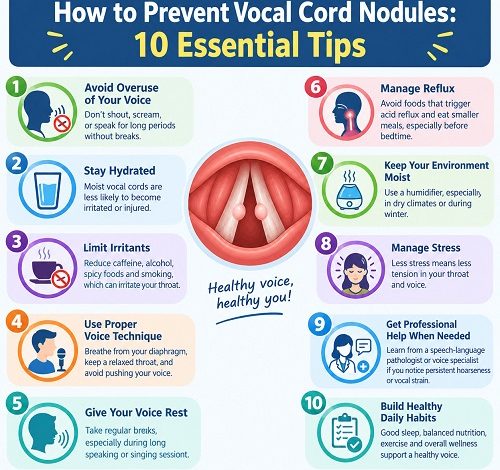
10 Essential Tips for Vocal Cord Nodules Prevention
1. Avoid Excessive Talking and Shouting
One of the most important steps in vocal cord nodules prevention is avoiding unnecessary vocal strain.
When you shout, scream, or speak loudly for long periods, your vocal folds collide with greater force. Repeated high-impact contact can irritate the tissue and increase the risk of vocal injury.
Try to maintain a comfortable speaking volume during conversations. If you work in a noisy environment, move to a quieter location whenever possible rather than raising your voice to compete with background noise.
Teachers can use classroom microphones, while fitness instructors and coaches can use amplification systems when addressing large groups. Public speakers should ensure that the available sound equipment allows them to communicate without forcing their voices.
It is equally important to avoid prolonged whispering when your voice is tired or hoarse. Whispering is not always a gentle alternative to speaking and may contribute to vocal strain in some circumstances.
Practical tip: If your throat feels tired or your voice becomes rough, reduce speaking and give your voice time to recover.
2. Stay Properly Hydrated
Hydration is a fundamental part of good vocal hygiene. The vocal folds need an appropriate moist environment to vibrate efficiently, and dehydration can contribute to discomfort and vocal fatigue.
Drink water regularly throughout the day rather than waiting until you feel thirsty. Keep a water bottle nearby if your job requires extended speaking or singing.
You may need to drink more fluids during physical activity, hot weather, or long performances, depending on your individual needs.
Caffeine does not necessarily need to be eliminated completely, but excessive consumption may affect hydration or worsen reflux symptoms in some individuals. Alcohol can also contribute to dehydration and may make it easier to ignore signs of vocal fatigue.
Remember that drinking water supports overall hydration but does not directly wash or instantly moisturize the vocal folds. The goal is to maintain adequate hydration consistently.
Practical tip: Make water breaks part of your daily speaking or singing routine, particularly during long periods of voice use.
3. Take Regular Voice Breaks
Your voice needs recovery time, especially when you use it for several hours each day.
Continuous talking or singing without breaks can lead to vocal fatigue. When fatigue develops, people may compensate by pushing harder, increasing volume, or tightening the muscles around the throat. These habits can add further strain.
Schedule short periods of voice rest throughout your day. Teachers can use independent classroom activities, speakers can include pauses in presentations, and call center workers can use approved breaks between calls.
If you notice hoarseness, discomfort, or reduced vocal strength, decrease your voice use rather than trying to push through the Vocal Cord Nodules symptoms.
Voice rest does not always mean complete silence for every minor symptom. The appropriate amount of rest depends on the cause and severity of the problem. Persistent or sudden voice changes warrant medical advice.
Practical tip: Plan your speaking schedule so that demanding vocal activities are balanced with opportunities for recovery.
4. Warm Up Before Singing or Prolonged Speaking
Just as athletes prepare their bodies before strenuous exercise, singers and other professional voice users can benefit from appropriate vocal warm-ups.
A gentle warm-up may help you coordinate breathing and voice production before demanding vocal activity. Depending on your needs, exercises may include gentle humming, lip trills, or comfortable pitch glides.
Avoid forcing high notes, shouting during warm-ups, or repeatedly practicing sounds that cause discomfort. Warm-ups should feel comfortable rather than exhausting.
Singers may benefit from working with a qualified singing teacher or speech-language pathologist who specializes in voice disorders. These professionals can recommend exercises suited to vocal range, technique, and performance requirements.
Warm-ups are not a guarantee against nodules, particularly if excessive vocal use continues afterward. They should be combined with sensible voice limits, hydration, and adequate recovery.
Practical tip: Begin demanding voice activities gradually and stop any exercise that causes pain, strain, or worsening hoarseness.
5. Learn Proper Breathing and Speaking Techniques
Poor vocal technique can make everyday communication unnecessarily tiring. Speaking primarily through throat tension, using excessive force, or failing to coordinate breathing with speech may contribute to vocal discomfort.
Healthy voice production involves coordination between airflow, vocal fold vibration, and the muscles involved in speech. Learning efficient techniques can help reduce unnecessary effort.
When speaking, maintain relaxed posture and allow comfortable breaths between phrases. Avoid pushing the voice from the throat, particularly when delivering long presentations or speaking to large groups.
Singers should develop breath control and appropriate vocal technique rather than forcing their voices to reach particular notes or volumes.
If speaking regularly leaves you hoarse or exhausted, consider voice therapy with a speech-language pathologist who has experience treating voice disorders. Vocal Cord Nodules Therapy can help identify harmful vocal habits and teach more efficient ways to produce sound.
Practical tip: Aim for a clear, comfortable voice rather than the loudest possible voice.
6. Avoid Smoking and Secondhand Smoke
Smoking exposes the vocal folds and surrounding airways to irritating substances that can contribute to inflammation and voice problems. Secondhand smoke may also irritate the respiratory tract.
If you smoke, seek support to stop. Avoid smoky environments whenever possible, and take reasonable precautions around dust, fumes, and other airborne irritants.
Vaping can also expose the airways to potentially irritating substances, so avoiding it is a sensible precaution for vocal health.
A smoke-free environment is particularly important for singers, teachers, and people who already experience persistent hoarseness or throat irritation.
Although avoiding smoke does not eliminate every possible cause of vocal cord nodules, it supports healthier vocal tissues and reduces exposure to avoidable irritants.
Practical tip: Maintain smoke-free surroundings at home and work, and seek professional support if you need help stopping smoking.
7. Manage Acid Reflux and Allergies
Certain medical conditions can contribute to throat irritation and voice symptoms. Gastroesophageal reflux disease (GERD), laryngopharyngeal reflux, allergies, and upper respiratory infections may affect vocal comfort.
Reflux occurs when stomach contents move back into the esophagus and sometimes reach the throat. In susceptible individuals, this may contribute to irritation, coughing, throat clearing, or hoarseness.
If you experience frequent heartburn, a sour taste, or recurring throat symptoms, discuss them with a healthcare professional. Treatment should be based on your symptoms and clinical assessment rather than assuming that reflux is the cause of every voice problem.
For allergies, follow an appropriate treatment plan. Some cold and allergy medications can dry the vocal tract, so ask your healthcare professional or pharmacist about suitable options if you rely heavily on your voice.
Avoid repeatedly clearing your throat when possible. Try swallowing or taking a small sip of water instead, provided doing so is comfortable. Persistent throat clearing should be evaluated if it continues.
Practical tip: Address ongoing reflux, allergies, coughing, and throat irritation rather than treating hoarseness as an isolated problem.
8. Maintain a Healthy Environment and Lifestyle
Your surroundings and general health can influence how comfortably you use your voice.
Dry indoor air may aggravate throat discomfort for some people. A clean humidifier can help add moisture to dry indoor air, particularly during dry seasons. Follow the manufacturer’s cleaning instructions to prevent the growth of mold and microorganisms.
Adequate sleep is also important. Physical fatigue may make sustained voice use more difficult, while regular exercise can support general stamina, posture, and breathing.
Wash your hands regularly to reduce the risk of respiratory infections. If you develop a cold, laryngitis, or another illness that affects your voice, reduce strenuous speaking and singing until your voice improves.
Avoid trying to compensate for illness-related hoarseness by speaking more forcefully. Seek medical advice if symptoms persist or worsen.
Practical tip: Combine a comfortable indoor environment with sufficient sleep, general wellness habits, and reduced vocal demands during illness.
9. Use Microphones and Voice Amplification
People who regularly address groups should not have to strain their voices simply to be heard.
Microphones and amplification systems can reduce the need to speak loudly, particularly in classrooms, conference halls, fitness studios, and large meeting rooms.
Teachers may benefit from a classroom microphone, while presenters can use a suitable sound system instead of projecting their voices across a large space.
At concerts, sporting events, or social gatherings, move away from loud background noise when having a conversation. Trying to compete with music or crowd noise can increase vocal effort without improving communication.
These changes are particularly valuable for people who use their voices professionally and may otherwise repeat high-strain activities every day.
Practical tip: Make amplification and quieter communication environments part of your regular voice care plan whenever possible.
10. Monitor Voice Changes and Seek Early Treatment
Recognizing early warning signs is a vital part of vocal cord nodules prevention.
A persistent raspy voice, reduced singing range, frequent vocal fatigue, or difficulty speaking comfortably may indicate that your vocal system needs attention.
Do not assume that every episode of hoarseness means you have nodules. Infections, reflux, vocal overuse, and other medical conditions can cause similar symptoms.
However, continuing to strain your voice when symptoms are present may make an underlying problem worse. Reduce demanding voice use and arrange an assessment when changes persist.
An ear, nose, and throat specialist, also called an otolaryngologist or ENT specialist, can examine the larynx and vocal folds. A speech-language pathologist specializing in voice can then help address vocal behaviors when appropriate.
Practical tip: Arrange a medical assessment if hoarseness lasts more than two to three weeks, or sooner if symptoms are significant or worsening. Seek urgent care for breathing difficulty or other concerning symptoms, such as coughing up blood.
Vocal Hygiene: Essential Voice Care Tips for Everyday Life
Good vocal hygiene means developing habits that protect your voice and reduce unnecessary strain. The best approach is to make these habits part of your everyday routine rather than waiting until voice problems appear.
Here are some simple vocal hygiene, voice care tips to follow consistently:
- Drink water regularly: Maintain adequate hydration throughout the day.
- Avoid vocal overuse: Balance long periods of talking or singing with rest.
- Speak at a comfortable volume: Avoid shouting across rooms or talking over loud music.
- Use good breathing techniques: Coordinate breathing with speech instead of forcing sound from your throat.
- Limit throat clearing: Try swallowing or sipping water when comfortable, and investigate persistent symptoms.
- Avoid smoking: Reduce exposure to smoke and airborne irritants.
- Get enough sleep: Allow your body and voice to recover from daily demands.
- Warm up gradually: Prepare your voice before demanding singing or speaking activities.
- Manage underlying conditions: Seek appropriate care for persistent reflux, allergies, or respiratory symptoms.
- Listen to your voice: Reduce vocal demands when you notice fatigue, discomfort, or hoarseness.
These habits can help reduce avoidable vocal strain, although they cannot guarantee that nodules will never develop. Individual needs vary, and people who rely heavily on their voices may benefit from professional guidance.
Can Vocal Cord Nodules Be Prevented Completely?
Vocal cord nodules are often associated with repeated vocal strain, so many risk factors can be addressed through changes in everyday behavior. However, complete prevention cannot be guaranteed.
A person’s risk depends on several factors, including how frequently they use their voice, the intensity of their vocal activities, their technique, and any underlying medical conditions.
For example, a singer who performs for several hours each day may need a more structured voice care routine than someone who speaks occasionally. Similarly, a teacher working in a noisy classroom may benefit from amplification and planned voice breaks.
The key is to recognize your individual vocal demands and respond before discomfort becomes persistent.
If nodules develop despite your prevention efforts, do not assume that you have permanently damaged your voice. Many people improve with appropriate voice therapy, changes in vocal habits, and treatment of contributing conditions. An ENT specialist can recommend an appropriate Vocal Cord Nodules treatment plan.
Natural Treatment for Vocal Cord Nodules
Vocal cord nodules are small, benign growths that develop on the vocal cords, often due to excessive talking, shouting, or improper voice use. They can cause hoarseness, vocal fatigue, and difficulty speaking clearly. Fortunately, Natural Remedies for Vocal Cord Nodules can help support vocal health and reduce irritation when combined with appropriate medical care.
Effective Natural Remedies for Vocal Cord Nodules
- Stay Hydrated: Drink plenty of water throughout the day to keep your vocal cords moist and reduce dryness. Warm, caffeine-free drinks may also soothe throat discomfort.
- Practice Voice Rest: Avoid shouting, prolonged talking, and singing when your voice feels strained. Do not whisper excessively, as whispering can also place stress on your voice.
- Use Humidification: A clean humidifier can add moisture to dry indoor air, helping relieve throat dryness and irritation.
- Avoid Irritants: Stay away from cigarette smoke, dust, and other airborne irritants. Managing acid reflux may also help reduce throat irritation.
- Improve Vocal Technique: Practice gentle breathing and proper voice projection. A speech-language pathologist can teach techniques that reduce vocal strain.
When Should You See a Doctor?
Although occasional hoarseness may occur after a cold or a demanding day, persistent voice changes should not be ignored.
Consider arranging an assessment with an ENT specialist if you experience:
- Hoarseness that persists for two to three weeks.
- Repeated episodes of voice loss.
- Difficulty singing notes that were previously comfortable.
- Vocal fatigue that interferes with work or daily communication.
- Persistent throat discomfort or unexplained changes in voice quality.
- Recurrent voice problems despite taking adequate rest.
Seek urgent medical attention if you have difficulty breathing, cough up blood, or experience other severe or concerning symptoms.
Depending on the findings, your clinician may recommend examination of the vocal folds, voice therapy, or treatment for an underlying condition. A speech-language pathologist with specialist voice training can help you develop more efficient vocal habits and reduce the likelihood of repeated injury.
Conclusion
Vocal cord nodules prevention starts with consistent, healthy voice habits. Excessive talking, shouting, poor vocal technique, and inadequate recovery can place unnecessary stress on the vocal folds. Fortunately, practical changes can help you protect your voice and reduce avoidable risks.
Stay hydrated, take regular voice breaks, warm up before demanding vocal activities, use microphones when necessary, and avoid smoking and other irritants. Pay attention to persistent hoarseness and seek professional advice when your voice does not recover as expected.
By following effective vocal hygiene, voice care tips, you can support better vocal comfort and endurance in everyday communication, singing, teaching, and public speaking.
Your voice is an important part of your health and daily life. Protecting it today can help you continue using it comfortably in the future.
4. Medical references
The following reputable medical sources support the article’s information and are suitable for an editorial reference section.
- National Institute on Deafness and Other Communication Disorders (NIDCD)
Taking Care of Your Voice
An authoritative overview of hydration, vocal rest, avoiding strain, smoking, and healthy voice use.
- Cleveland Clinic
Vocal Cord Lesions: Nodules, Polyps and Cysts
Covers causes, symptoms, prevention strategies, and treatment options for benign vocal fold lesions.
Read the Cleveland Clinic guide
- American Speech-Language-Hearing Association (ASHA)
Voice Disorders
Professional guidance on vocal hygiene, reducing harmful vocal behaviors, and voice therapy.
- NYU Langone Health
Preventing Benign Vocal Cord Lesions
Practical recommendations on voice rest, hydration, speaking volume, and avoiding vocal strain.
- JAMA Otolaryngology–Head & Neck Surgery
Gaskins D, Baird BJ. What Are Vocal Cord Nodules? 2024;150(2):185. Published online December 14, 2023.
A medical patient resource discussing vocal cord nodules, prevention, and when to seek professional care.
- InformedHealth.org, National Center for Biotechnology Information (NCBI)
Overview: Vocal Nodules
Explains vocal nodules, prevention through voice rest, and the role of voice therapy.