
Vocal cord nodules can affect speaking, singing, and everyday communication. People who develop these small growths may experience persistent hoarseness, a rough voice, vocal fatigue, or difficulty reaching higher notes. These symptoms can be especially frustrating for teachers, singers, public speakers, and others who rely on their voices professionally.
One of the most common questions patients ask is: Do vocal cord nodules require surgery?
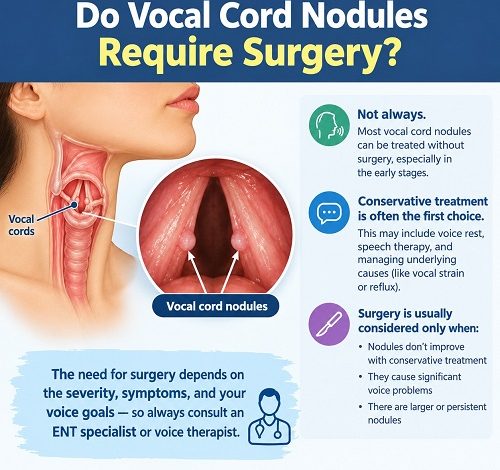
The short answer is no. Most vocal cord nodules do not require surgery because they can often improve with voice therapy, changes in vocal habits, and treatment of contributing medical conditions. However, some patients may benefit from surgery when nodules persist despite appropriate conservative treatment or when a specialist identifies another reason for surgical intervention.
The Vocal cord nodules causes, available treatments, and circumstances in which surgery may be recommended can help patients make informed decisions about their vocal health.
What Are Vocal Cord Nodules?
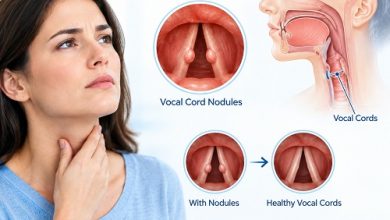
What Are Vocal Cord Nodules? Vocal cord nodules, also known as vocal fold nodules, are small, benign growths that develop on the vocal folds inside the larynx, commonly called the voice box. They frequently occur on both vocal folds at corresponding points where repeated contact and friction place stress on the tissue.
The vocal folds are two flexible bands of tissue that vibrate when air passes through them during speech and singing. This vibration produces sound. When the vocal folds experience repeated irritation or excessive mechanical stress, small areas of swelling and tissue changes may develop over time.
Vocal cord nodules are generally noncancerous and are often associated with vocal overuse or inefficient voice production. They are sometimes compared to calluses that form on the skin after repeated friction.
Although nodules are benign, they can interfere with the normal vibration and closure of the vocal folds. As a result, the voice may become hoarse, breathy, weak, or less flexible.
The size, firmness, duration, and location of the nodules can influence symptoms and treatment outcomes. Early or softer nodules may respond well to conservative management, while longstanding, firm lesions can be more difficult to treat without additional intervention.
What Causes Vocal Cord Nodules?
Vocal cord nodules usually develop because of repeated stress on the vocal folds. However, several habits and medical factors can contribute to their formation or make existing symptoms worse.
Common contributing factors include:
- Vocal overuse: Speaking, shouting, or singing for long periods without sufficient rest can strain the vocal folds.
- Incorrect vocal technique: Producing sound with excessive throat tension or speaking too loudly may increase vocal trauma.
- Occupational voice demands: Teachers, coaches, call-center employees, performers, and public speakers may be at greater risk because of frequent voice use.
- Frequent shouting: Repeatedly raising the voice, particularly in noisy environments, can increase irritation.
- Smoking and environmental irritants: Tobacco smoke, dust, and other airborne irritants may worsen inflammation and voice symptoms.
- Allergies and respiratory irritation: These conditions can contribute to coughing, throat clearing, and discomfort.
- Reflux symptoms: Gastroesophageal or laryngopharyngeal reflux may contribute to laryngeal irritation in some patients.
Not everyone with these risk factors develops nodules. Vocal technique, individual tissue characteristics, overall health, and the amount of vocal stress all influence risk.
Identifying the factors contributing to the problem is essential because removing a nodule without addressing the cause may not prevent it from returning.
Common Symptoms of Vocal Cord Nodules
Symptoms can develop gradually, particularly in people who use their voices heavily. Some patients initially notice only a small change in voice quality, while others experience significant difficulty communicating.
Common Vocal Cord Nodules symptoms include:
- Persistent hoarseness or a raspy voice
- A breathy, weak, or rough-sounding voice
- Vocal fatigue after speaking
- Difficulty reaching high notes while singing
- Reduced vocal range or flexibility
- A feeling of strain when speaking
- Frequent throat clearing
- A sensation of something irritating the throat
- Difficulty projecting the voice without extra effort
Symptoms may become more noticeable after prolonged speaking or singing and may improve temporarily with rest.
However, these Vocal Cord Nodules symptoms do not automatically mean that vocal cord nodules are present. Vocal fold polyps, cysts, inflammation, muscle tension dysphonia, and other conditions can cause similar problems.
Anyone experiencing persistent hoarseness should receive an appropriate medical assessment rather than assuming the cause is vocal nodules.
Do Vocal Cord Nodules Require Surgery?
In most cases, vocal cord nodules surgery is not the first treatment recommended. Voice therapy and vocal habit modification are generally preferred because they address the mechanical stress that contributes to nodule formation.
Many patients experience substantial improvement without an operation, especially when the nodules are relatively soft and the contributing vocal behaviors can be changed.
The American Academy of Otolaryngology–Head and Neck Surgery recommends considering surgery for appropriate symptomatic benign vocal fold lesions that have not responded to conservative management. Its guidance also supports voice therapy for voice disorders that are amenable to this approach.
This means surgery is an option for selected patients rather than an automatic requirement for everyone diagnosed with nodules.
The decision depends on several factors:
- How long the nodules have been present
- Whether the lesions are soft or firm
- The severity of voice symptoms
- The patient’s occupation and communication needs
- The findings of a laryngeal examination
- Whether voice therapy has been completed effectively
- Whether another vocal fold condition may be present
A specialist should assess these factors before recommending vocal nodule removal or continued nonsurgical treatment.
When Is Vocal Cord Nodules Surgery Necessary?
Although conservative treatment is usually preferred, surgery may be appropriate in certain situations.
1. Nodules Do Not Improve With Voice Therapy
One of the main reasons to consider surgery is the persistence of significant symptoms despite a suitable course of voice therapy and changes in vocal habits.
Voice therapy requires time, consistent practice, and the correction of behaviors that may have contributed to the problem. If symptoms remain troublesome despite appropriate treatment, an ear, nose, and throat (ENT) specialist may reassess the diagnosis and discuss whether surgery is likely to improve the voice.
Failure to improve does not automatically mean surgery is necessary. The clinician should first determine whether the Vocal Cord Nodules diagnosis is correct, whether the therapy plan was appropriate, and whether other contributing factors remain untreated.
2. Nodules Are Longstanding or Firm
Some longstanding nodules develop firmer tissue changes and may respond less readily to conservative treatment. In selected cases, a specialist may consider surgical removal when these lesions continue to interfere significantly with voice quality.
However, appearance alone does not determine the need for surgery. The decision should account for symptoms, examination findings, and the likelihood of achieving a meaningful improvement.
3. Voice Problems Affect Work or Daily Life
Persistent voice difficulties can have a substantial effect on quality of life. A singer may struggle to reach familiar notes, a teacher may find it difficult to speak throughout the school day, or a professional speaker may experience fatigue after short presentations.
When symptoms remain disabling despite appropriate treatment, surgery may be discussed as part of an individualized plan.
Professional voice demands can influence the decision, but they do not guarantee that an operation will be recommended or that the voice will return to its previous condition.
4. The Diagnosis Needs Further Investigation
Not every growth on the vocal folds is a nodule. Polyps, cysts, and other lesions may look similar but require different management.
If a lesion has an unusual appearance or the diagnosis is uncertain, the specialist may recommend additional assessment or a procedure to examine the tissue more closely. A suspicious lesion may require biopsy or other appropriate investigation.
This is different from routine surgery for typical benign nodules. The purpose is to establish the correct diagnosis and select the safest treatment.
Can Vocal Cord Nodules Heal Without Surgery?
Yes. Many vocal cord nodules improve with nonsurgical treatment, particularly when the underlying causes are addressed.
The preferred approach often combines voice therapy, improved vocal technique, appropriate voice rest, and management of relevant medical conditions.
Voice Therapy
Voice therapy is a central component of vocal nodule treatment. It is provided by a qualified speech-language pathologist or voice therapist with appropriate expertise in voice disorders.
The therapist evaluates how the patient produces sound and develops exercises to reduce unnecessary strain on the vocal folds.
Vocal Cord Nodules Treatment may include:
- Learning to coordinate breathing and voice production
- Reducing excessive throat tension
- Practicing efficient speaking volume and pitch
- Improving vocal resonance
- Learning techniques for speaking in noisy environments
- Developing strategies to avoid shouting
- Practicing exercises at home
Voice therapy is not simply about speaking less. It teaches patients how to use their voices more efficiently so that daily communication places less stress on the vocal folds.
The duration of treatment varies according to symptom severity, individual progress, and the ability to practice new techniques consistently.
Vocal Hygiene and Lifestyle Changes
Vocal hygiene refers to habits that help maintain a healthy voice.
Patients may be advised to drink adequate fluids, take breaks during prolonged speaking, avoid shouting, and reduce exposure to smoke or other irritants.
Using a microphone or voice amplifier can be particularly helpful for teachers, instructors, and public speakers who need to communicate with large groups.
Patients should also avoid repeatedly forcing their voices when hoarse or fatigued. Persistent whispering can be uncomfortable for some people and is not a universal substitute for healthy voice production.
Instead of following strict voice-rest instructions independently, patients should ask their clinician which level of voice use is appropriate for their condition.
Treating Contributing Medical Conditions
Some patients have additional conditions that worsen vocal symptoms, including allergies, chronic nasal irritation, or reflux disease.
When a contributing condition is identified, treating it may help reduce irritation and improve comfort. Medication should be used when clinically indicated rather than prescribed automatically for every patient with nodules.
Antibiotics do not routinely treat vocal cord nodules, and reflux medication is not appropriate for every person with hoarseness.
An individualized treatment plan is generally more effective than taking medication without confirming the cause of the symptoms.
What Happens During Vocal Nodule Removal?
When conservative treatment does not provide satisfactory improvement, an ENT specialist or laryngologist may discuss vocal nodule removal.
The procedure commonly involves microlaryngoscopy, in which the surgeon examines the vocal folds under magnification and carefully removes selected abnormal tissue using specialized instruments.
The procedure is generally performed under general anesthesia. The surgeon accesses the larynx through the mouth using a laryngoscope, avoiding an external incision in the neck in routine cases.
The goal is to remove the targeted lesion while preserving as much healthy vocal fold tissue as possible. This is especially important because the vocal folds rely on delicate tissue layers to vibrate efficiently.
Surgery may be appropriate for selected patients, but it is not guaranteed to restore the voice completely. The result depends on the diagnosis, tissue characteristics, surgical technique, and postoperative care.
Voice therapy may be recommended before or after surgery to improve vocal technique and reduce the risk of further injury.
What Are the Risks of Vocal Cord Nodules Surgery?
Vocal fold surgery is a specialized procedure, and the potential benefits must be weighed against its risks.
Possible complications include:
- Temporary throat discomfort or hoarseness
- Bleeding or swelling
- Anesthesia-related complications
- Scarring of the vocal fold tissue
- Persistent voice changes
- Incomplete improvement in symptoms
- Recurrence of lesions when the underlying causes remain
Scarring is an important concern because even small changes in the delicate vibrating tissue can affect voice quality. For this reason, surgeons aim to remove abnormal tissue carefully while minimizing damage to surrounding structures.
Patients should discuss their individual risks with the surgeon, including how their occupation, vocal demands, medical history, and lesion characteristics may affect the expected outcome.
It is also important to understand that surgery does not correct poor vocal technique by itself. If the behaviors that caused repeated vocal trauma continue, symptoms or lesions may recur.
Recovery After Vocal Cord Nodules Surgery
Recovery varies according to the procedure, the extent of tissue removal, and the surgeon’s recommendations.
Some patients experience temporary throat irritation or changes in their voice during the early healing period. The voice may not improve immediately because the vocal folds need time to recover.
Postoperative instructions may include:
- Following the surgeon’s instructions about voice rest
- Avoiding shouting and strenuous vocal use during early recovery
- Attending scheduled follow-up appointments
- Gradually returning to speaking as advised
- Completing recommended postoperative voice therapy
- Avoiding smoking and other known irritants
Voice rest should be individualized. Patients should not assume that complete silence for a particular number of days is suitable for every procedure.
Voice therapy after surgery can help patients develop healthier vocal habits, improve coordination, and reduce repeated strain. The treating team will determine when therapy should begin and when normal speaking or singing can resume.
Professional singers and other heavy voice users may need a carefully planned return to performance, guided by clinical assessment rather than symptoms alone.
Can Vocal Cord Nodules Come Back After Surgery?
Yes. Vocal cord nodules can recur, particularly if the habits that contributed to their development remain unchanged.
Surgical removal addresses the existing lesion but does not automatically eliminate excessive vocal pressure, inefficient voice production, or repeated irritation.
To reduce the risk of recurrence, patients should follow their treatment plan, practice recommended voice exercises, take breaks during prolonged speaking, and avoid unnecessary shouting.
It is also important to manage relevant medical conditions and seek reassessment if hoarseness returns or worsens.
A combination of appropriate surgery, when necessary, and voice therapy provides a more comprehensive approach than surgery alone.
How Are Vocal Cord Nodules Diagnosed?
An accurate diagnosis is essential before deciding whether surgery is appropriate.
An ENT specialist will usually review the patient’s symptoms, medical history, occupational voice demands, and possible contributing factors.
The clinician may perform laryngoscopy, using a small camera or specialized viewing instrument to examine the vocal folds. Videostroboscopy may also be used to assess the vibratory pattern of the vocal folds in greater detail.
These examinations help distinguish nodules from other vocal fold lesions and identify abnormalities that may influence treatment.
The American Academy of Otolaryngology–Head and Neck Surgery recommends laryngeal visualization when dysphonia does not improve within four weeks, or sooner when a serious underlying cause is suspected. Laryngeal examination should also precede voice therapy for a diagnosed voice disorder.
Patients should seek prompt medical evaluation if they experience breathing difficulty, coughing up blood, a neck mass, or other concerning symptoms. Persistent hoarseness should not be ignored, particularly in people with a history of tobacco use.
Vocal Cord Nodules Surgery vs. Voice Therapy: Which Is Better?
Neither treatment is universally better for every patient. The appropriate choice depends on the nature of the lesion, symptom severity, previous treatment, and expected benefits and risks.
Voice therapy is usually the preferred starting point for typical vocal cord nodules because it addresses the behaviors contributing to vocal trauma without exposing patients to surgical risks.
Surgery may be useful when a carefully assessed lesion continues to cause significant symptoms despite appropriate conservative treatment.
A comparison can help explain the difference:
| Factor | Voice therapy | Surgery |
| Main purpose | Improve vocal technique and reduce strain | Remove selected abnormal tissue |
| Typical role | First-line treatment | Considered for selected cases |
| Recovery | Gradual improvement with practice | Healing period and gradual voice rehabilitation |
| Risks | Usually low, although progress may be slow | Includes surgical, anesthesia, and scarring risks |
| Prevention of recurrence | Helps correct contributing vocal habits | Usually requires continued attention to vocal habits |
The evidence comparing surgery directly with nonsurgical treatments remains limited, so treatment decisions should be individualized rather than based on a single universal rule.
Natural Treatment for Vocal Cord Nodules
Vocal cord nodules are small, noncancerous growths that develop on the vocal cords, often due to voice overuse, shouting, or improper speaking techniques. They can cause hoarseness, vocal fatigue, and difficulty speaking clearly. Fortunately, several Natural Remedies for Vocal Cord Nodules may help soothe the throat and support vocal health.
Effective Natural Remedies for Vocal Cord Nodules
- Voice Rest: Resting your voice is one of the most important steps toward recovery. Avoid shouting, prolonged talking, and whispering, as whispering can also strain the vocal cords.
- Stay Hydrated: Drink plenty of water throughout the day to keep your vocal cords hydrated. Proper hydration helps maintain healthy vocal function and reduces throat dryness.
- Use a Humidifier: Adding moisture to indoor air may relieve throat dryness and irritation. Avoid inhaling steam directly from boiling water because it can cause burns.
- Avoid Irritants: Smoking, secondhand smoke, and excessive alcohol consumption can irritate the throat. Limiting exposure to these irritants may support vocal recovery.
- Practice Gentle Vocal Care: Avoid forcing your voice and consider working with a speech-language pathologist for appropriate vocal exercises.
Frequently Asked Questions
Are vocal cord nodules permanent?
Not necessarily. Many nodules improve or resolve with appropriate voice therapy and changes in vocal habits. Longstanding or firm lesions may be more difficult to treat, and some patients require further intervention.
Is vocal nodule removal painful?
The procedure is usually performed under general anesthesia, so patients do not experience the operation itself. Temporary throat discomfort or voice changes can occur afterward. Recovery experiences vary from person to person.
How long does it take for vocal cord nodules to heal?
There is no single recovery timeline. Improvement with voice therapy may take weeks or longer, while surgical recovery depends on the procedure and the healing of the vocal folds. The treating clinician can provide a more individualized estimate.
Can children need vocal cord nodules surgery?
Surgery is rarely the first choice for children with typical vocal cord nodules. Voice therapy, appropriate changes in vocal behavior, and follow-up are generally preferred. Surgery may be considered in selected cases after specialist assessment.
Can I continue singing if I have vocal cord nodules?
Continuing to sing through significant hoarseness or vocal strain may worsen symptoms. A voice specialist can advise whether temporary changes in singing activity, technique, or training are needed during treatment.
Does everyone with vocal cord nodules need an ENT specialist?
Anyone with persistent voice changes should receive an appropriate assessment. An ENT specialist can examine the vocal folds, confirm the diagnosis, and determine whether voice therapy, monitoring, or surgery is appropriate.
Conclusion: Do Vocal Cord Nodules Require Surgery?
Vocal cord nodules do not usually require surgery. Many patients improve with voice therapy, healthier vocal habits, and treatment of contributing conditions.
Vocal cord nodules surgery may be considered when symptoms remain significant despite appropriate conservative treatment, when a lesion is unlikely to respond adequately to nonsurgical management, or when further investigation identifies another reason for intervention.
Vocal nodule removal should be approached carefully because the vocal folds contain delicate tissue essential for normal voice production. A correct diagnosis, realistic expectations, and appropriate rehabilitation are important for achieving the best possible outcome.
If you have persistent hoarseness, vocal fatigue, or difficulty speaking or singing, consult an ENT specialist or laryngologist. With an individualized treatment plan, many people can improve their voice without surgery, while those who need an operation can receive guidance on treatment and recovery.
Medical disclaimer
This article is for educational purposes only and does not replace professional medical advice, diagnosis, or treatment. Decisions about surgery should be made with a qualified healthcare professional after an appropriate examination.
Medical References
The following sources support the article’s medical information and are suitable for an evidence-based health blog.
- InformedHealth.org — Overview: Vocal Nodules
Institute for Quality and Efficiency in Health Care (IQWiG), National Library of Medicine. Updated March 25, 2024.
Patient-friendly information on causes, symptoms, and conservative treatment.
- Clinical Practice Guideline: Hoarseness (Dysphonia) — Update
Stachler RJ et al. Otolaryngology–Head and Neck Surgery. 2018.
Evidence-based guidance on laryngoscopy, voice therapy, and indications for surgery when conservative treatment fails.
Read the clinical practice guideline
- Birchall MA, Carding P. Vocal Nodules Management
Clinical Otolaryngology. 2019;44(4):497–501.
Reviews clinical uncertainties concerning diagnosis and the effectiveness of behavioral and surgical approaches.
- Surgical versus Non-surgical Interventions for Vocal Cord Nodules
Cochrane Database of Systematic Reviews.
Reviews the evidence comparing surgical and nonsurgical approaches and highlights limitations in the available comparative trials.
- Consensus Statement on the Use of Voice Therapy in the Treatment of Dysphonia
American Academy of Otolaryngology–Head and Neck Surgery, March 3, 2026.
Discusses the role of voice therapy in medical and surgical treatment, including rehabilitation and prevention of further vocal injury.
- Vocal Fold Polyps, Nodules, and Granulomas
Merck Manual Professional Edition. Reviewed July 2025.
Clinical information on diagnosis, differential diagnosis, and management of benign vocal fold lesions.