
Your voice plays an important role in everyday communication, whether you are speaking at work, teaching a class, singing on stage, or talking with family. However, frequent speaking, shouting, or singing without proper vocal care can place stress on your vocal cords. Over time, this repeated strain may contribute to the development of vocal cord nodules.
Recognizing Vocal cord nodules symptoms early can help you take steps to protect your voice and seek appropriate medical care. The first warning signs are often subtle, such as a slightly raspy voice, unusual vocal tiredness, or difficulty reaching certain notes when singing.
Although these changes may seem harmless at first, persistent voice problems deserve attention. Understanding the early signs of vocal nodules can help you distinguish an ongoing voice concern from temporary hoarseness and learn when to consult a specialist.
What Are Vocal Cord Nodules?
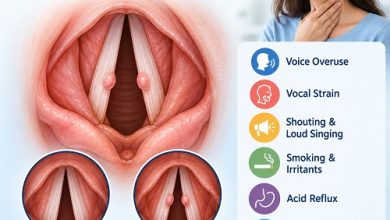
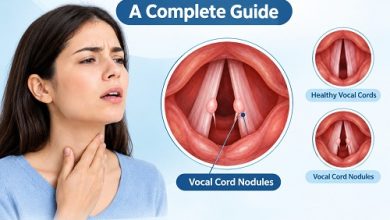
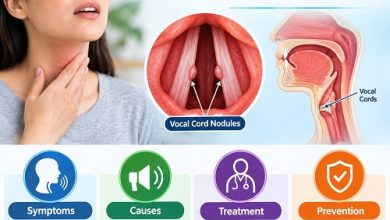
What Are Vocal Cord Nodules? Vocal cord nodules are small, benign growths that develop on the vocal folds, commonly known as the vocal cords. These two bands of tissue are located inside the larynx, or voice box, and vibrate as air passes through them to produce sound.
When you speak or sing, your vocal folds come together and vibrate rapidly. Repeated excessive pressure, shouting, or inefficient voice use can irritate the tissue. Over time, this repeated friction may contribute to the formation of small, callus-like nodules.
Vocal nodules commonly develop on both vocal folds, usually in corresponding areas where the folds make contact during speech. They are not cancerous, but they can interfere with normal vibration and affect voice quality.
People who regularly rely on their voices may be more likely to develop this condition. Teachers, singers, coaches, call-center employees, public speakers, and children who frequently shout or scream may be at increased risk.
The good news is that many vocal nodules can be managed with appropriate voice therapy, changes in vocal habits, and treatment of contributing conditions.
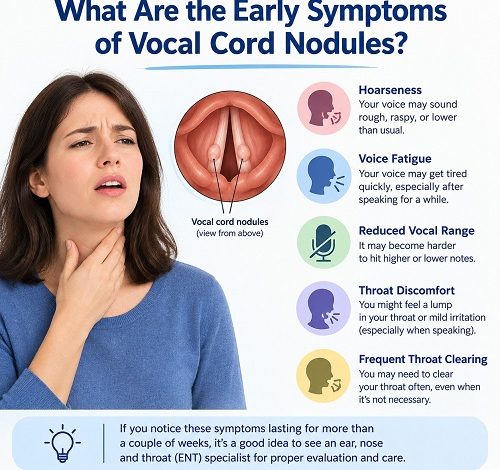
What Are the Early Symptoms of Vocal Cord Nodules?
The early symptoms of vocal cord nodules often develop gradually. You might initially notice that your voice sounds different after a long conversation or that singing requires more effort than usual.
The symptoms can vary depending on the size of the nodules, the amount of vocal strain, and how frequently you use your voice.
1. Persistent Hoarse Voice
One of the most recognizable early signs is a hoarse voice. Your voice may sound rough, raspy, husky, or less clear than usual.
Hoarseness occurs because nodules can interfere with the smooth vibration and closure of the vocal folds. Instead of producing a clear, consistent sound, the folds may vibrate irregularly or allow air to escape.
You might notice that your voice sounds normal in the morning but becomes rougher as the day progresses. It may also become more noticeable after teaching, singing, speaking loudly, or participating in a long meeting.
A hoarse voice does not automatically mean you have vocal nodules. Colds, allergies, acid reflux, and other conditions can cause similar changes. However, hoarseness that persists or repeatedly returns should not be ignored.
2. Vocal Fatigue After Speaking
Another important symptom is vocal fatigue. This means your voice feels tired after activities that previously seemed effortless.
For example, you may find that speaking for an hour leaves your voice weak or strained. You might need more effort to finish sentences, or your voice may become less reliable during conversations.
Vocal fatigue can occur when the vocal folds are not vibrating efficiently. You may unconsciously push your voice harder to compensate, creating additional strain.
People who work in teaching, customer service, sales, or public speaking may initially attribute this fatigue to a demanding schedule. If it happens regularly, particularly alongside hoarseness, it is worth discussing with an ear, nose, and throat (ENT) specialist.
3. A Raspy, Scratchy, or Breathier Voice
Changes in voice quality are among the common Vocal cord nodules symptoms.
Your voice may sound rough, scratchy, airy, or breathy. Someone listening to you may notice that your speech lacks its usual clarity or strength.
A breathy voice occurs when air escapes through the vocal folds instead of being converted efficiently into sound. Nodules can affect how completely the folds meet and how smoothly they vibrate.
You may also notice that your voice sounds weaker during telephone conversations or that people frequently ask you to repeat yourself.
These changes can develop slowly, making them easy to overlook. Paying attention to persistent differences from your normal voice can help you recognize when an evaluation may be necessary.
4. Difficulty Reaching High or Low Notes
For singers, musicians, and people who regularly use different vocal pitches, a reduced vocal range may be an early warning sign.
You might struggle to reach high notes that once felt comfortable, experience difficulty singing softly, or find that certain parts of your range sound unstable.
Your voice may crack when moving between notes, or you may need additional effort to maintain a particular pitch.
These difficulties can occur because nodules interfere with the flexibility and vibration of the vocal folds. Although singers often notice this problem first, people who do not sing professionally may also experience changes in their speaking pitch.
If your vocal range changes unexpectedly and the problem persists, consider arranging an assessment rather than repeatedly forcing your voice to reach difficult notes.
5. Voice Cracking or Breaking
Another possible symptom is an unpredictable voice that cracks, breaks, or changes pitch during speech.
You may notice that your voice becomes unstable when speaking for a long time, projecting across a room, or moving between different pitches.
Voice breaks can happen when the vocal folds do not vibrate consistently. You might also feel that certain words require extra effort or that your voice occasionally disappears in the middle of a sentence.
Although occasional voice cracking can have many causes, frequent or persistent changes accompanied by hoarseness may indicate an underlying voice disorder.
6. Increased Effort When Speaking or Singing
People with developing vocal problems sometimes feel that they must push harder to produce their usual sound.
You may raise your volume, tighten your throat, or use more breath than normal to make your voice audible. Speaking over background noise may become especially difficult.
Unfortunately, forcing your voice can increase the pressure on the vocal folds and potentially worsen irritation.
If speaking begins to feel like hard work, try to reduce unnecessary vocal strain rather than compensating by shouting or speaking more forcefully.
7. Frequent Throat Clearing or Coughing
Repeated throat clearing is another symptom that can accompany vocal fold irritation.
You may feel as though mucus is stuck in your throat or that you need to clear your voice before speaking. Some people develop a persistent urge to cough or clear their throat throughout the day.
However, these symptoms are not specific to vocal nodules. Allergies, postnasal drip, respiratory infections, dry air, and acid reflux can also cause them.
Frequent throat clearing can itself irritate the vocal folds. Instead, when appropriate, try taking a sip of water or swallowing gently. If the urge persists, seek medical advice to identify its underlying cause.
8. A Sensation of Tightness or a Lump in the Throat
Some people with voice disorders describe a feeling of tightness, discomfort, or a lump in the throat when speaking.
You may notice this sensation more during prolonged conversations or when attempting to project your voice.
The sensation can be related to muscle tension, irritation, reflux, or other throat conditions. It does not confirm the presence of vocal nodules, and many people with nodules experience no throat pain at all.
If you regularly experience discomfort while using your voice, a medical evaluation can help identify the cause and determine whether voice therapy or another treatment is appropriate.
What Causes Vocal Cord Nodules?
Vocal cord nodules most often develop in association with repeated vocal strain or inefficient voice use over time.
Common contributing factors include:
- Frequent shouting or yelling: Repeatedly using a loud voice can place excessive pressure on the vocal folds.
- Prolonged speaking: Talking for hours without adequate breaks may contribute to vocal fatigue and irritation.
- Intensive singing: Singing with poor technique, especially at extreme pitches or high volumes, can increase vocal strain.
- Poor vocal technique: Speaking from excessive throat tension or using an inefficient breathing pattern may contribute to voice problems.
- Smoking and irritants: Tobacco smoke and other airborne irritants can affect the health of the larynx.
- Acid reflux: Reflux can irritate the throat and may aggravate existing voice symptoms.
- Allergies and respiratory illness: Inflammation, coughing, and throat irritation may worsen vocal difficulties.
Not everyone who uses their voice extensively develops nodules. Individual anatomy, vocal technique, general health, and environmental factors can influence the likelihood of developing a voice disorder.
Who Is at Higher Risk?
Vocal nodules can affect adults and children, but certain groups may be more vulnerable because of frequent or demanding voice use.
Teachers and coaches: Regularly speaking over a noisy classroom or sports environment can strain the voice.
Professional singers and performers: Repeated rehearsals and performances place substantial demands on the vocal folds.
Call-center and customer-service employees: Long periods of continuous speaking may contribute to vocal fatigue.
Public speakers and fitness instructors: Projecting the voice in large rooms or noisy environments can increase vocal effort.
Children who frequently shout: Repeated yelling during play or other activities may contribute to vocal fold irritation.
People with reflux, allergies, or smoking exposure may also experience additional irritation. Recognizing these risk factors can help you make informed changes to your daily vocal habits.
How Are Vocal Cord Nodules Diagnosed?
Symptoms alone cannot confirm that you have vocal nodules. Several voice conditions cause similar problems, so an examination by a qualified healthcare professional is important.
An ENT specialist, particularly a laryngologist who specializes in voice disorders, may ask about your symptoms, occupation, vocal habits, medical history, and how long the changes have lasted.
The specialist may recommend one or more of the following examinations.
Laryngoscopy: A thin viewing instrument with a light and camera is used to examine the larynx and vocal folds.
Videostroboscopy: A specialized light and camera system helps the clinician assess vocal fold vibration and identify abnormalities that may not be obvious during a routine examination.
These procedures allow the clinician to look directly at the vocal folds and determine whether nodules or another condition may be responsible for your symptoms.
Persistent hoarseness should not automatically be attributed to vocal overuse. Other possible causes include inflammation, vocal fold paralysis, polyps, cysts, and, less commonly, cancer.
How Are Vocal Cord Nodules Treated?
Treatment depends on the diagnosis, the severity of symptoms, and the demands placed on your voice. Many people improve with nonsurgical treatment.
Voice Therapy
Voice therapy, usually provided by a speech-language pathologist with experience in voice disorders, is a common first-line treatment.
Therapy may help you develop more efficient breathing and speaking techniques, reduce excessive throat tension, improve vocal coordination, and avoid habits that place unnecessary stress on the vocal folds.
Your therapist may also help you adapt your voice use to the demands of your job or singing practice.
Vocal Rest and Healthy Voice Habits
Reducing unnecessary voice use can help the vocal folds recover. Your clinician may recommend a period of relative voice rest, meaning you avoid shouting, prolonged conversations, and strenuous singing.
Follow professional advice about voice rest. Do not assume that prolonged complete silence is always necessary, and avoid whispering if it causes additional strain.
Other helpful habits include:
- Drinking enough water throughout the day.
- Taking regular breaks during long speaking sessions.
- Using a microphone when addressing large groups.
- Avoiding shouting over music or background noise.
- Using a comfortable speaking pitch and volume.
- Avoiding smoking and exposure to irritating fumes.
- Managing allergies or reflux with appropriate medical guidance.
Medical Treatment and Surgery
If allergies, reflux, or another medical condition contributes to irritation, your healthcare professional may recommend treatment for that problem.
Surgery is not usually the first treatment for typical vocal nodules. It may be considered in selected cases when a confirmed lesion persists and continues to cause significant problems despite appropriate conservative management.
The treatment plan should be based on direct examination rather than symptoms alone.
Natural Treatment for Vocal Cord Nodules
Vocal cord nodules are small, noncancerous growths that develop on the vocal cords, often due to excessive voice use, shouting, or improper speaking techniques. They can cause hoarseness, vocal fatigue, and difficulty speaking clearly. Fortunately, several Natural Remedies for Vocal Cord Nodules may help soothe the throat and support vocal recovery.
Effective Natural Remedies
- Rest Your Voice: Reducing unnecessary talking, shouting, and singing gives your vocal cords time to recover. Avoid whispering, as it can also strain your voice.
- Stay Hydrated: Drinking plenty of water helps keep your vocal cords hydrated and supports healthy voice function. Warm water and caffeine-free herbal teas may soothe throat discomfort.
- Use Humidified Air: A humidifier can help relieve dryness and irritation in your throat, especially in dry environments.
- Avoid Irritants: Smoking, secondhand smoke, and excessive alcohol consumption can irritate the throat. Limiting these irritants may support vocal health.
- Practice Healthy Voice Techniques: Gentle vocal exercises guided by a speech-language pathologist can help reduce strain and improve voice quality.
When Should You See a Doctor?
Arrange an appointment with an ENT specialist if you experience persistent hoarseness, recurring voice changes, reduced vocal range, or difficulty speaking comfortably.
A commonly recommended threshold is hoarseness lasting more than two to four weeks, although people with concerning symptoms or significant risk factors may need evaluation sooner. Professional voice users should seek advice promptly when a persistent change threatens their ability to work.
Seek urgent medical care if you experience difficulty breathing, noisy breathing, or rapidly worsening throat symptoms. Sudden voice loss during strenuous vocal use also warrants prompt assessment and strict avoidance of further vocal strain until you receive medical advice.
Early evaluation can help identify the cause of your symptoms and prevent inappropriate self-treatment.
Can Vocal Cord Nodules Be Prevented?
You may reduce the risk of vocal strain by developing consistent voice-care habits.
Warm up gently before demanding singing sessions, increase vocal workload gradually, and take breaks during prolonged speaking. Avoid shouting when possible, and use amplification when speaking to large groups.
Maintain adequate hydration and address persistent coughing, allergies, or reflux with professional guidance. If you regularly experience vocal fatigue, consider working with a voice therapist to improve your speaking or singing technique.
Most importantly, pay attention to changes in your voice. A persistent hoarse voice or repeated loss of vocal range is a reason to reassess your habits and seek professional advice.
Frequently Asked Questions
What is the first symptom of vocal cord nodules?
Persistent hoarseness or a raspy voice is often one of the earliest symptoms. Some people initially notice vocal fatigue or difficulty reaching high notes.
Can vocal cord nodules go away on their own?
Some nodules improve with reduced vocal strain and appropriate voice care. Voice therapy may be needed to address the habits contributing to the problem. Recovery varies, so persistent symptoms should be evaluated by a specialist.
Are vocal cord nodules dangerous?
Vocal cord nodules are benign, meaning they are not cancerous. However, they can affect communication and vocal performance. Persistent hoarseness should still be examined because other conditions can produce similar symptoms.
Does a hoarse voice always mean vocal nodules?
No. Hoarseness can result from infections, allergies, reflux, vocal strain, and other conditions. Only an appropriate clinical evaluation can determine the underlying cause.
Can I continue singing if I have vocal nodules?
You should avoid strenuous singing or forcing difficult notes until you have received appropriate advice. A voice specialist can help you determine what level of vocal activity is safe during recovery.
Conclusion
Recognizing the early symptoms of vocal cord nodules can help you protect your voice before a minor problem becomes a persistent obstacle. Common warning signs include hoarseness, vocal fatigue, a raspy or breathy voice, voice cracking, increased speaking effort, and difficulty reaching certain notes.
Although these symptoms can occur for many reasons, ongoing voice changes deserve professional attention. An ENT specialist can examine your vocal folds, establish the likely cause, and recommend appropriate treatment.
With early assessment, healthier vocal habits, and voice therapy when needed, many people can improve their voice function and reduce the risk of further strain. If your voice has remained hoarse for several weeks, do not rely on self-diagnosis. Arrange an evaluation to understand what is happening and find the right path toward recovery.
Medical disclaimer
This article is for educational purposes only and does not replace professional medical advice, diagnosis, or treatment.