
Your voice is an important part of how you communicate, express emotions and connect with other people. Whether you speak throughout the day, sing professionally or simply enjoy conversations, changes in your voice can affect your confidence and daily life. If your voice has become rough, weak or unusually breathy, you may wonder whether the problem will ever go away.
Vocal cord nodules voice changes can range from mild, temporary hoarseness to persistent difficulties with speaking and singing. The good news is that many people experience significant improvement with appropriate treatment, vocal care and changes in the habits that place excessive strain on their voices.
However, recovery depends on several factors, including the size and duration of the nodules, the amount of vocal strain involved and whether other conditions affect the vocal folds. Some people need more extensive treatment if the problem persists. How vocal cord nodules affect voice quality, whether the changes can become permanent, which treatments may help and when to seek professional advice.
What Are Vocal Cord Nodules?
What Are Vocal Cord Nodules? Vocal cord nodules, also called vocal fold nodules, are small, benign growths that develop on the vocal folds inside the larynx, commonly known as the voice box.
Your vocal folds are two flexible bands of tissue that vibrate as air passes through them from your lungs. These vibrations produce the sound you use when speaking or singing. Your brain, breathing muscles and vocal muscles work together to control pitch, loudness and voice quality.
When you repeatedly strain your voice, the vocal folds can experience irritation and tissue changes. Over time, this repeated mechanical stress may contribute to the development of nodules.
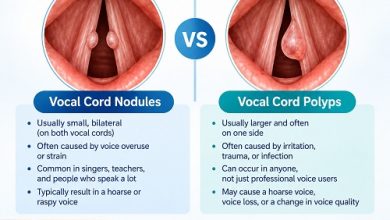
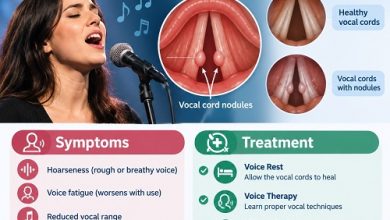
Nodules often form on both vocal folds at corresponding points where the tissues repeatedly make contact. They are generally non-cancerous, but they can interfere with the smooth vibration needed to produce a clear voice.
Common Vocal cord nodules symptoms include:
- Persistent hoarseness or a raspy voice.
- A rough, breathy or weak speaking voice.
- Vocal fatigue after talking for a short period.
- Difficulty reaching high notes when singing.
- A reduced vocal range.
- Frequent throat clearing.
- A feeling of effort when speaking.
- A voice that becomes worse after prolonged use.
These symptoms can overlap with other voice disorders, so a medical assessment is important to confirm the cause.
How Do Vocal Cord Nodules Change Your Voice?
Vocal cord nodules affect the way the vocal folds meet and vibrate. Healthy vocal folds usually come together and separate in a coordinated pattern. Nodules can prevent them from closing completely or vibrating evenly.
As a result, your voice may sound different from its usual quality.
1. A persistent raspy voice
A raspy voice is one of the most noticeable symptoms of vocal cord nodules. You may sound rough, hoarse or strained, even when you are not experiencing a cold or another respiratory infection.
The nodules interfere with the regular vibration of the vocal folds. Air may escape through a small gap when you speak, creating a breathy or rough sound.
Your voice may also deteriorate after a busy day of speaking, teaching, telephone conversations or singing.
A raspy voice does not automatically mean that you have nodules. Vocal fold swelling, inflammation, muscle tension, reflux and other conditions can cause similar symptoms.
2. Vocal range loss
People who sing or use their voices professionally may notice that certain notes become difficult to produce.
Vocal range loss can occur because nodules interfere with the fine adjustments required to change pitch. High notes may become particularly challenging, although the effects vary from person to person.
You might notice that:
- You can no longer reach notes that were previously comfortable.
- Your voice cracks when you move between pitches.
- Singing requires more effort than before.
- Your upper register sounds breathy or unstable.
- Your voice tires more quickly during rehearsals.
These changes can be frustrating, especially if singing is part of your work or a valued hobby. They do not necessarily mean that your vocal range has been permanently damaged. Many people improve when the nodules and the habits contributing to them are appropriately managed.
3. A weaker or breathier speaking voice
Nodules may stop the vocal folds from closing completely during speech. This can allow air to escape, making your voice sound weak, airy or less powerful.
You may find yourself speaking more loudly to compensate, which can increase strain and worsen symptoms.
If you regularly need to raise your voice in noisy environments, take breaks and use amplification when practical rather than forcing your voice to compete with background noise.
4. Vocal fatigue
Vocal fatigue occurs when speaking or singing becomes tiring. You might notice discomfort, increased effort or a decline in voice quality after a relatively short period of talking.
You may also feel that your voice works well in the morning but becomes rough or weak later in the day.
Fatigue can encourage compensatory habits, such as pushing air harder through the vocal folds or tightening the muscles in your throat. These habits may add to the strain that contributed to the original problem.
Recognising fatigue early and adjusting your vocal use can support recovery.
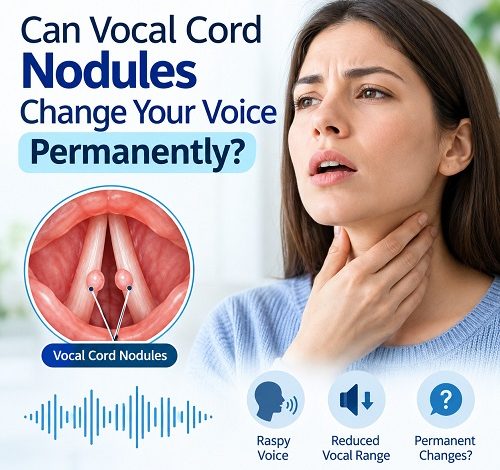
Can Vocal Cord Nodules Change Your Voice Permanently?
The answer is yes, long-lasting voice changes are possible, but permanent damage is not inevitable. Many vocal cord nodules improve with appropriate voice therapy and changes to the habits that strain the vocal folds. Some people regain a voice that sounds and functions much like it did before symptoms developed.
The long-term outcome depends on the nature of the tissue changes, the duration of the problem and how consistently you follow your treatment plan.
When voice changes are likely to improve
Your voice may improve considerably when nodules are identified early and the repeated strain that contributed to them is reduced.
For example, a teacher who frequently shouts over a noisy classroom may benefit from voice therapy, better classroom acoustics and using a microphone. A singer may need to adjust vocal technique, reduce demanding rehearsals temporarily and allow adequate recovery between performances.
As the vocal folds become less irritated and work more efficiently, hoarseness and vocal fatigue may lessen. Your singing range and ability to sustain notes may also improve, although the speed and extent of recovery differ between individuals.
When voice changes may last longer
Persistent symptoms are more concerning when nodules have been present for a long time, vocal strain continues or the vocal folds have developed more established tissue changes.
Repeated injury can contribute to ongoing swelling, stiffness and inefficient vibration. Even if the original nodules improve, learned habits such as excessive throat tension or forcing the voice may continue to affect its sound.
In some cases, the Vocal Cord Nodules diagnosis may also involve another vocal fold condition, such as a cyst, polyp or scar, rather than nodules alone. These conditions can require different management.
It is not possible to predict permanent voice damage from symptoms alone. An ear, nose and throat (ENT) specialist can examine the vocal folds and assess what is affecting your voice.
What Causes Vocal Cord Nodules to Develop?
The Vocal Cord Nodules Causes helps you protect your voice during recovery and reduce the risk of recurrence.
1. Excessive speaking
Speaking for hours without adequate breaks can place repeated mechanical stress on the vocal folds. Teachers, call-centre workers, coaches, tour guides and customer service professionals may be particularly affected if their jobs involve continuous speaking.
The risk can increase when you speak loudly or compete with background noise.
2. Shouting and screaming
Sudden or repeated shouting increases the force with which the vocal folds come together. Frequent episodes can irritate the tissue and contribute to voice problems.
Try to avoid shouting across rooms, at sporting events or in crowded environments. Moving closer to the person you are speaking to can reduce the need to raise your voice.
3. Incorrect singing technique
Singing at an uncomfortable pitch, forcing high notes or using excessive vocal pressure may strain the vocal folds.
Singers should pay attention to persistent changes in tone, difficulty with transitions between registers and a reduction in comfortable vocal range. A qualified singing teacher and voice-specialist speech and language therapist can help identify harmful techniques.
4. Frequent coughing and throat clearing
Repeated coughing and forceful throat clearing can bring the vocal folds together abruptly. If these habits occur frequently, they may aggravate existing irritation.
If you regularly clear your throat, discuss possible causes such as allergies, nasal irritation, reflux or other respiratory conditions with a healthcare professional.
5. Smoking and environmental irritants
Tobacco smoke and other irritants can inflame the larynx and worsen voice symptoms. Dust, chemical fumes and dry environments may also aggravate discomfort.
Avoid smoking, minimise exposure to irritants and improve ventilation where possible. These steps support vocal health but do not replace an assessment when hoarseness persists.
How Are Vocal Cord Nodules Diagnosed?
An ENT specialist, ideally a laryngologist with expertise in voice disorders, can assess persistent changes in voice quality.
The clinician will usually ask about your symptoms, work, singing habits, smoking exposure, medical history and how long your voice has been affected.
Laryngoscopy
Laryngoscopy allows a clinician to view the larynx and vocal folds using a small camera or viewing instrument. A flexible scope may pass through the nose, while another method uses a rigid scope through the mouth.
This examination helps identify nodules and distinguish them from other possible causes of hoarseness.
Videostroboscopy
A specialist may use videostroboscopy to assess vocal fold vibration in greater detail. It uses a flashing light to create a view of the folds’ vibratory movement during phonation.
This can help identify abnormalities in vibration and closure that may explain a raspy voice or vocal range loss.
Correct diagnosis matters because not every persistent voice change is caused by nodules, and treatment depends on the underlying problem.
Merck Manual Professional Edition+1
What Treatments Can Help Restore Your Voice?
Vocal Cord Nodules Treatment generally begins with approaches that reduce vocal strain and improve how you use your voice. Surgery is not usually the first option for typical vocal fold nodules.
1. Voice therapy
Voice therapy is a central part of treatment. A speech and language therapist or speech-language pathologist with specialist voice training can assess your vocal habits and develop an individual programme.
Therapy may focus on:
- Improving breathing and breath support during speech.
- Reducing excessive pressure on the vocal folds.
- Finding a comfortable pitch and speaking volume.
- Reducing unnecessary tension in the throat, jaw and neck.
- Practising efficient vocal exercises.
- Developing a sustainable routine for work, speaking or singing.
The aim is not simply to make the voice sound better temporarily. Therapy also helps you develop habits that reduce repeated injury and support long-term vocal function. Research has found that improvements following voice treatment can be maintained over time.
2. Adjusting your vocal habits
Treatment works best when you address the activities that contribute to the problem.
Consider taking regular speaking breaks, reducing unnecessary shouting and using a microphone if your job requires you to address a large group. If you sing, avoid pushing through pain, strain or persistent hoarseness.
Do not attempt to force your voice back to its previous range through repeated high notes or strenuous exercises. Ask your voice specialist when and how to resume demanding vocal activities.
3. Appropriate voice rest
Reducing vocal use can help irritated tissues recover, particularly when your symptoms worsen after prolonged speaking.
However, prolonged or complete voice rest is not necessary for everyone. The appropriate amount depends on your condition and your clinician’s advice. Whispering can also place strain on the voice in some circumstances, so it is not automatically a safer alternative to normal speech.
Follow your treatment plan rather than relying on rest alone. If your voice repeatedly becomes raspy as soon as you resume normal activities, you may need to change the way you use it.
4. Managing contributing health conditions
Allergies, nasal inflammation, chronic coughing and reflux symptoms may contribute to laryngeal irritation in some people.
A healthcare professional can assess whether one of these conditions is present and recommend appropriate treatment. Do not assume that reflux is the cause of every voice problem or start long-term medication without an appropriate assessment.
5. Surgery
Surgery may be considered if significant symptoms persist despite appropriate conservative treatment and the specialist determines that removing the nodules is likely to help.
Vocal fold surgery requires precision because even small injuries to the delicate vibrating tissue can affect voice quality. Your specialist will weigh the likely benefits against the risks, especially if your livelihood depends on singing or speaking.
Voice therapy may still be necessary before or after surgery to improve vocal technique and reduce the risk of further injury.
Surgery is not a guarantee of complete recovery, and removing the nodules without addressing the habits that caused them can leave you vulnerable to recurrence.
Natural Treatment for Vocal Cord Nodules
Vocal cord nodules are small, non-cancerous growths that develop on the vocal cords, often because of excessive voice use, shouting, or repeated vocal strain. They may cause hoarseness, a raspy voice, vocal fatigue, and difficulty speaking clearly. Although natural approaches can support vocal health, professional assessment is important for effective management.
Natural Remedies for Vocal Cord Nodules
Several lifestyle changes can help reduce vocal strain and support recovery. Voice rest is one of the most important steps. Avoid shouting, prolonged conversations, and whispering, as whispering can also strain the voice.
Drink plenty of water throughout the day to keep your throat hydrated. Warm, caffeine-free drinks may soothe throat discomfort, while a humidifier can help maintain moisture in dry indoor environments.
Avoid smoking and irritants, including cigarette smoke, dust, and strong chemical fumes. If acid reflux contributes to throat irritation, consider avoiding large meals before bedtime and discuss suitable treatment with a healthcare professional.
Gentle breathing exercises and guidance from a qualified speech and language therapist may also help improve vocal technique and reduce unnecessary strain.
While these Natural Remedies for Vocal Cord Nodules may support vocal comfort, they cannot guarantee that existing nodules will disappear. Consult an ear, nose and throat (ENT) specialist for diagnosis and personalised advice, particularly if hoarseness persists for more than three weeks.
How Long Does It Take for Your Voice to Recover?
Recovery varies according to the severity of the condition, the treatment used and whether you continue to strain your voice.
Some people notice gradual improvement over several weeks, while others require a longer period of voice therapy and follow-up. Cleveland Clinic notes that vocal cord lesions, including nodules, may improve over approximately two to six months with voice therapy or vocal rest. This is a general guide, not a guaranteed recovery timeline for every person.
During recovery, you may notice that your speaking voice improves before your singing voice returns to its previous range. This does not necessarily mean that treatment has failed. Singing places different demands on pitch control and vocal endurance.
Keep track of changes in your voice, including how long you can speak comfortably, whether hoarseness worsens during the day and which singing notes remain difficult. Share these observations with your clinician or voice therapist.
Avoid comparing your progress with someone else’s experience. Your treatment plan should reflect your own vocal needs and examination findings.
Daily Tips to Protect Your Voice
Good vocal habits can support treatment and reduce the likelihood of further irritation.
- Drink enough water: Maintain normal hydration throughout the day, particularly during prolonged speaking or singing.
- Take regular breaks: Give your voice recovery time during demanding workdays.
- Avoid shouting: Move closer to listeners or use amplification in noisy environments.
- Do not force high notes: Return to challenging singing gradually, with professional guidance.
- Avoid smoking: Tobacco smoke can irritate the larynx and contribute to other serious health problems.
- Address persistent coughing: Seek advice about allergies, reflux or other possible causes.
- Get adequate sleep: Fatigue can make it harder to maintain efficient vocal technique.
- Follow your therapy programme: Practise only the exercises recommended by your voice specialist.
- Monitor recurring symptoms: Arrange a reassessment if hoarseness returns or fails to improve.
These measures support vocal health but cannot guarantee that nodules will disappear. They work best alongside an accurate diagnosis and an appropriate treatment plan.
When Should You See a Doctor?
Do not ignore persistent hoarseness simply because you suspect vocal cord nodules.
Arrange an assessment if your voice remains hoarse for more than two to three weeks, particularly if there is no obvious temporary cause or the problem keeps returning. An earlier assessment may be appropriate if you smoke, use your voice professionally or have other concerning symptoms.
Seek urgent medical attention if you develop difficulty breathing, noisy breathing or significant difficulty swallowing. Sudden voice loss during strenuous singing or shouting also needs prompt medical assessment because it can indicate a vocal fold haemorrhage.
An ENT specialist can determine whether the problem involves nodules or another condition and recommend the right treatment.
Frequently Asked Questions
1. Can vocal cord nodules permanently damage your voice?
They can contribute to long-lasting voice problems if vocal injury continues or tissue changes become established. However, many people improve with voice therapy and changes to their vocal habits. An examination is needed to assess your individual prognosis.
2. Will my raspy voice go away after treatment?
A raspy voice may improve as the vocal folds recover and vibrate more efficiently. The outcome depends on the cause of the hoarseness, the condition of the vocal folds and how well contributing factors are managed.
3. Can vocal cord nodules cause vocal range loss?
Yes. Nodules can interfere with the vibration and closure of the vocal folds, making some notes harder to produce. Your range may improve with appropriate treatment, although recovery varies.
4. Can I continue singing if I have vocal cord nodules?
You may need to reduce or temporarily modify singing while your voice recovers. Avoid forcing notes or practising through persistent hoarseness. Ask an ENT specialist and a voice therapist when it is safe to resume demanding singing.
5. Do vocal cord nodules always require surgery?
No. Voice therapy and changes to vocal habits are often the initial treatments. Surgery is considered selectively when symptoms persist and the specialist believes it is appropriate.
6. Can vocal cord nodules come back?
Yes. Nodules may recur if the habits or circumstances that contributed to them remain unchanged. Ongoing vocal care and appropriate voice therapy can help reduce the risk.
Conclusion
Vocal cord nodules voice changes do not automatically mean that your voice is damaged permanently. Although nodules can cause a raspy voice, vocal fatigue and vocal range loss, many people experience meaningful improvement with early assessment, appropriate voice therapy and better vocal habits.
The most important step is to identify the cause of your symptoms rather than trying to treat hoarseness on your own. If your voice remains rough, weak or difficult to control, consult an ENT specialist who can examine your vocal folds and guide your recovery.
Protecting your voice involves more than resting when it feels tired. Learning to use it efficiently, addressing contributing health conditions and following professional advice can help you maintain a healthier voice over the long term.
Medical disclaimer:
This article is for general educational purposes only and does not replace professional medical advice, diagnosis or treatment. Persistent voice changes should be assessed by a qualified healthcare professional.
Medical references
Use these reputable medical sources to support the article’s medical information.
- Cleveland Clinic — Vocal Cord Lesions: Nodules, Polyps and Cysts.
Read the clinical overview. - National Center for Biotechnology Information (NCBI), InformedHealth.org — Overview: Vocal Nodules.
Read the evidence-based overview. - Merck Manual Professional Edition — Vocal Fold Polyps, Nodules, and Granulomas.
Read the professional medical reference. - American Speech-Language-Hearing Association (ASHA) — Voice Disorders.
Read the voice-disorders practice guidance. - Alberta Health Services — Vocal Nodules.
Read the patient guidance. - PubMed — Long-term effects of an intensive voice treatment for vocal fold nodules.
Read the published research.