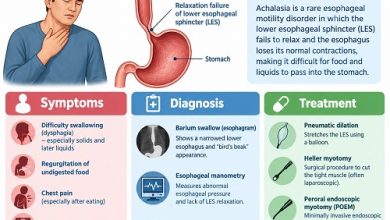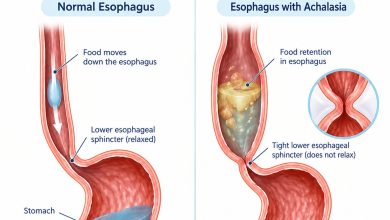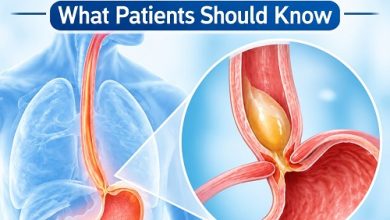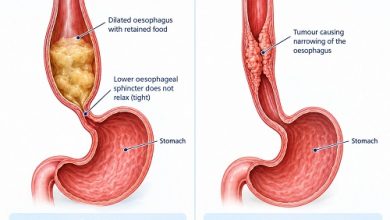

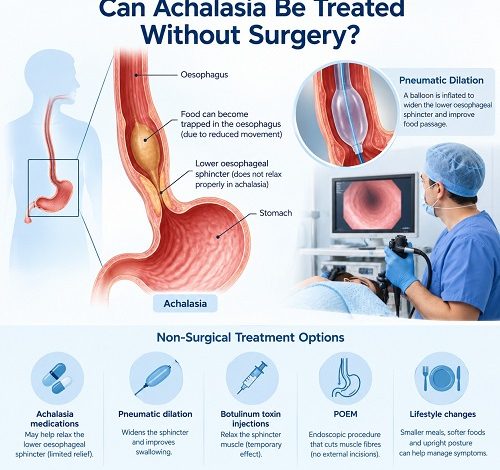
Achalasia is a rare disorder of the oesophagus that makes swallowing food and liquids difficult. It occurs when the muscles of the oesophagus do not move food towards the stomach properly and the lower oesophageal sphincter (the muscular valve between the oesophagus and stomach) fails to relax as it should. This can cause food to remain in the oesophagus, leading to swallowing difficulties, regurgitation, chest discomfort and weight loss.
Many people diagnosed with achalasia want to know whether they can manage the condition without undergoing an operation. The good news is that achalasia treatment without surgery is possible in selected cases, although the most suitable approach depends on the severity of symptoms, the type of achalasia and a person’s overall health.
Non-surgical options include medicines, pneumatic dilation and endoscopic treatments such as botulinum toxin injections. These approaches do not all work equally well, and some provide temporary relief rather than a long-term solution.
This guide explains the available options, how they work, their potential benefits and limitations, and when medical intervention may be necessary.
What Is Achalasia?
What Is Achalasia? Achalasia is a condition in which the oesophagus has difficulty moving swallowed food into the stomach. Normally, coordinated muscle contractions push food downwards while the lower oesophageal sphincter relaxes to allow it to pass through.
In people with achalasia, these movements become impaired. The exact cause is not fully understood, but the condition is associated with damage to nerve cells that control oesophageal movement.
Common Achalasia symptoms include:
- Difficulty swallowing solid foods and liquids.
- Regurgitation of undigested food.
- Chest pain or discomfort, particularly after eating.
- A sensation that food is stuck in the chest.
- Coughing, especially at night.
- Unintentional weight loss.
- Heartburn-like symptoms.
These Achalasia symptoms can resemble gastro-oesophageal reflux disease (GERD) and other digestive conditions. A gastroenterologist may recommend tests such as oesophageal manometry, an upper gastrointestinal endoscopy or a barium swallow to confirm the diagnosis and rule out other causes.
Can Achalasia Be Treated Without Surgery?
Yes, several treatment options can help manage achalasia without conventional surgery. However, it is important to understand that these treatments mainly aim to improve the passage of food through the lower oesophageal sphincter. They do not reliably restore the damaged nerve function responsible for the condition.
The most appropriate treatment depends on symptom severity, manometry findings, the type of achalasia, age, general health and personal preferences.
The main options for achalasia treatment without surgery include:
- Prescription medicines that relax the lower oesophageal sphincter.
- Pneumatic dilation to widen the sphincter.
- Botulinum toxin injections delivered during endoscopy.
- Peroral endoscopic myotomy (POEM), an endoscopic procedure that does not require external surgical incisions.
- Dietary adjustments and supportive measures to help reduce symptoms.
Not every option is suitable for every patient. A specialist should explain the expected benefits, risks and likelihood of needing further treatment.
1. Achalasia Medications
Medicines may help some people experience temporary relief from swallowing difficulties and chest discomfort. However, achalasia medications generally have limited effectiveness and are not usually the preferred long-term treatment when symptoms significantly affect eating.
Calcium channel blockers
Medicines such as nifedipine can relax smooth muscle and may reduce pressure in the lower oesophageal sphincter. In selected patients, this can make it easier for food to pass into the stomach.
However, their effects may be short-lived, and side effects can include dizziness, headache and low blood pressure. They are not suitable for everyone.
Nitrates
Certain nitrate medicines can also relax the lower oesophageal sphincter. A specialist may consider them in selected circumstances, particularly when more effective treatments are unsuitable or unavailable.
Potential side effects include headaches, dizziness and low blood pressure. Nitrates can also interact dangerously with certain medicines, including erectile dysfunction medicines.
Are medications enough?
For some people with mild symptoms or significant medical conditions that make procedures difficult, medication may provide limited symptom relief. Nevertheless, medicines usually do not offer the same durable improvement as effective sphincter-directed treatments.
Do not start prescription medicines or change an existing treatment plan without consulting your healthcare professional.
2. Pneumatic Dilation
Pneumatic dilation is an established non-surgical treatment for achalasia. It uses a specialised balloon inserted through the mouth into the oesophagus during an endoscopic procedure.
The balloon is positioned at the lower oesophageal sphincter and inflated under controlled conditions. This stretches and partially disrupts the muscle fibres, reducing resistance and allowing food and liquids to pass more easily into the stomach.
How does pneumatic dilation work?
The procedure generally involves the following steps:
- A healthcare team provides appropriate sedation or anaesthesia.
- An endoscope or imaging guidance helps position the balloon.
- The balloon is inflated in a controlled manner to widen the sphincter.
- The patient is monitored afterwards for complications and recovery.
Some people experience substantial improvement after one treatment, while others require repeat dilation.
Benefits of pneumatic dilation
Potential benefits include improved swallowing, reduced food regurgitation and better ability to eat. It avoids the external incisions associated with conventional surgery and may provide lasting symptom relief in appropriately selected patients.
Risks and limitations
The most important risk is perforation, meaning a tear in the oesophageal wall. This complication can be serious and may require urgent treatment, including surgery. Other possible complications include chest pain, bleeding and reflux symptoms.
The benefits can diminish over time, and repeat procedures may be necessary. A gastroenterologist should assess whether pneumatic dilation is appropriate based on the patient’s condition and individual risks.
3. Botulinum Toxin Injections
Botulinum toxin injections, commonly called Botox injections, can be used to treat selected people with achalasia. During an endoscopy, a specialist injects the medicine into the lower oesophageal sphincter to reduce muscle contraction.
This can make it easier for food to pass into the stomach.
Who may benefit?
Botulinum toxin injections are often considered for people who are older, medically frail or at increased risk from more invasive procedures. They may also be an option when other treatments are unsuitable.
Benefits and limitations
The procedure is relatively less invasive and can provide symptom relief without conventional Achalasia surgery. However, the effect commonly wears off over time, and repeated injections may be needed.
Botulinum toxin is generally less durable than pneumatic dilation or definitive myotomy procedures. Repeated injections can also complicate subsequent treatment decisions in some circumstances.
Your specialist can explain whether this option is appropriate for your age, symptoms and overall health.
4. Is POEM a Non-Surgical Treatment for Achalasia?
Peroral endoscopic myotomy (POEM) is an advanced endoscopic procedure used to treat achalasia. It is performed through the mouth using an endoscope, so it does not require the external incisions used in conventional surgery.
During POEM, the specialist creates a tunnel within the oesophageal wall and cuts selected muscle fibres to reduce resistance at the lower oesophageal sphincter.
Although POEM is often described as a minimally invasive or non-surgical alternative, it is still a specialised interventional procedure rather than a simple medication-based treatment.
Potential benefits of POEM
POEM can provide substantial and lasting improvement in swallowing for many patients. It is an established treatment for different types of achalasia and may be particularly useful in certain cases, including some patients with type III achalasia.
Important risks
The procedure requires specialist expertise and carries risks, including bleeding, infection, injury to nearby structures and reflux after treatment. Some patients may need long-term monitoring or acid-suppressing medicines.
POEM is not suitable for everyone. A specialist team should discuss its advantages and limitations alongside other available options.
5. Can Lifestyle Changes Treat Achalasia?
Lifestyle changes cannot correct the underlying nerve and muscle dysfunction, but they may help reduce symptoms and make eating more manageable. They are best used alongside medical care rather than as a replacement for effective treatment.
Eat smaller meals
Try eating smaller, more frequent meals instead of large portions. This may reduce discomfort and make it easier to manage symptoms.
Chew food thoroughly
Chew food slowly and thoroughly. Choose textures that are easier to swallow, depending on your individual symptoms and your healthcare professional’s advice.
Drink fluids with meals if appropriate
Some people find that sipping water with food helps it pass through the oesophagus. However, this does not work for everyone, particularly when swallowing liquids is also difficult. Follow your clinician’s advice and do not force fluids if you are struggling to swallow.
Remain upright after eating
Staying upright after meals may help reduce regurgitation. Avoid lying down immediately after eating, and consider elevating the head of your bed if night-time regurgitation is a problem.
Monitor food triggers
Keep a record of foods that worsen your symptoms. You may find that certain textures or meal sizes are harder to manage. A registered dietitian can help you maintain adequate nutrition without unnecessarily restricting your diet.
Protect your nutritional health
Persistent swallowing problems can lead to dehydration, malnutrition and weight loss. Seek professional advice if eating becomes difficult or you notice a significant change in your weight.
6. Can Natural Remedies Cure Achalasia?
People researching achalasia treatment without surgery may also look for herbal supplements, Natural Remedies for Achalasia or dietary approaches. It is important to distinguish between supportive measures and treatments that have been shown to address the underlying condition.
There is currently no reliable clinical evidence that herbal remedies, vitamins, dietary supplements or special diets can reverse achalasia or restore normal oesophageal nerve function.
A balanced diet and appropriate nutritional support may help maintain general health, particularly when swallowing difficulties affect food intake. However, these measures do not replace medical treatment.
Some supplements may interact with prescription medicines or cause unwanted effects. Products marketed for digestive health should not be assumed to treat achalasia simply because they contain natural ingredients.
Before using herbal products or supplements, discuss them with your healthcare professional, especially if you are taking prescription medicines or have difficulty swallowing tablets.
7. Which Non-Surgical Achalasia Treatment Is Best?
There is no single treatment that works best for everyone. The choice depends on individual medical circumstances, the type of achalasia and the expected durability of symptom relief.
In general:
- Medications: May provide limited, short-term relief for selected patients.
- Pneumatic dilation: An established option that can provide meaningful relief, although repeat treatment may be required.
- Botulinum toxin injections: May be useful for people who cannot undergo more definitive treatment, but the effect is often temporary.
- POEM: An endoscopic treatment that can provide durable relief but requires specialised expertise and carries procedural risks.
- Lifestyle measures: Can support eating and nutrition but do not correct the underlying disorder.
A specialist may also discuss laparoscopic Heller myotomy, which is a surgical procedure, depending on the patient’s circumstances. Treatment decisions should be made after confirming the diagnosis and reviewing the available options.
8. When Should You Seek Medical Attention?
Speak to a healthcare professional if you have persistent difficulty swallowing, frequent regurgitation, unexplained weight loss or recurring chest discomfort. These symptoms require assessment because several conditions can cause similar problems.
Seek urgent medical attention if you cannot swallow saliva, food becomes completely stuck, you develop severe chest pain or you experience breathing difficulties. Severe dehydration or an inability to maintain adequate food intake also requires prompt assessment.
People with diagnosed achalasia should attend follow-up appointments, particularly if symptoms return after treatment. Persistent or worsening symptoms may indicate that further investigation or treatment is necessary.
Frequently Asked Questions
Can achalasia go away without treatment?
Achalasia is generally a chronic condition. Symptoms may fluctuate, but the underlying disorder usually does not resolve on its own. Medical assessment is important even if symptoms temporarily improve.
Are achalasia medications effective?
Some medicines can temporarily relax the lower oesophageal sphincter, but their effects are often limited. They are generally less effective than established procedures for providing sustained symptom relief.
Is pneumatic dilation better than medication?
Pneumatic dilation generally offers more substantial and longer-lasting relief than medication for appropriately selected patients. However, it carries procedural risks, including oesophageal perforation, and may require repeat treatment.
Can diet cure achalasia?
No specific diet has been shown to cure achalasia. Eating adjustments may help manage symptoms and support nutrition, but they do not restore normal oesophageal function.
Is POEM considered surgery?
POEM is an endoscopic procedure that avoids external incisions, but it involves cutting muscle fibres within the oesophageal wall. It is therefore better described as a minimally invasive endoscopic intervention rather than a simple non-surgical remedy.
Conclusion
Achalasia treatment without surgery is possible, and several options can improve swallowing and quality of life. Medicines may provide limited relief, while pneumatic dilation and botulinum toxin injections can help selected patients. POEM offers another effective endoscopic option without external surgical incisions.
However, no single approach is appropriate for everyone, and lifestyle changes or natural supplements should not be considered cures. The most suitable treatment depends on the severity of symptoms, the type of achalasia, overall health and individual preferences.
If you have difficulty swallowing or suspect achalasia, consult a gastroenterologist to confirm the diagnosis and discuss the benefits and risks of available treatments. Early assessment can help prevent complications and support better long-term nutrition and wellbeing.
Medical disclaimer
This article is for educational purposes only and does not replace professional medical advice, diagnosis or treatment. Always consult a qualified healthcare professional before starting, stopping or changing treatment.