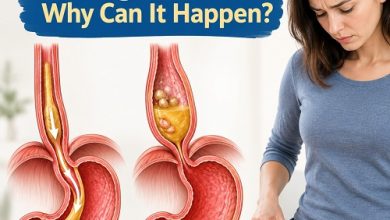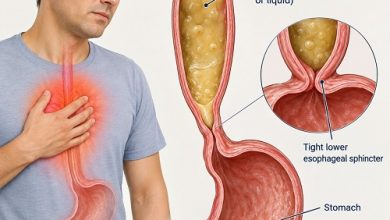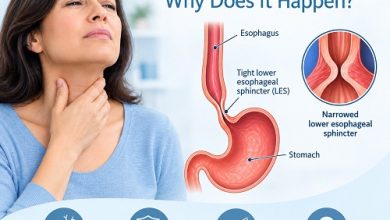

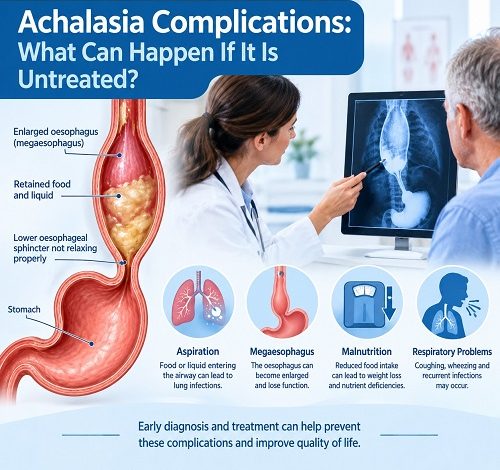
Achalasia is a rare swallowing disorder that affects the oesophagus, the muscular tube that carries food and liquid from the mouth to the stomach. In achalasia, the lower oesophageal sphincter does not relax properly during swallowing, and the normal muscular contractions that move food down the oesophagus can also become impaired.
Because food and liquid may remain in the oesophagus instead of passing normally into the stomach, symptoms can gradually become more noticeable. Difficulty swallowing, regurgitation, chest discomfort, coughing and unintended weight loss are common symptoms of Achalasia. Without appropriate medical assessment and treatment, the condition can lead to several complications.
Knowing about achalasia complications can help you recognise why persistent swallowing difficulties should not be ignored. Complications may develop gradually, particularly when symptoms have been present for a long time. What can happen with untreated achalasia, including aspiration, megaesophagus, malnutrition and other potential problems.
What Is Achalasia?
What Is Achalasia? Achalasia is a disorder of oesophageal movement, also called oesophageal motility. The lower oesophageal sphincter normally opens when you swallow, allowing food and liquid to enter the stomach.
With achalasia, this sphincter fails to relax normally. The oesophageal muscles may also lose their ability to push swallowed material effectively towards the stomach.
As a result, food, saliva and liquid can collect inside the oesophagus.
Common Achalasia symptoms include:
- Difficulty swallowing food and drinks
- Regurgitation of undigested food or liquid
- Chest discomfort or pain
- Coughing, particularly at night
- Heartburn-like symptoms
- Feeling that food is stuck in the chest
- Unintended weight loss
- Difficulty eating normal meals
- Night-time choking or coughing
Symptoms can sometimes be mistaken for acid reflux or other digestive problems. This can delay diagnosis and allow the condition to progress.
Why Can Untreated Achalasia Cause Complications?
The main problem is that swallowed material cannot pass normally into the stomach. When food and liquid repeatedly remain in the oesophagus, the oesophagus can become stretched and enlarged over time.
The retained material can also come back up into the throat or mouth. This is particularly important when lying down because regurgitated food or liquid can enter the airways.
Long-standing achalasia can therefore affect more than swallowing. It can contribute to respiratory problems, nutritional deficiencies and structural changes in the oesophagus.
The severity of complications varies from person to person. Some people have relatively mild symptoms for years, while others develop significant oesophageal enlargement or nutritional problems.
Achalasia Complications to Know About
1. Aspiration
One of the important achalasia complications is aspiration.
Aspiration occurs when food, liquid, saliva or regurgitated stomach contents enter the airway instead of travelling down the digestive tract.
Achalasia can increase this risk because material may remain in the oesophagus and later move upwards into the throat. This can happen during sleep, when swallowing reflexes and protective coughing may be reduced.
Possible signs of aspiration include:
- Coughing while eating or drinking
- Coughing after lying down
- Choking episodes
- Night-time coughing
- Wheezing
- Shortness of breath
- Recurrent chest infections
Repeated aspiration can contribute to aspiration pneumonia, a potentially serious lung infection.
If you regularly wake up coughing or choking, particularly after experiencing regurgitation, discuss these symptoms with a healthcare professional.
2. Megaesophagus
Long-standing achalasia can cause the oesophagus to become progressively enlarged. Severe enlargement is sometimes described as megaesophagus.
The oesophagus may become stretched because food and liquid repeatedly accumulate rather than passing efficiently into the stomach.
An enlarged oesophagus can make swallowing and regurgitation even more troublesome. Some people may experience significant chest pressure, difficulty eating and increased retention of food and liquid.
Megaesophagus represents a more advanced structural consequence of longstanding oesophageal dysfunction. It is one reason why persistent symptoms require proper assessment rather than being left untreated.
Doctors may use investigations such as an upper endoscopy, barium swallow or oesophageal manometry to evaluate the oesophagus and confirm the diagnosis.
3. Malnutrition and Weight Loss
Another important complication is malnutrition.
People with achalasia may gradually reduce their food intake because eating becomes uncomfortable or difficult. Some may avoid certain foods because they feel that these foods become stuck.
When swallowing problems persist, a person may consume fewer calories, protein, vitamins and minerals than their body needs.
This can result in:
- Unintended weight loss
- Weakness
- Fatigue
- Reduced muscle mass
- Nutritional deficiencies
- Poor physical function
The risk can become greater when symptoms are severe or have been present for a long time.
If swallowing difficulties are causing weight loss, nutritional assessment can be an important part of medical care.
4. Regurgitation of Food and Liquid
Regurgitation is different from vomiting. With regurgitation, material that has remained in the oesophagus may come back into the mouth without the forceful contractions normally associated with vomiting.
People with achalasia may regurgitate undigested food, saliva or liquid several hours after eating.
This can be particularly troublesome at night.
Regurgitation may cause:
- Coughing
- Choking
- Poor sleep
- Bad breath
- Throat irritation
- Anxiety around eating
- Increased aspiration risk
Frequent regurgitation is a reason to seek medical assessment, particularly when it occurs alongside progressive difficulty swallowing.
5. Respiratory Problems
Although achalasia primarily affects the digestive system, respiratory symptoms can occur.
Retained food and liquid can press against nearby structures or be regurgitated into the airway. Microaspiration, in which small amounts of material enter the lungs without obvious choking, may also contribute to respiratory symptoms.
Some people experience:
- Chronic cough
- Wheezing
- Shortness of breath
- Recurrent respiratory infections
- Night-time coughing
Not every respiratory symptom in someone with achalasia is caused by the condition. Other causes, including asthma, infection and lung disease, may need to be considered.
6. Chest Pain and Discomfort
Achalasia can cause chest discomfort because of abnormal oesophageal contractions, stretching of the oesophagus and retained food or liquid.
Chest symptoms can sometimes be confusing because they may resemble heartburn or, in some cases, other types of chest pain.
Do not automatically assume that new or severe chest pain is caused by achalasia. Sudden, severe or unexplained chest pain requires urgent medical evaluation, particularly when accompanied by breathlessness, sweating, fainting or pain spreading to the arm, back, neck or jaw.
7. Difficulty Maintaining a Normal Diet
As swallowing becomes increasingly difficult, some people change their eating habits without realising how much their diet has been restricted.
A person may begin choosing only foods that seem easy to swallow and avoid foods with a firmer or drier texture.
Over time, this can make maintaining a balanced diet more difficult.
A diet that is increasingly limited may contribute to inadequate calorie and nutrient intake. Working with a doctor or dietitian can help identify nutritional problems while the underlying swallowing disorder is being treated.
8. Oesophageal Inflammation and Irritation
Food and liquid retained in the oesophagus can irritate the oesophageal lining.
Regurgitated material can also irritate the throat and mouth.
Persistent irritation may contribute to discomfort and make swallowing symptoms more troublesome.
An upper gastrointestinal endoscopy can help doctors assess the oesophageal lining and exclude other conditions that can cause swallowing difficulties.
9. Increased Risk of Oesophageal Cancer
Research has found an association between long-standing achalasia and an increased risk of oesophageal cancer compared with the general population.
However, this does not mean that someone with achalasia will develop cancer.
The relationship appears to be associated with longstanding stasis and chronic irritation in the oesophagus. Because the absolute risk remains relatively low, screening recommendations are not necessarily the same for every person with achalasia.
Doctors may consider an individual’s symptoms, disease duration, age, risk factors and investigation results when deciding on appropriate monitoring.
Any new or changing symptoms, such as progressive swallowing difficulty, unexplained weight loss, bleeding or persistent chest discomfort, should be assessed.
What Happens If Achalasia Is Left Untreated for Years?
The progression of achalasia varies considerably.
Some people have symptoms that remain relatively stable, while others experience progressively worsening swallowing difficulties and oesophageal enlargement.
With longstanding untreated disease, the oesophagus may become increasingly dilated and less effective at moving food towards the stomach.
This can create a cycle:
Impaired sphincter relaxation → food and liquid retention → oesophageal enlargement → worsening swallowing and regurgitation → increased nutritional and respiratory problems.
Treatment aims to improve the passage of food and liquid into the stomach and reduce symptoms. Early medical assessment can help prevent the condition from progressing to more advanced complications.
Can Achalasia Be Treated?
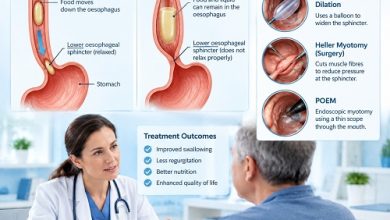
Yes. Although treatment cannot necessarily restore completely normal oesophageal nerve and muscle function, several treatments can reduce the resistance at the lower oesophageal sphincter and improve the passage of food into the stomach.
Achalasia Treatment options can include:
- Pneumatic dilation
- Heller myotomy
- Peroral endoscopic myotomy (POEM)
- Botulinum toxin injection in selected patients
- Other specialist approaches depending on individual circumstances
The most appropriate option depends on factors such as the type of achalasia, age, general health, oesophageal anatomy and previous treatments.
A gastroenterologist or specialist with experience in oesophageal disorders can discuss the available options.
Achalasia Treatment Options
Achalasia is a swallowing disorder in which the lower oesophageal sphincter does not relax properly, making it difficult for food and liquids to pass into the stomach. Treatment focuses on improving the movement of food through the oesophagus and reducing symptoms such as difficulty swallowing, regurgitation and chest discomfort.
There is currently no proven Natural Cure for Achalasia that can restore normal oesophageal muscle function or permanently remove the underlying disorder. However, dietary and lifestyle measures may help some people manage symptoms alongside appropriate medical care.
Medical treatment options include pneumatic dilation, which stretches the lower oesophageal sphincter, and Heller myotomy, a surgical procedure that cuts selected muscle fibres to improve food passage. Peroral endoscopic myotomy (POEM) is another minimally invasive procedure that uses an endoscope to divide the sphincter muscle. Botulinum toxin injections may provide temporary symptom relief and can be considered for selected patients who are not suitable for other procedures.
Eating slowly, chewing food thoroughly and following an appropriate diet may help reduce swallowing difficulties. However, these measures should not replace specialist treatment.
If you have persistent difficulty swallowing, regurgitation, unexplained weight loss or chest discomfort, consult a gastroenterologist for proper diagnosis and an individualised treatment plan.
How Is Achalasia Diagnosed?
Because symptoms can overlap with other digestive disorders, diagnosis usually requires specific testing.
Common investigations include:
Upper Endoscopy
An endoscopy allows a doctor to examine the oesophagus and stomach using a flexible camera. It can help rule out structural blockage, inflammation and other Achalasia causes of swallowing difficulties.
Barium Swallow
During a barium swallow, you drink a contrast liquid while X-ray images are taken. The test can show how material moves through the oesophagus and may demonstrate oesophageal enlargement or narrowing at the lower oesophageal sphincter.
Oesophageal Manometry
Oesophageal manometry measures pressure and muscle activity within the oesophagus. It is particularly important for confirming achalasia and identifying its subtype.
These tests help distinguish achalasia from conditions such as oesophageal strictures, reflux-related problems and other swallowing disorders.
When Should You Seek Medical Advice?
Do not ignore persistent swallowing problems.
Speak with a healthcare professional if you experience:
- Increasing difficulty swallowing
- Food regularly sticking in the chest
- Frequent regurgitation
- Unexplained weight loss
- Persistent coughing after eating
- Repeated night-time choking
- Recurrent chest infections
- Increasing difficulty maintaining your normal diet
Seek urgent medical attention for severe breathing difficulty, choking that does not resolve, vomiting blood, black stools or severe unexplained chest pain.
Can Achalasia Complications Be Prevented?
Appropriate diagnosis and treatment can help reduce the risk of complications associated with persistent food and liquid retention.
If you have already been diagnosed with achalasia, follow-up is important even if your symptoms improve. Symptoms can recur after treatment, and some people require further evaluation or treatment over time.
Practical measures may also help manage symptoms while receiving medical care. These can include eating slowly, chewing food thoroughly, drinking sufficient fluids with meals if appropriate for you, and following dietary advice from your healthcare team.
If night-time regurgitation is a problem, discuss suitable sleeping and eating strategies with your healthcare professional.
These measures do not replace treatment for the underlying disorder.
Frequently Asked Questions About Achalasia Complications
Is untreated achalasia dangerous?
Untreated achalasia can lead to significant complications, particularly when symptoms persist for a long time. Potential problems include aspiration, respiratory infections, malnutrition, weight loss and progressive oesophageal enlargement.
Can achalasia cause aspiration?
Yes. Retained food and liquid can move back towards the throat and potentially enter the airway. This can cause coughing, choking and, in some cases, aspiration pneumonia.
What is megaesophagus in achalasia?
Megaesophagus refers to marked enlargement and dilation of the oesophagus. It can occur in longstanding achalasia when food and liquid repeatedly remain in the oesophagus.
Can achalasia cause malnutrition?
Yes. Difficulty swallowing can make it difficult to eat enough calories and nutrients. Persistent symptoms may therefore contribute to weight loss and malnutrition.
Does achalasia get worse if it is not treated?
Achalasia varies between individuals. Some people have relatively stable symptoms, while others develop progressively worsening oesophageal dilation and swallowing difficulties. Medical assessment is important because complications can develop when the condition remains untreated.
Can achalasia affect the lungs?
Yes. Regurgitation and aspiration of retained food or liquid can contribute to coughing and respiratory problems. Repeated aspiration may increase the risk of aspiration pneumonia.
Does achalasia increase cancer risk?
Longstanding achalasia has been associated with an increased risk of oesophageal cancer. However, most people with achalasia do not develop oesophageal cancer. Discuss individual risk and appropriate follow-up with your specialist.
Final Thoughts
Understanding achalasia complications is important because persistent swallowing difficulties should not be dismissed as simple indigestion or reflux.
Untreated achalasia can allow food and liquid to remain in the oesophagus, potentially contributing to regurgitation, aspiration, respiratory problems, oesophageal enlargement, weight loss and malnutrition. In advanced cases, the oesophagus may become markedly enlarged, a condition known as megaesophagus.
The good news is that achalasia can be evaluated and treated. If you have ongoing difficulty swallowing, food sticking in your chest, frequent regurgitation or unexplained weight loss, speak with a healthcare professional or gastroenterologist.
Early assessment can help establish the cause of your symptoms and determine whether treatment is needed to improve swallowing and reduce the risk of complications.
Medical Disclaimer
This article is intended for general educational purposes only and does not provide personalised medical advice, diagnosis or treatment. Achalasia and its complications can vary between individuals. If you have persistent swallowing difficulties, regurgitation, unexplained weight loss, breathing problems or other concerning symptoms, consult a qualified healthcare professional. Seek urgent medical attention for severe breathing difficulty, choking, vomiting blood or severe unexplained chest pain.