
Chest pain can be alarming, especially when it occurs unexpectedly or feels similar to the pressure associated with heart problems. While chest pain should never be ignored, not every episode originates from the heart. Conditions affecting the esophagus can also produce significant discomfort in the chest. One such condition is achalasia, a rare disorder that interferes with the normal movement of food and liquid through the esophagus.
Understanding the relationship between achalasia chest pain and digestive symptoms can help people recognize patterns and seek appropriate medical evaluation. Achalasia can cause chest discomfort, pressure, burning, or pain, particularly around meals or when food becomes delayed in the esophagus. Why achalasia can cause chest pain, what the pain may feel like, how it relates to swallowing difficulties, and when chest pain requires urgent medical attention.
What Is Achalasia?
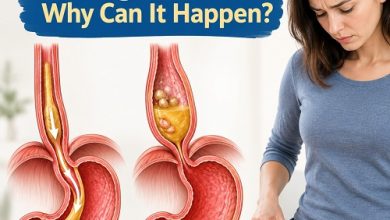
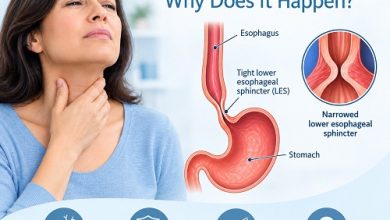
What Is Achalasia? Achalasia is a rare esophageal motility disorder in which the esophagus has difficulty moving food toward the stomach. The lower esophageal sphincter, a muscular valve between the esophagus and stomach, also fails to relax normally during swallowing.
Normally, swallowing triggers coordinated muscle contractions called peristalsis. These contractions push food downward through the esophagus. At the same time, the lower esophageal sphincter relaxes to allow food to enter the stomach.
With achalasia, these normal processes become disrupted. The lower esophageal sphincter may remain tightly closed, while the esophagus loses some or most of its ability to move food efficiently.
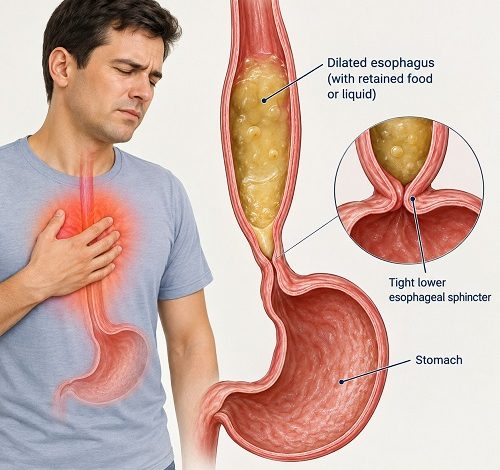
As food and liquid remain in the esophagus longer than they should, pressure and stretching can develop. This is one reason people with achalasia may experience chest discomfort.
Common achalasia symptoms include difficulty swallowing, regurgitation of undigested food or liquid, chest discomfort, coughing, weight loss, and symptoms that become worse after eating.
Can Achalasia Cause Chest Pain?
Yes. Achalasia can cause chest pain or discomfort.
The pain may result from several factors associated with the disorder. Food and liquid can become trapped in the esophagus because the lower esophageal sphincter does not relax properly. The esophagus may become stretched or distended, producing pressure or discomfort behind the breastbone.
Abnormal contractions of the esophageal muscles may also contribute to pain. Some people experience episodes of intense squeezing or pressure that can be mistaken for heart-related chest pain.
Achalasia chest pain can vary considerably from person to person. It may be mild and occasional in some individuals, while others may experience more noticeable or recurrent episodes.
Importantly, chest pain should not automatically be attributed to achalasia. Heart attacks and other cardiovascular conditions can cause serious chest symptoms, and distinguishing between cardiac and esophageal causes may require medical evaluation.
What Does Achalasia Chest Pain Feel Like?
There is no single description that applies to everyone with achalasia. Chest discomfort may be described as:
- Pressure behind the breastbone
- Tightness or squeezing
- Burning discomfort
- A feeling of fullness in the chest
- Sharp or aching pain
- Discomfort after eating
- Pain associated with swallowing
- Pain that occurs when food or liquid seems stuck
Some people notice that their symptoms occur more frequently after meals or when consuming certain foods and drinks.
Others may experience chest discomfort at night, particularly when retained food or liquid moves back into the esophagus.
Because the symptoms can overlap with other digestive and cardiovascular conditions, the sensation alone cannot reliably determine the cause.
Why Does Achalasia Cause Chest Pain?
Several mechanisms may contribute to achalasia chest pain.
1. Esophageal stretching
When food and liquid remain inside the esophagus, the esophageal wall can become stretched. This distension may activate nerves in the esophageal wall and produce pressure or pain.
Over time, persistent difficulty emptying the esophagus can cause it to become enlarged.
2. Abnormal muscle contractions
The esophagus normally uses coordinated contractions to move food toward the stomach. In achalasia, these contractions may become weak, uncoordinated, or absent.
Abnormal contractions can sometimes create sensations of squeezing or cramping.
3. Increased pressure
The lower esophageal sphincter may remain tightly closed instead of relaxing during swallowing. Pressure can build above this area when food or liquid cannot pass easily into the stomach.
This increased pressure can contribute to chest discomfort.
4. Food retention
Food that remains in the esophagus for an extended period can cause fullness, pressure, irritation, or discomfort.
Some people may also experience regurgitation when retained food or liquid moves back toward the mouth.
5. Esophageal sensitivity
People can experience pain differently depending on how sensitive their esophagus is to stretching and pressure. Two individuals with similar findings may therefore report very different levels of discomfort.
Achalasia and Difficulty Swallowing
Difficulty swallowing, medically known as dysphagia, is one of the most characteristic symptoms of achalasia.
People may have trouble swallowing both solid foods and liquids. This differs from some other swallowing disorders that initially affect solids more than liquids.
Food may feel as though it is stuck in the chest or lower throat. Some people respond by drinking water to help food move downward.
This swallowing difficulty is closely connected to achalasia chest pain because food that cannot pass normally may remain in the esophagus and increase pressure.
Recognizing this relationship can be useful when discussing symptoms with a healthcare professional.
Is Achalasia Chest Pain the Same as Swallowing Pain?
Not necessarily.
Swallowing pain, known medically as odynophagia, means that swallowing itself causes pain. Achalasia more commonly causes difficulty getting food or liquid through the esophagus rather than pain with every swallow.
However, some people with achalasia may experience discomfort during or shortly after swallowing.
It is important to distinguish difficulty swallowing from painful swallowing because different conditions can cause these symptoms.
For example, inflammation, infection, ulcers, or other disorders of the esophagus can cause painful swallowing. A healthcare professional can help determine which symptoms require further testing.
How Is Esophageal Chest Pain Different From Heart-Related Chest Pain?
Chest pain originating from the esophagus can resemble cardiac chest pain. This is one of the most important reasons people should not assume that chest discomfort is caused by achalasia.
Esophageal chest pain may occur around meals, during swallowing, or when food and liquid remain in the esophagus. It may also be associated with regurgitation or a sensation that food is stuck.
Heart-related chest pain may occur with physical exertion and can sometimes spread to the arm, shoulder, neck, jaw, or back. It may also be associated with shortness of breath, sweating, nausea, dizziness, or weakness.
However, symptoms overlap, and these patterns are not reliable enough to diagnose the cause on their own.
If chest pain is new, severe, unexplained, persistent, or accompanied by concerning symptoms, urgent medical evaluation is appropriate.
When Should Chest Pain Be Treated as an Emergency?
Chest pain should always be taken seriously.
Seek emergency medical care if chest pain is severe, sudden, persistent, or accompanied by symptoms such as:
- Shortness of breath
- Fainting or severe dizziness
- Cold sweating
- Nausea or vomiting
- Pain spreading to the arm, shoulder, jaw, neck, or back
- A rapid or irregular heartbeat
- Severe weakness
- A feeling of pressure or heaviness in the chest
These symptoms can occur with serious heart or other medical conditions.
Even if someone has already been diagnosed with achalasia, new or significantly different chest pain should not automatically be blamed on the esophageal disorder.
Other Achalasia Symptoms to Watch For
Chest discomfort is only one possible feature of achalasia.
Other achalasia symptoms may include:
Difficulty swallowing
People may feel that food or drinks are slow to move through the chest.
Regurgitation
Undigested food or liquid may return to the mouth, particularly when lying down.
Coughing
Retained food or liquid can sometimes enter the throat or airways and cause coughing.
Weight loss
Difficulty eating normally may lead to reduced food intake and unintended weight loss.
Nighttime symptoms
Regurgitation and coughing can become noticeable when lying down.
Feeling of food sticking
Some people describe a sensation that food is lodged behind the breastbone.
Chest discomfort
Pain, pressure, tightness, or burning may occur, particularly around meals.
Not everyone experiences all of these symptoms, and their severity can vary.
How Is Achalasia Diagnosed?
Because symptoms can resemble other digestive or heart conditions, doctors typically use specific tests to diagnose achalasia.
Upper endoscopy
An endoscopy allows a healthcare professional to examine the esophagus and stomach using a flexible camera.
This test can help rule out other conditions that may produce similar symptoms.
Esophageal manometry
Esophageal manometry is an important test for evaluating how the esophageal muscles and lower esophageal sphincter function during swallowing.
It can help identify the abnormal muscle activity associated with achalasia.
Barium swallow
During a barium swallow, a person drinks a contrast liquid while X-ray images are taken. The test can show how the substance moves through the esophagus and whether there is narrowing near the stomach.
The results of these tests, combined with symptoms and medical history, help clinicians establish a diagnosis.
How Is Achalasia Treated?
Treatment focuses on improving the movement of food through the lower esophageal sphincter. The appropriate treatment depends on factors such as the type of achalasia, overall health, symptoms, and medical history.
Possible Achalasia treatments include pneumatic dilation, surgical myotomy, and peroral endoscopic myotomy. In selected situations, botulinum toxin injections or medications may also be considered.
The goal is generally to reduce resistance at the lower esophageal sphincter and improve esophageal emptying.
When treatment improves the passage of food and liquid, symptoms such as regurgitation and chest discomfort may also improve.
Natural Remedies for Achalasia decisions should be made with a qualified healthcare professional who understands esophageal motility disorders.
Can Treating Achalasia Reduce Chest Pain?
For some people, treating the underlying obstruction can reduce symptoms associated with retained food, esophageal pressure, and abnormal swallowing.
However, chest pain does not always disappear immediately or completely after treatment. Some patients may continue to experience symptoms even after the lower esophageal sphincter has been treated.
Persistent chest pain should therefore be discussed with a healthcare professional rather than assumed to be a normal part of achalasia.
Other Achalasia causes of chest pain may need to be investigated.
Lifestyle Strategies That May Help Manage Symptoms
Lifestyle measures do not cure achalasia, but some people find that certain habits make eating and swallowing more manageable.
Eat slowly
Taking smaller bites and chewing food thoroughly may make swallowing easier.
Drink fluids with meals
Some people find that drinking water during meals helps food pass through the esophagus.
Avoid lying down immediately after eating
Remaining upright after meals may reduce regurgitation for some people.
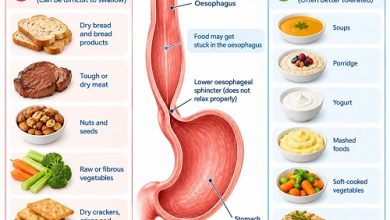
Identify personal trigger foods
Certain foods may be more difficult to swallow than others. Keeping track of foods that worsen symptoms can help identify individual patterns.
Follow medical treatment recommendations
Lifestyle strategies should complement, rather than replace, appropriate medical care.
Can Achalasia Be Confused With Acid Reflux?
Yes. Achalasia and gastroesophageal reflux disease can sometimes produce overlapping symptoms, including chest discomfort and regurgitation.
However, the underlying mechanisms are different.
Acid reflux occurs when stomach contents move backward into the esophagus. Achalasia primarily involves impaired relaxation of the lower esophageal sphincter and abnormal esophageal movement.
Some people with achalasia may also experience reflux-like symptoms, including burning or regurgitation. Proper testing can help determine the underlying cause.
What Should You Tell Your Doctor About Chest Pain?
When discussing achalasia chest pain with a healthcare professional, detailed information can be helpful.
Consider describing:
- When the pain began
- How frequently it occurs
- How long each episode lasts
- Whether it happens before, during, or after meals
- Whether swallowing triggers discomfort
- Whether food feels stuck
- Whether regurgitation occurs
- Whether symptoms happen at night
- Whether physical activity affects the pain
- Whether you experience shortness of breath, dizziness, sweating, or nausea
Keeping a symptom diary may help identify patterns.
Frequently Asked Questions
Can achalasia cause pain in the middle of the chest?
Yes. Achalasia can cause discomfort or pain behind the breastbone because food and liquid may remain in the esophagus and increase pressure or stretching.
Is chest pain common with achalasia?
Chest pain can occur in people with achalasia, although not everyone with the condition experiences it. Symptoms vary from person to person.
Can swallowing cause chest pain with achalasia?
Some people may experience discomfort associated with swallowing. However, difficulty swallowing is more characteristic of achalasia than painful swallowing itself.
Can achalasia chest pain feel like a heart attack?
Esophageal pain can sometimes resemble heart-related chest pain. Because the symptoms can overlap, unexplained or severe chest pain should be medically evaluated rather than assumed to be caused by achalasia.
Does treating achalasia stop chest pain?
Treatment may improve chest symptoms when they are related to impaired esophageal emptying, but persistent or new chest pain may have another cause and should be evaluated.
Final Thoughts
Achalasia chest pain can occur because the esophagus has difficulty moving food and liquid into the stomach. Retained contents, increased pressure, esophageal stretching, and abnormal muscle activity may all contribute to discomfort.
Chest pain associated with achalasia may occur alongside difficulty swallowing, regurgitation, food sticking, and other symptoms. Nevertheless, esophageal symptoms can closely resemble heart-related chest pain.
For this reason, new, severe, persistent, or unexplained chest pain should always receive appropriate medical attention. Once serious causes have been excluded, evaluation for achalasia and other esophageal disorders can help identify the source of symptoms.
If you have ongoing swallowing difficulties, recurrent chest discomfort, regurgitation, or unexplained weight loss, discuss these symptoms with a healthcare professional. Early evaluation can help identify the underlying problem and guide appropriate treatment.
Medical Disclaimer
The information provided in this article about achalasia chest pain, esophageal chest pain, achalasia symptoms, and swallowing problems is intended for general educational and informational purposes only. It is not a substitute for professional medical advice, diagnosis, or treatment.
Chest pain can have many possible causes, including serious heart and other medical conditions. Do not assume that chest pain is caused by achalasia without appropriate medical evaluation. If you experience sudden, severe, persistent, or unexplained chest pain, especially with shortness of breath, sweating, dizziness, nausea, fainting, or pain spreading to the arm, jaw, neck, shoulder, or back, seek emergency medical care.
Always consult a qualified healthcare professional for an appropriate diagnosis and personalized treatment plan. Do not start, stop, or change any medication or treatment based solely on information presented in this article.