
Persistent hoarseness, a rough voice and difficulty speaking for long periods can affect everyday communication. Vocal cord nodules are one possible cause of these symptoms, particularly in people who frequently use their voices for work or personal activities. However, voice strain is not the only factor that may contribute to irritation of the vocal cords. Acid reflux may also play a role in some cases.
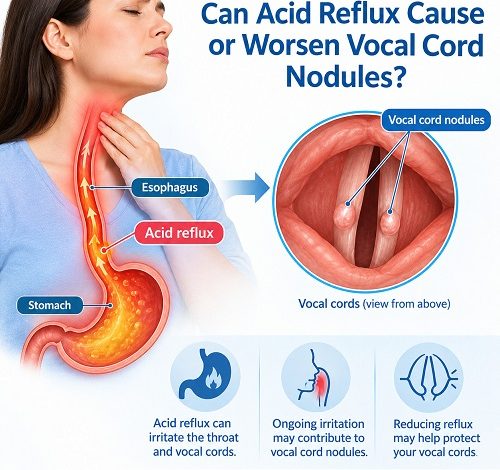
Acid reflux and vocal cord nodules are linked through the effects that reflux can have on the delicate tissues of the throat and voice box. When stomach contents travel upwards into the oesophagus or reach the throat, they may irritate sensitive tissues and contribute to inflammation. This irritation can make existing voice problems more difficult to manage, especially when combined with repeated shouting, singing or prolonged speaking.
However, acid reflux does not automatically cause vocal cord nodules, and not everyone with reflux develops voice problems. Nodules can arise from repeated mechanical stress on the vocal folds, while reflux may be one of several contributing factors.
Recognising the possible connection can help you seek appropriate assessment, protect your voice and identify treatment options that address the underlying causes of your symptoms.
What Are Vocal Cord Nodules?
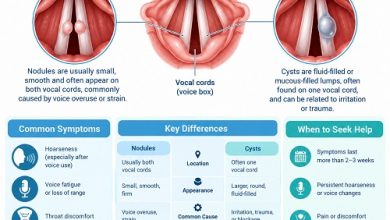
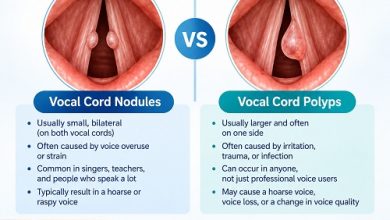
What Are Vocal Cord Nodules? Vocal cord nodules are small, usually benign growths that develop on the vocal folds inside the larynx, commonly called the voice box. The vocal folds vibrate as air passes through them, producing sound when you speak or sing.
Repeated pressure, friction and collision between the vocal folds can lead to tissue changes. Over time, these changes may develop into nodules, which often appear on both vocal folds at corresponding points.
People who frequently raise their voices, sing intensively, teach, speak publicly or work in noisy environments may be more susceptible to developing nodules. Children who regularly shout may also develop them.
Common Vocal Cord Nodules symptoms include:
- Persistent hoarseness or a raspy voice.
- A breathy, weak or strained voice.
- Reduced vocal range, particularly when singing.
- Vocal fatigue after speaking.
- Difficulty reaching higher notes.
- Frequent throat clearing.
- A rough voice that becomes worse after prolonged use.
These symptoms can overlap with those caused by acid reflux, allergies, infections and other laryngeal conditions. Therefore, symptoms alone cannot confirm that nodules are present.
What Is Acid Reflux, and How Can It Affect the Throat?
Acid reflux occurs when stomach contents flow backwards into the oesophagus. The oesophagus is the tube that carries food from the mouth to the stomach. Reflux commonly causes heartburn, regurgitation or an unpleasant acidic taste, although some people experience no obvious digestive symptoms.
When reflux reaches the throat and voice box, it is often discussed in connection with laryngopharyngeal reflux (LPR). LPR may cause symptoms such as throat irritation, persistent coughing, hoarseness, excessive mucus sensations and frequent throat clearing.
Unlike typical gastro-oesophageal reflux disease (GORD), LPR may occur without noticeable heartburn. This can make it difficult to recognise.
The tissues of the larynx are sensitive. Contact with refluxed stomach contents may contribute to irritation in some people. Refluxate can contain acid, pepsin and other substances that may affect the upper airway. However, throat symptoms have many possible causes, and their presence does not prove that reflux is responsible.
When reflux-related irritation occurs alongside repeated vocal strain, it may make voice symptoms more troublesome and complicate recovery.
Can Acid Reflux Cause Vocal Cord Nodules?
Acid reflux may contribute to the development of vocal cord nodules, but the evidence does not establish it as a direct cause in every case.
The main recognised cause of vocal nodules is repeated mechanical stress on the vocal folds. Shouting, singing with excessive force, speaking for long periods and using poor vocal techniques can repeatedly bring the folds into forceful contact. This can lead to tissue irritation and changes over time.
Research suggests that reflux may make the vocal fold surface more vulnerable to this type of damage. A systematic review published in The Laryngoscope in 2019 examined the association between laryngopharyngeal reflux and benign vocal fold lesions. The authors found biological evidence supporting a possible connection, but highlighted limitations in the quality and quantity of available research.
There are several possible explanations for this association:
- Inflammation: Refluxed stomach contents may irritate the lining of the larynx, potentially making the vocal folds more sensitive.
- Increased vulnerability to vocal strain: Inflamed or irritated tissue may tolerate repeated impact less effectively.
- Frequent throat clearing: Repeatedly clearing the throat can cause forceful contact between the vocal folds, adding mechanical stress.
- Persistent coughing: A cough can place additional pressure on the vocal folds, particularly when it occurs frequently.
- Delayed symptom improvement: If reflux continues to irritate the throat, voice symptoms may persist even after someone begins reducing vocal strain.
These mechanisms are plausible, but they do not prove that reflux is responsible for a particular person’s nodules. Vocal overuse remains an important factor, and reflux may be absent altogether.
Can Acid Reflux Make Existing Vocal Cord Nodules Worse?
Yes, acid reflux may aggravate existing voice symptoms and potentially interfere with recovery in some people. However, the degree to which reflux changes the size or severity of established nodules is not fully understood.
Vocal cord nodules develop in response to repeated stress on the vocal folds. If reflux contributes to inflammation, it may create an additional source of irritation alongside the mechanical effects of speaking or singing.
For example, a teacher with vocal nodules may already experience hoarseness after a full day of speaking. If that person also has reflux-related coughing, throat clearing or laryngeal irritation, their voice may become more uncomfortable and fatigued.
Reflux can also create a cycle of irritation and compensatory behaviour. A person may feel mucus in the throat, repeatedly clear it and then experience more irritation. Trying to force sound through an irritated voice can add further strain.
Nevertheless, worsening hoarseness does not necessarily mean that nodules have grown. Swelling, muscle tension, infection, allergies and other voice disorders can produce similar changes. An ENT specialist can examine the vocal folds and determine whether the underlying lesion has changed.
Laryngopharyngeal Reflux and Throat Irritation: Common Symptoms
Laryngopharyngeal reflux, throat irritation and persistent voice changes can occur together, sometimes without the typical symptoms of digestive reflux.
The following symptoms may suggest that reflux deserves consideration as part of a broader medical assessment.
1. Persistent hoarseness
Your voice may sound rough, weak, breathy or strained. Some people notice more hoarseness in the morning, while others experience worsening symptoms after speaking throughout the day.
Hoarseness can result from vocal nodules themselves, reflux-related inflammation or both.
2. Frequent throat clearing
A sensation of mucus or something stuck in the throat may lead to repeated throat clearing. Although this may briefly feel helpful, forceful clearing can increase friction between the vocal folds.
Try taking a sip of water or swallowing gently instead of repeatedly clearing your throat.
3. Chronic cough
Reflux may trigger coughing in some people, even when heartburn is absent. Allergies, asthma, respiratory infections and certain medicines can also cause persistent coughing, so a clinician may need to consider several possible explanations.
4. A lump-like sensation in the throat
Some people experience a persistent sensation of a lump or tightness in the throat, often called globus sensation. This can occur with reflux, muscle tension and other conditions.
A persistent lump sensation should not automatically be attributed to reflux or vocal nodules.
5. Throat discomfort or irritation
Your throat may feel raw, dry, sensitive or uncomfortable after speaking. These symptoms are non-specific and can also result from dehydration, dry air, allergies, smoke exposure or infection.
6. Reduced vocal stamina
You may find that your voice tires quickly, particularly during lengthy conversations, teaching sessions or singing. Nodules and other voice disorders can reduce vocal efficiency, while irritation may make speaking feel more effortful.
The American Academy of Otolaryngology–Head and Neck Surgery recognises hoarseness, chronic throat discomfort, cough and throat clearing among symptoms associated with LPR. However, these symptoms alone cannot confirm the Vocal Cord Nodules diagnosis.
How Can You Tell Whether Reflux Is Affecting Your Vocal Cords?
It is difficult to distinguish reflux-related voice problems from symptoms caused by nodules based on how your throat feels.
Heartburn, sour-tasting regurgitation and symptoms that occur after meals or when lying down may support the possibility of gastro-oesophageal reflux. However, LPR can occur without these symptoms.
An ENT specialist may recommend a laryngeal examination to assess the vocal folds directly. This can identify nodules and other abnormalities, as well as signs of inflammation.
It is important to recognise a limitation: redness or swelling seen during laryngoscopy does not, by itself, prove that reflux caused the inflammation. Other conditions can produce similar findings. Recent international consensus guidance emphasises the importance of distinguishing symptoms that could be reflux-related from reflux disease supported by objective evidence.
Depending on your symptoms and medical history, further investigations may include:
- Flexible laryngoscopy: A thin camera allows the clinician to inspect the larynx and vocal folds.
- Videostroboscopy: A specialised examination assesses vocal fold vibration and may help clarify the nature of a lesion.
- Reflux monitoring: Ambulatory pH or pH-impedance monitoring may help assess reflux when the diagnosis remains uncertain.
- Gastroenterology assessment: This may be appropriate when digestive symptoms persist or additional investigation is needed.
Not everyone needs every test. Your clinician will select investigations based on the symptoms, examination findings and response to previous treatment.
Treatment Options for Acid Reflux and Vocal Cord Nodules
Effective management should address confirmed vocal fold problems, possible reflux and the behaviours that may be contributing to ongoing irritation. Treating suspected reflux alone may not resolve nodules caused primarily by repeated vocal strain.
1. Voice therapy
Voice therapy with a qualified speech and language therapist who has experience in voice disorders is often a key part of treating vocal nodules.
Therapy may help you reduce excessive vocal effort, improve breathing and sound production, and develop healthier speaking habits. Your therapist may also teach you how to avoid shouting, use a comfortable pitch and pace conversations.
Consistent practice can improve vocal function and reduce repeated trauma to the vocal folds. Some nodules improve with conservative Vocal Cord Nodules treatment, although outcomes depend on their characteristics and the person’s voice use.
2. Reflux management
If a clinician determines that reflux is contributing to your symptoms, management may include lifestyle changes and, where appropriate, medication.
Practical measures include:
- Eating smaller meals if large meals trigger symptoms.
- Avoiding lying down for around three hours after eating.
- Identifying foods and drinks that reliably worsen your reflux.
- Raising the head of the bed if you experience reflux during sleep.
- Discussing weight management with a healthcare professional if excess weight contributes to reflux.
- Avoiding smoking and reducing exposure to throat irritants.
Common triggers include high-fat meals, spicy foods, chocolate, caffeine and acidic foods, but they do not affect everyone equally. A restrictive diet is not necessary for every person with reflux.
Acid-suppressing medicines, such as proton pump inhibitors, may be appropriate for certain patients, particularly those with established acid reflux. However, they should not be started solely because hoarseness is present. The AAO-HNS dysphonia guideline advises against prescribing antireflux medication for isolated voice symptoms based only on suspected reflux without visualising the larynx.
3. Hydration and vocal care
Drink enough water throughout the day and take regular breaks during extended speaking. A humidifier may help if your environment is particularly dry.
Avoid whispering forcefully, shouting over background noise or repeatedly pushing your voice when it feels tired. Whispering is not always gentler than normal speech, especially when it involves muscular tension.
If your work requires extensive speaking, consider using a microphone or amplification system to reduce vocal effort.
4. Reducing habitual throat clearing
Frequent throat clearing can perpetuate irritation. When the urge occurs, try swallowing gently, taking a small sip of water or using a gentle, non-forceful exhalation.
If the sensation continues, ask your clinician whether reflux, allergies, postnasal drainage or another condition might be responsible.
5. Specialist treatment for persistent nodules
If nodules persist despite appropriate voice therapy and management of contributing factors, an ENT specialist may discuss further options.
Surgery is sometimes considered when a lesion significantly affects the voice and conservative treatment has not produced sufficient improvement. It is not necessary for every case, and the decision depends on the diagnosis, symptoms and professional voice requirements.
Vocal Cord Nodules Surgery also does not eliminate the behaviours that caused repeated vocal trauma. Voice rehabilitation and continued vocal care may still be needed.
Can Vocal Cord Nodules Heal if You Treat Acid Reflux?
Vocal cord nodules can improve with appropriate treatment, but controlling reflux alone may not be enough. The outcome depends on the severity and duration of the nodules, the amount of vocal strain involved and whether other contributing conditions are present.
If reflux is aggravating your throat, treating it may reduce some symptoms and make it easier to follow a voice therapy programme. However, established nodules may need additional care to address the repeated mechanical stress that contributed to their development.
Recovery times vary. Some people notice improvements in voice quality over several weeks of consistent vocal care, while others need a longer period of therapy and follow-up. More persistent lesions may require specialist assessment.
Avoid assuming that your nodules have disappeared simply because your voice feels better. An ENT specialist can assess whether the vocal folds have recovered and whether further treatment is needed.
Foods and Habits That May Help Reduce Reflux-Related Throat Irritation
Although no specific food can cure vocal cord nodules, certain dietary and lifestyle adjustments may help people who experience reflux.
Stay hydrated
Drinking water throughout the day supports normal vocal fold function and may ease the sensation of throat dryness. Hydration does not directly remove nodules or treat reflux disease.
Choose meals that suit your symptoms
Eat balanced meals and identify any foods that consistently trigger reflux. Smaller portions may be more comfortable than large meals, especially in the evening.
Adjust your evening routine
Finish eating around three hours before lying down if reflux occurs at night. Elevating the head of the bed may also help with nighttime symptoms.
Be cautious with herbal products, supplements and home remedies marketed as cures for reflux or vocal nodules. Evidence that these products can eliminate nodules is lacking, and some may interact with medicines or worsen reflux. Discuss supplements with your healthcare professional before using them.
When Should You See a Doctor?
Arrange an assessment with an ENT specialist if you experience persistent hoarseness, recurring voice loss, reduced vocal range or difficulty speaking comfortably. Clinical guidance recommends laryngoscopy when dysphonia does not improve within four weeks, or sooner when a serious underlying cause is suspected.
Wiley Online Library+1
Seek prompt medical attention if you develop difficulty breathing, noisy breathing or difficulty swallowing. Coughing up blood, a neck lump, unexplained weight loss or progressive swallowing difficulties also warrant medical assessment.
Do not assume that persistent voice changes are caused by acid reflux, even if you have previously experienced heartburn. An examination can help identify nodules, other benign lesions and conditions that require different treatment.
Frequently Asked Questions
1. Can acid reflux cause vocal cord nodules?
Acid reflux may contribute to conditions that make vocal fold tissue more vulnerable to injury, but evidence that it directly causes nodules remains limited. Repeated vocal strain is a major recognised cause.
2. Can acid reflux make vocal cord nodules worse?
It may aggravate throat irritation, coughing and hoarseness, potentially complicating recovery. However, there is insufficient evidence to conclude that reflux always enlarges existing nodules.
3. What is the connection between LPR and vocal cord nodules?
Laryngopharyngeal reflux occurs when stomach contents reach the throat or larynx. It may contribute to inflammation and throat-clearing habits that increase vocal fold irritation. Not everyone with LPR develops nodules.
4. Will treating acid reflux make vocal cord nodules disappear?
Not necessarily. Reflux treatment may reduce a contributing source of irritation, but established nodules may also require voice therapy and changes to vocal habits. Some persistent lesions need further specialist treatment.
5. Can you have LPR without heartburn?
Yes. Some people experience hoarseness, coughing, throat clearing or a lump-like sensation without typical heartburn. These symptoms have other possible causes, so a clinical assessment is important.
6. Should I take acid reflux medicine for hoarseness?
Do not start acid-suppressing medication solely because you have hoarseness. A healthcare professional should assess your symptoms and determine whether reflux is likely to be involved and whether medication is appropriate.
7. How long does it take for vocal cord nodules to heal?
Recovery varies according to the severity of the nodules, voice use and response to treatment. Improvement may take weeks or longer, and some people need ongoing voice therapy or specialist care.
Conclusion
Acid reflux and vocal cord nodules may be connected, particularly when laryngopharyngeal reflux contributes to throat irritation, coughing or repeated throat clearing. Research supports a possible relationship between reflux and increased vulnerability of the vocal folds, but it does not establish reflux as the cause of every case of vocal nodules.
The most effective approach is to identify the factors affecting your voice and address them together. Voice therapy, sensible vocal habits, hydration and appropriate reflux management may help reduce symptoms and support recovery.
If hoarseness persists, seek an ENT assessment rather than assuming that reflux is responsible. An accurate diagnosis can help you choose appropriate treatment and protect your voice over the long term.
Medical Disclaimer
This article is for educational purposes only and does not replace professional medical advice, diagnosis or treatment. Acid reflux is only one possible contributor to throat irritation and voice changes. Consult a qualified healthcare professional for persistent hoarseness, suspected vocal cord nodules or reflux symptoms. Do not start, stop or change prescribed medication without medical guidance.
Medical References
- Lechien JR, Bobin F, Muls V, et al. Association between laryngopharyngeal reflux and benign vocal folds lesions: A systematic review. The Laryngoscope. 2019;129:E329–E341. Read the research.
- Koufman JA, et al. Pharyngeal acid reflux events in patients with vocal cord nodules. The Laryngoscope. 1998;108(8):1146–1149. Read the study.
- Stachler RJ, Francis DO, Schwartz SR, et al. Clinical Practice Guideline: Hoarseness (Dysphonia) (Update). Otolaryngology–Head and Neck Surgery. 2018. Read the guideline.
- American Academy of Otolaryngology–Head and Neck Surgery. Position Statement: Laryngopharyngeal Reflux. Read the position statement.
- National Institute on Deafness and Other Communication Disorders. Taking Care of Your Voice. Read the guidance.
- The San Diego Consensus. The San Diego Consensus for Laryngopharyngeal Symptoms and Laryngopharyngeal Reflux Disease. 2025. Read the consensus statement.