
Swallowing difficulty can be a worrying symptom, particularly when it continues or becomes worse over time. Two conditions that may cause problems with swallowing are achalasia and oesophageal cancer. Although both can affect the oesophagus, they have different causes, effects on the body, and treatment approaches. Knowing the differences between achalasia vs esophageal cancer can help you understand why an accurate medical assessment is important.
Achalasia is a rare swallowing disorder that affects the movement of food through the oesophagus into the stomach. Oesophageal cancer develops when abnormal cells grow uncontrollably in the oesophagus. Both conditions may cause food to feel stuck, regurgitation, chest discomfort, and weight loss. However, these symptoms can develop for different reasons, and symptoms alone cannot reliably distinguish between them.
Achalasia vs Esophageal Cancer symptoms, causes, risk factors, diagnostic procedures and treatment options associated with these two conditions. It also discusses warning signs that require prompt medical attention.
What Is Achalasia?
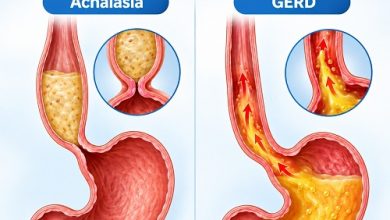
What Is Achalasia? Achalasia is an uncommon disorder of the oesophagus, the muscular tube that carries food and liquids from the mouth to the stomach. Normally, coordinated muscular contractions move swallowed food downwards, while a muscular valve called the lower oesophageal sphincter relaxes to allow food to enter the stomach.
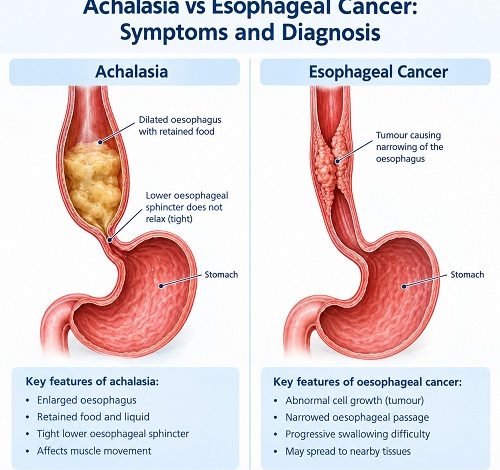
In achalasia, the oesophagus loses some or all of its normal coordinated movement, and the lower oesophageal sphincter does not relax properly. As a result, food and liquid may collect in the oesophagus instead of passing easily into the stomach.
Achalasia is generally associated with damage to the nerve cells that control oesophageal movement. In many cases, the exact cause remains unknown. It is not the same as cancer, and achalasia itself is not an oesophageal cancer diagnosis.
Common Achalasia symptoms include difficulty swallowing both solid foods and liquids, bringing undigested food back into the mouth, chest discomfort, coughing at night, and unintended weight loss.
Symptoms often develop gradually. Some people experience mild swallowing problems initially, while others develop more noticeable symptoms over months or years.
What Is Oesophageal Cancer?
Oesophageal cancer occurs when abnormal cells develop and grow uncontrollably in the lining or tissues of the oesophagus. These cells can form a tumour that interferes with swallowing and may spread to nearby tissues or other parts of the body.
The two main types are:
- Oesophageal squamous cell carcinoma: Develops in the flat cells lining the oesophagus and may occur in different parts of the organ.
- Oesophageal adenocarcinoma: Develops in glandular cells, commonly in the lower oesophagus. It is associated with certain risk factors, including chronic gastro-oesophageal reflux disease (GORD) and Barrett’s oesophagus.
Risk factors vary by cancer type and may include tobacco use, heavy alcohol consumption, chronic reflux, Barrett’s oesophagus, older age, and certain dietary or environmental factors.
Oesophageal cancer can cause progressive swallowing difficulty as a tumour narrows the passage through which food travels. Other symptoms may include unexplained weight loss, pain when swallowing, chest discomfort, persistent indigestion, or a hoarse voice.
Early oesophageal cancer may not cause obvious symptoms. For this reason, persistent or progressive swallowing problems should not be ignored.
Achalasia vs Esophageal Cancer: Key Differences
Although both conditions affect the oesophagus, their underlying mechanisms are different. Achalasia primarily affects muscular movement and the relaxation of the lower oesophageal sphincter. Oesophageal cancer involves abnormal cell growth that can obstruct the passage of food.
The following comparison highlights their typical features.
| Feature | Achalasia | Oesophageal cancer |
| Main cause | Impaired oesophageal nerve function and muscle movement | Abnormal cell growth forming a tumour |
| Swallowing difficulty | Often affects solids and liquids from relatively early in the illness | Often begins with solids and may progress to liquids, although patterns vary |
| Regurgitation | Undigested food or liquid may return to the mouth | May occur when a tumour obstructs swallowing |
| Weight loss | May occur because eating becomes difficult | May occur because of obstruction, reduced intake, or the cancer itself |
| Chest discomfort | May result from abnormal contractions or food retention | May result from tumour-related irritation or obstruction |
| Typical diagnostic tests | Oesophageal manometry, endoscopy, and a barium swallow | Endoscopy with biopsy, with further tests to assess the extent of disease |
| Main treatment approach | Treatments that improve the opening of the lower oesophageal sphincter | Treatment based on cancer type, stage, location, and the person’s overall health |
These are general patterns rather than strict rules. Symptoms overlap, and neither the type of swallowing difficulty nor the presence of weight loss can establish a diagnosis by itself.
Symptoms of Achalasia
Recognising the common features of achalasia can help explain how this condition differs from other causes of swallowing difficulty.
1. Difficulty Swallowing Solid Foods and Liquids
Dysphagia, or difficulty swallowing, is the main symptom of achalasia. Food and liquids may seem to move slowly or become stuck in the chest. Unlike some obstructive conditions, achalasia can affect the swallowing of both solids and liquids from relatively early in the illness.
Symptoms may fluctuate. A person may find that eating slowly, drinking water, or changing body position makes swallowing easier, but these measures do not treat the underlying disorder.
2. Regurgitation of Undigested Food
Food and liquid can remain in the oesophagus and later return to the mouth without the forceful contractions associated with vomiting. This is called regurgitation.
It may happen after meals or when lying down. Repeated regurgitation can disturb sleep and increase the risk of food or liquid entering the airways.
3. Chest Pain or Discomfort
Some people with achalasia experience pressure, tightness, or pain behind the breastbone. This discomfort may be related to abnormal muscle contractions or the stretching of the oesophagus as food accumulates.
Chest pain can have other serious causes, including heart disease. Sudden, severe, or unexplained chest pain requires urgent medical assessment.
4. Unintended Weight Loss
Difficulty eating and the retention of food in the oesophagus can reduce nutritional intake. Some people consequently lose weight.
Weight loss does not automatically indicate cancer, but unexplained or substantial weight loss alongside swallowing difficulty requires prompt investigation.
5. Coughing and Night-Time Symptoms
Food or liquid retained in the oesophagus may return when a person lies down. This can cause coughing, choking, disturbed sleep, or recurrent respiratory problems.
A clinician may consider aspiration, where food or liquid enters the respiratory tract, if these symptoms occur.
Symptoms of Oesophageal Cancer
Oesophageal cancer may cause symptoms that resemble achalasia, particularly when a tumour obstructs the passage of food.
1. Progressive Swallowing Difficulty
One important warning sign is swallowing difficulty that gradually becomes worse. Some people initially struggle with solid foods, such as bread or meat, before finding it difficult to swallow softer foods or liquids.
This pattern can occur when a tumour progressively narrows the oesophagus. However, the pattern is not universal, and achalasia and other oesophageal disorders can produce overlapping symptoms.
2. Unexplained Weight Loss
Weight loss may occur because swallowing becomes uncomfortable or difficult, reducing the amount a person eats. Cancer can also affect appetite and the body’s energy requirements.
Unintentional weight loss combined with persistent swallowing difficulty deserves prompt medical investigation.
3. Painful Swallowing
Some people experience pain or discomfort when swallowing, known as odynophagia. The sensation may occur in the chest or throat, depending on the cause and the person’s perception of the pain.
Painful swallowing is not specific to cancer. Inflammation, infection, and other oesophageal conditions may also cause it.
4. Persistent Chest Discomfort or Indigestion
Oesophageal cancer may cause persistent discomfort behind the breastbone, worsening indigestion, or a sensation that food is sticking. These symptoms are common in many less serious conditions, so they should be assessed in context rather than interpreted as proof of cancer.
5. Hoarseness, Coughing, or Bleeding
Some people develop a persistent cough, hoarse voice, or other symptoms when the disease affects surrounding structures. Bleeding can occasionally occur and may appear as blood in vomit or black, tarry stools.
Vomiting blood, passing black stools, or experiencing difficulty swallowing your own saliva requires urgent medical assessment. Severe bleeding or breathing difficulties warrant emergency care.
Why the Symptoms Can Be Confused
The comparison of achalasia vs esophageal cancer can be challenging because both conditions interfere with the normal passage of food through the oesophagus.
For example, someone with achalasia may experience regurgitation, chest discomfort, and weight loss because food does not pass efficiently into the stomach. Someone with oesophageal cancer may develop similar symptoms because a tumour obstructs the oesophagus.
The timing and progression of symptoms can provide useful clues, but they are not enough to confirm either condition.
Achalasia often affects solids and liquids early in the illness, whereas a narrowing caused by cancer may initially cause difficulty with solids. Nevertheless, there are exceptions to both patterns.
A further complication is that certain cancers near the lower oesophagus or the junction between the oesophagus and stomach can produce symptoms resembling achalasia. This is one reason clinicians may need to exclude an obstructing tumour before confirming achalasia.
Other causes of swallowing difficulty include GORD, oesophageal strictures, eosinophilic oesophagitis, and certain neurological or muscular disorders. A complete assessment helps distinguish among these possibilities.
How Is Achalasia Diagnosed?
Diagnosing achalasia generally involves a medical history, physical assessment, and tests that examine the oesophagus and its muscular function.
1. Medical History and Symptom Assessment
A clinician may ask when swallowing problems began, whether they affect solids or liquids, whether food returns to the mouth, and whether weight loss or chest discomfort has occurred.
Information about the speed of symptom progression, previous reflux, medications, and other health conditions may help guide further testing.
2. Upper Gastrointestinal Endoscopy
An upper gastrointestinal endoscopy allows a clinician to examine the lining of the oesophagus, stomach, and upper small intestine using a thin, flexible instrument with a camera.
In suspected achalasia, endoscopy may reveal retained food or liquid, an enlarged oesophagus, or resistance when the instrument passes through the lower oesophageal sphincter.
Endoscopy is also important because it helps identify other causes of obstruction, including cancer. If a suspicious area is found, the clinician may take a tissue sample for examination.
A normal-looking oesophagus does not necessarily exclude achalasia, so additional tests are often required.
3. Oesophageal Manometry
High-resolution oesophageal manometry is a key test for confirming achalasia. It measures pressure changes in the oesophagus during swallowing.
A thin catheter with pressure sensors is passed through the nose into the oesophagus. The patient then swallows small amounts of water while the equipment records muscle activity and the relaxation of the lower oesophageal sphincter.
The results can identify impaired sphincter relaxation and absent or abnormal peristalsis, the coordinated muscular contractions that normally move food towards the stomach.
Manometry can also help classify achalasia into subtypes, which may influence treatment planning.
4. Barium Swallow Study
A barium swallow is an imaging test in which the patient drinks a contrast liquid while X-ray images are taken.
In achalasia, the images may show an enlarged oesophagus, delayed passage of contrast into the stomach, and a narrowing at the lower end often described as a bird’s-beak appearance.
A timed barium oesophagram can also help assess how well the oesophagus empties and may be used to monitor treatment response.
5. Additional Imaging When Needed
Computed tomography (CT) or endoscopic ultrasound may be considered if the clinical findings raise concern about a tumour or another structural abnormality. These tests are not necessary for every person with suspected achalasia.
The clinician chooses investigations according to the symptoms, examination findings, and results of initial testing.
How Is Oesophageal Cancer Diagnosed?
A diagnosis of oesophageal cancer requires examination of the oesophagus and, when a suspicious lesion is identified, testing of tissue samples.
1. Upper Gastrointestinal Endoscopy
Endoscopy is one of the main tests used to investigate suspected oesophageal cancer. It allows the clinician to examine the oesophageal lining for abnormal growths, ulcers, narrowing, or other changes.
If an abnormal area is present, the clinician can collect small tissue samples for laboratory analysis. Endoscopy can also help identify other explanations for swallowing difficulty, including benign strictures and inflammation.
2. Biopsy and Laboratory Examination
A biopsy involves removing a small sample of tissue for examination under a microscope. A pathologist assesses the sample for cancer cells and may perform additional tests to establish the cancer type.
A biopsy is generally required to confirm oesophageal cancer. Symptoms, X-ray findings, and imaging alone cannot reliably establish the diagnosis.
The results help the medical team determine the next steps and whether further investigations are needed.
3. CT Scans and Other Imaging
Once cancer is confirmed or strongly suspected, imaging may be used to assess its location and possible spread.
A CT scan of the chest and abdomen, sometimes extending to the pelvis, can help identify enlarged lymph nodes or abnormalities in other organs. Depending on the circumstances, clinicians may also recommend a PET-CT scan.
These tests help the team assess the extent of the disease and plan appropriate treatment.
4. Endoscopic Ultrasound
Endoscopic ultrasound combines endoscopy with ultrasound imaging. It can help assess how deeply a tumour extends into the oesophageal wall and whether nearby lymph nodes appear affected.
When appropriate, the clinician may obtain samples from suspicious lymph nodes to help determine the stage of the cancer.
5. Determining the Cancer Stage
Cancer staging describes the size and local extent of the tumour, whether lymph nodes are involved, and whether the disease has spread to distant parts of the body.
Staging is important because Achalasia treatment options differ according to the cancer’s extent, location, type, and the person’s overall health.
Not everyone requires every available test. The medical team selects investigations based on the individual clinical situation.
Achalasia vs Esophageal Cancer: Which Diagnostic Tests Make the Difference?
Both conditions may require endoscopy and imaging, but the purpose of each test differs.
For achalasia, the key question is whether the oesophagus has lost its normal muscular movement and whether the lower oesophageal sphincter relaxes adequately. High-resolution manometry is particularly important for answering this question.
For oesophageal cancer, the key questions are whether abnormal cells are present and, if cancer is confirmed, how far the disease has progressed. Endoscopy with biopsy establishes the tissue diagnosis, while imaging and other investigations help determine the stage.
The following summary shows the main differences:
- Achalasia: High-resolution manometry confirms abnormal oesophageal movement. Endoscopy and a barium swallow help support the diagnosis and identify alternative causes.
- Oesophageal cancer: Endoscopy with biopsy establishes the diagnosis. CT, PET-CT, endoscopic ultrasound, and other investigations may help assess the extent of disease.
- When the diagnosis is uncertain: Clinicians may combine several tests rather than rely on a single result.
This distinction matters because achalasia and cancer require different treatments. A clinician must establish the cause of swallowing difficulty before recommending an appropriate management plan.
Can Achalasia Increase the Risk of Oesophageal Cancer?
Achalasia is associated with an increased long-term risk of oesophageal cancer, particularly squamous cell carcinoma. Researchers believe that chronic food retention, inflammation, and irritation may contribute to this association.
However, most people with achalasia do not develop oesophageal cancer. The increased relative risk does not mean that cancer is inevitable.
The duration of achalasia, the person’s age, and other risk factors may influence the overall clinical assessment. Persistent symptoms, new changes in swallowing, or unexplained weight loss warrant medical review, even if achalasia has already been diagnosed.
Whether people with achalasia should undergo routine endoscopic surveillance remains an area of clinical debate. There is no universally accepted surveillance schedule for every patient with achalasia. Follow-up should therefore be discussed with a gastroenterologist, taking individual risk factors and symptoms into account.
People should not assume that all new symptoms are simply part of their existing oesophageal disease. A change in symptoms may require further investigation.
Treatment Options for Achalasia
Achalasia treatment aims to help food and liquid pass from the oesophagus into the stomach. Treatment can improve symptoms, but it does not directly restore the damaged nerve function.
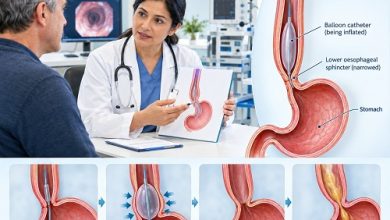
Pneumatic Dilation
Pneumatic dilation uses a specialised balloon to stretch and disrupt some of the muscle fibres of the lower oesophageal sphincter. This reduces resistance to the passage of food.
The procedure can improve swallowing, although some people require repeat treatment. Potential complications include oesophageal perforation and reflux.
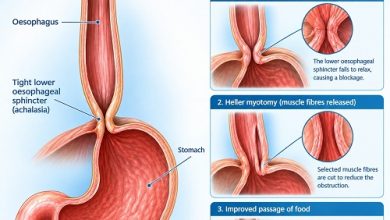
Heller Myotomy
A Heller myotomy is a surgical procedure in which the surgeon cuts selected muscle fibres around the lower oesophageal sphincter to reduce resistance.
It is often combined with a partial fundoplication, which helps reduce reflux after surgery.
Peroral Endoscopic Myotomy (POEM)
POEM is an endoscopic procedure in which a specialist creates a tunnel within the oesophageal wall and cuts selected muscle fibres. It can be effective for different achalasia subtypes.
Reflux can occur after POEM, so follow-up and management may be necessary.
Medicines and Supportive Care
Certain medicines may temporarily relax the lower oesophageal sphincter, but they are generally less effective than established procedural treatments. They may be considered in selected cases when other treatments are unsuitable.
Eating slowly, taking small mouthfuls, and maintaining adequate nutrition may help manage symptoms while a treatment plan is arranged. These measures do not replace medical care.
The best approach depends on achalasia subtype, symptom severity, previous treatments, and the person’s preferences and general health.
Treatment Options for Oesophageal Cancer
Treatment depends on the cancer’s type, stage, location, and the patient’s overall health.
Surgery
For selected patients with localised disease, surgery may remove part or most of the oesophagus and nearby lymph nodes. The stomach or another section of the digestive tract may be used to restore continuity.
Achalasia Surgery is not suitable for every patient, and the decision depends on the expected benefits, risks, and available alternatives.
Chemotherapy and Radiotherapy
Chemotherapy uses medicines to destroy cancer cells or slow their growth. Radiotherapy uses high-energy radiation to damage cancer cells.
These treatments may be used before surgery, alongside other treatments, as the main treatment for certain tumours, or to relieve symptoms when the cancer cannot be removed surgically.
Immunotherapy and Targeted Treatment
Some oesophageal cancers may respond to immunotherapy or targeted medicines. Their suitability depends on the tumour’s characteristics, biomarker results, cancer stage, previous treatments, and local treatment guidance.
Supportive and Nutritional Care
Swallowing problems can make it difficult to maintain weight and hydration. A multidisciplinary team may provide nutritional support, symptom management, and interventions to help food pass more easily when appropriate.
Treatment planning should involve specialists in cancer care, gastroenterology, surgery, and nutrition as needed.
When Should You Seek Medical Attention?
Persistent swallowing difficulty should always be assessed by a healthcare professional. Do not wait for symptoms to become severe or assume they are caused by reflux or achalasia without an appropriate evaluation.
Arrange prompt medical assessment if you experience:
- Swallowing difficulty that persists, worsens, or begins unexpectedly.
- Unexplained weight loss or a significant reduction in food intake.
- Pain when swallowing.
- Repeated regurgitation or vomiting.
- Persistent chest discomfort or symptoms that interfere with eating.
- A new change in swallowing after an established diagnosis of achalasia.
Seek emergency medical care if food becomes completely stuck, you cannot swallow your saliva, you have difficulty breathing, or you experience severe chest pain. Vomiting blood or passing black, tarry stools also requires urgent assessment.
These warning signs do not necessarily mean that cancer is present. They indicate that medical assessment is needed to identify the cause and prevent complications.
Natural Remedies for Achalasia
Achalasia is a rare esophageal disorder that makes it difficult for food and liquids to pass from the esophagus into the stomach. Although natural remedies cannot cure achalasia, certain lifestyle changes may help manage symptoms and improve daily comfort.
Natural Cure for Achalasia: Helpful Home Remedies
People searching for a Natural Cure for Achalasia should understand that no scientifically proven natural treatment can reverse this condition. However, supportive measures may help reduce swallowing difficulties and discomfort.
- Eat Soft Foods: Choose soft, moist foods such as soups, yogurt, mashed vegetables, and porridge. These foods may be easier to swallow than dry or tough meals.
- Eat Smaller Meals: Eating small portions slowly can help make meals more comfortable. Chew food thoroughly and avoid rushing while eating.
- Stay Upright After Eating: Remain upright after meals to reduce regurgitation. Avoid lying down immediately after eating.
- Drink Water Carefully: Small sips of water may help some people swallow food, but follow medical advice if liquids are also difficult to swallow.
- Maintain Healthy Habits: Avoid foods that trigger discomfort and discuss nutritional needs with a healthcare professional.
When to Seek Medical Treatment
Natural approaches cannot replace medical care. Achalasia may require treatments such as pneumatic dilation, POEM, or surgery. Consult a gastroenterologist for proper diagnosis and treatment.
Frequently Asked Questions
1. What is the main difference between achalasia and oesophageal cancer?
Achalasia is a disorder of oesophageal movement in which the lower oesophageal sphincter does not relax properly. Oesophageal cancer involves abnormal cell growth that can form a tumour and obstruct swallowing. Both can cause similar symptoms, so medical testing is needed to distinguish them.
2. Can achalasia be mistaken for oesophageal cancer?
Yes. Both conditions can cause swallowing difficulty, regurgitation, and weight loss. Endoscopy, manometry, imaging, and biopsy when indicated help clinicians identify the underlying cause.
3. Does swallowing difficulty always mean cancer?
No. Swallowing difficulty can result from achalasia, reflux-related narrowing, inflammation, neurological conditions, and several other disorders. However, persistent or progressive difficulty swallowing should be assessed promptly.
4. Is weight loss more common in achalasia or oesophageal cancer?
Weight loss can occur in both conditions. In achalasia, it may result from difficulty eating and poor passage of food into the stomach. In cancer, it may be associated with obstruction, reduced food intake, or the effects of the disease itself. Weight loss alone cannot distinguish between them.
5. Which test confirms achalasia?
High-resolution oesophageal manometry is the key test for confirming achalasia. Endoscopy and a barium swallow are also important because they help assess the oesophagus and exclude other causes of obstruction.
6. Which test confirms oesophageal cancer?
Endoscopy with biopsy is the principal method for confirming oesophageal cancer. Imaging and other tests may then be used to determine the stage and guide treatment.
7. Can achalasia turn into cancer?
Achalasia does not simply turn into cancer, but long-standing achalasia is associated with an increased risk of oesophageal cancer. Most people with achalasia do not develop cancer. New or worsening symptoms should be investigated.
8. Can achalasia be treated without surgery?
Some people can receive pneumatic dilation or other treatments that do not involve conventional surgery. Selected patients may also benefit from medicines, although these are generally less effective. A specialist can explain the available options and their risks.
Conclusion
Understanding vs esophageal cancer is achalasia important because both conditions can cause swallowing difficulty but require different approaches to diagnosis and treatment. Achalasia affects the normal movement of food through the oesophagus, whereas oesophageal cancer involves abnormal cell growth that may narrow the passage.
High-resolution manometry plays a central role in diagnosing achalasia, while endoscopy with biopsy is essential for confirming oesophageal cancer. Imaging and other investigations may be needed to clarify uncertain findings or assess the extent of disease.
Do not ignore persistent swallowing difficulty, unexplained weight loss, painful swallowing, or symptoms that progressively worsen. Early medical assessment can help identify the cause, guide appropriate treatment, and reduce the risk of complications.
Medical disclaimer
This article is for general educational purposes only. It does not replace professional medical advice, diagnosis, or treatment. If you have swallowing difficulty or other concerning symptoms, consult a qualified healthcare professional.