
Charles John sat at a desk for nine hours a day, drank four cups of tea, and called his daily exercise “walking to the parking lot.” He didn’t lack willpower. He lacked a system. Then a colleague dared him to close the three rings on his Apple Watch for one week. Day two, he paced his living room at 10 p.m. to finish his move ring. By day nine, he’d stopped thinking of it as a dare.
Nobody planned that moment, yet it’s the exact outcome every Fitness App Development company chases: a person who opens the app because the habit has taken hold, not because a reminder shouted at them. This article looks at how fitness apps are rewiring daily routines, which behavioral tricks do the heavy lifting, where the model breaks down, and what it means for anyone building or picking one.
The Real Problem Was Never Information
People know what healthy looks like. Walk more, sleep earlier, lift something heavy twice a week, eat vegetables. A quick search returns a thousand articles saying so.
The gap sits between knowing and doing. Researchers in behavioral science have studied this for decades, and the answer keeps coming back to the same place: habits form through repetition in a stable context, not through motivation. Charles Duhigg described the habit loop as cue, routine, and reward. BJ Fogg at Stanford built Tiny Habits around shrinking a behavior until it’s almost laughable. James Clear’s Atomic Habits turned the idea into a bestseller.
Fitness apps took those frameworks and put them in your pocket. A phone is the one object most people check dozens of times a day, which makes it a natural place to deliver cues and rewards at the right moment.
How Apps Build the Habit Loop
Open any popular fitness tracker and you can spot the loop in action.
The cue. A notification at 6:30 p.m. says your walking goal is 2,000 steps away. A watch taps your wrist after an hour of sitting. A calendar slot labeled “Workout” appears on your lock screen. Good cues are timed to your own schedule, not sent at random.
The routine. The app makes the action small and clear. Instead of “exercise more,” it offers a ten-minute bodyweight circuit with a video guide. Reducing friction is half the battle. Fewer decisions mean fewer excuses.
The reward. Rings close, confetti animates, a badge lands, a streak ticks up by one. The reward is tiny but immediate, and that immediacy is what the brain remembers. Compare it with the real payoff of exercise, which shows up weeks later in the mirror or on a blood pressure reading. Apps bridge that gap with small wins today.
Over time, the cue starts to feel automatic. You reach for your shoes before the notification arrives. That’s the signal a habit has moved from the app into you.
The 21-Day Myth and What the Research Says
Many apps still sell “build a habit in 21 days.” It’s a nice number with shaky roots. A study led by Phillippa Lally at University College London tracked volunteers forming new daily behaviors and found the average time to reach automaticity was about 66 days, with a huge range from 18 to 254 days depending on the person and the behavior.
That matters for design. An app that celebrates day 21 and then goes quiet abandons users at the worst moment. The best ones keep supporting you through the boring middle, when novelty has faded and automation hasn’t arrived yet. They also forgive slips. Research suggests missing one day doesn’t wreck the process, so apps that punish a broken streak with shame often cause users to quit altogether.
Streaks, Rings, and Rewards: Why Gamification Works
Duolingo proved that a small flame icon could make millions of people practice a language daily. Fitness platforms borrowed the playbook.
Apple’s activity rings turn movement, exercise, and standing into three visual goals. Strava layers in segments, kudos, and yearly challenges. Fitbit sends badges for steps. Nike Run Club hands out milestone awards and guided runs. Peloton adds leaderboards and instructors who call your name.
Each tool leans on a different human instinct: completion, competition, recognition, or belonging. The trick is balance. Too many badges feel childish, and too few feel empty. Streaks work well for people motivated by consistency, but they can backfire for someone recovering from injury or illness. The smarter apps now offer streak freezes, rest days, and flexible weekly targets so people aren’t forced to choose between health and a number.
Wearables Make Invisible Habits Visible
Before smartwatches, most daily health behavior went unnoticed. How many steps did you take yesterday? How long did you actually sleep? Nobody knew.
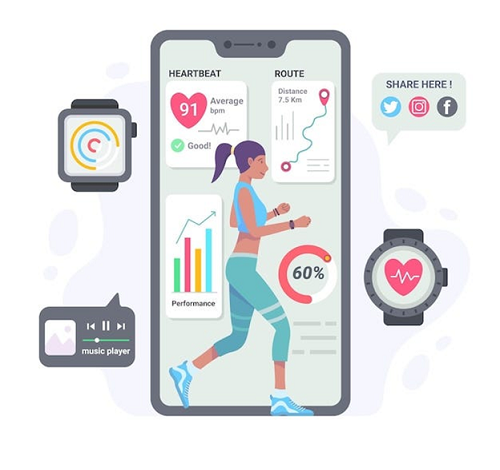
Garmin, Fitbit, Whoop, Oura Ring, and Apple Watch changed that by measuring quietly in the background. Seeing the data creates a feedback loop on its own. A person who learns they average five hours of sleep starts moving bedtime earlier. Someone who notices their resting heart rate drop after a month of walking feels proof that the effort works.
Apple HealthKit and Google Health Connect act as shared hubs, so sleep, steps, workouts, and nutrition from different apps live in one profile. That connected picture is what lets an app say something genuinely helpful, like “Your sleep has been short for three nights, so today’s session is lighter.”
Small Wins Beat Big Resolutions
New Year’s resolutions fail for a predictable reason. They ask for a complete lifestyle makeover on January 1st. Willpower runs out by the second week of February.
Apps approach it from the opposite direction. A beginner might start with a five-minute stretching routine or a target of 4,000 steps. Once that feels easy, the app nudges the goal upward by a small margin. This idea, called progressive overload in strength training and shaping in psychology, keeps difficulty just ahead of ability.
Charles version went like this. Week one: close the move ring. Week three: add a twenty-minute workout on Tuesdays and Thursdays. Month three: join a lunchtime walking group from his office. None of those steps felt dramatic. Together they added up to a different life.
Community and Accountability in Your Pocket
Habits stick better when other people are watching, kindly. Apps know this and build social features into the core experience.
Friends see each other’s workouts. Group challenges turn a solitary task into a shared joke. Coaches check in with a quick message. Some apps let you set a commitment, like paying a small penalty if you skip. Plenty of users say the group chat matters more than the workout itself.
For people who feel intimidated by gyms, online communities offer a softer starting point. A first-time runner can post a slow 2-kilometer jog and get cheered on instead of judged. That emotional safety keeps people coming back long enough for the habit to form.
Beyond Workouts: Sleep, Nutrition, and Stress
Daily habits cover far more than exercise, and fitness apps have widened their scope to match. MyFitnessPal and Cronometer track meals. Headspace and Calm guide meditation. Sleep tracking is built into most wearables, and some apps pair it with wind-down routines.
This broader view makes sense. A person who skips breakfast, sleeps poorly, and feels stressed isn’t going to nail their workout. Apps that combine these signals can offer daily suggestions that feel like a thoughtful friend rather than a drill sergeant.
The danger lies in tracking too much. Counting every calorie, every step, and every minute of sleep can create anxiety. People with a history of disordered eating, especially, should be cautious with calorie-focused tools. Good apps let you choose what to monitor and offer a gentle mode that reduces numbers on screen.
Where Fitness Apps Fall Short
Honesty helps here, because the limitations are real.
Novelty fades. Many people download an app, use it enthusiastically for three weeks, and then stop. Without evolving content and meaningful progress, engagement drops.
Generic nudges. A reminder to “get moving!” at the wrong moment feels like noise. Notification fatigue is a leading reason people delete apps.
Privacy concerns. Heart rate, location, and sleep patterns are personal data. Users should check how an app stores and shares information, and which third parties receive it.
Data without meaning. A dashboard full of charts doesn’t tell you what to do next. The best apps translate data into one clear action.
Inequality of access. Premium subscriptions, expensive wearables, and smartphone requirements leave some people out.
An app can start a habit. It can’t replace the decision to keep one. That part still belongs to you.
What Businesses Should Know Before Building a Habit-Focused App
Gyms, studios, corporate wellness programs, and independent coaches increasingly want their own branded apps. A custom product gives you control over the experience, the data, and the relationship with your members. Generic platforms limit that.
Cost comes up in the first conversation, and the answer depends on what you want inside. The custom workout and training app development cost for a simple version with workout logging, reminders, and basic progress tracking often starts around thirty thousand dollars. Adding wearable sync, AI-driven personalization, live classes, in-app payments, and a coach dashboard can push the total beyond one hundred and fifty thousand. Choice of platform, team location, design complexity, and long-term maintenance all shift the number.
Smart teams begin with a lean first release centered on one habit-forming loop, such as daily check-ins with streaks and a weekly goal. They measure retention at day 7, day 30, and day 90, then add features that serve what users actually do. Building a feature list first and hoping people will come is the quickest way to waste a budget.
A few design choices separate sticky apps from forgettable ones:
- Onboarding under two minutes. Ask only what you need to personalize the first session.
- Flexible goals. Allow rest days, travel weeks, and lighter periods without penalties.
- Smart, sparse notifications. Tie them to the user’s own routine.
- Visible progress. Show trends over weeks, not just today’s numbers.
- Strong privacy. Be clear about consent, and comply with GDPR and local rules.
How to Pick an App That Fits Your Life
If you’re a user, skip the feature list and start with one question: what habit do I want?
For a walking habit, a simple step tracker with a daily target might be plenty. For strength training, look for logging apps like Hevy or Strong. For running, Strava or Nike Run Club. For all-around routines, Apple Fitness+ or a guided program. If sleep or stress is the real issue, begin there instead.
Try the free version for two weeks. Ask yourself whether opening it feels easy or like a chore. Check whether the app lets you adjust goals, export your data, and turn off notifications you don’t want. An app that fights your schedule won’t survive your schedule.
Frequently Asked Questions
Do fitness apps really help build habits? They can. Features like reminders, streaks, goal setting, and social accountability support consistent behavior, and research on digital health interventions shows modest but meaningful gains in physical activity. Results depend on whether people keep using the app.
How long does it take to form a healthy habit? Research from University College London found an average of about 66 days, though individual results ranged widely. Simpler habits form faster than complex ones.
What is the best fitness app for beginners? It depends on your goal. Apps with guided, short workouts and gentle progress tracking tend to suit beginners, such as Nike Training Club or a simple step tracker paired with a smartwatch.
Are streaks a good idea? For many people, yes. They build consistency. But apps should allow rest days and recovery so users don’t push through illness or injury just to protect a number.
Is it safe to share health data with a fitness app? Check the privacy policy, review app permissions, and limit what you share publicly. Reputable apps let you export or delete your data.
Can I build healthy habits without an app? Absolutely. A notebook and a calendar work. Apps simply reduce friction by automating the tracking and delivering timely nudges.
Final Thoughts
Fitness apps haven’t invented new human psychology. They’ve borrowed what already works, such as clear cues, small steps, quick rewards, and a friendly crowd, and delivered it where people spend their day. That’s a bigger shift than it sounds. For the first time, a person’s habits are visible, measurable, and shared, and that visibility is what makes change stick.
Charles still paces the living room some nights, though not for the dare anymore. He does it because the day feels unfinished without it. That’s the finish line every app is really chasing: a habit that no longer needs the app to remind you.