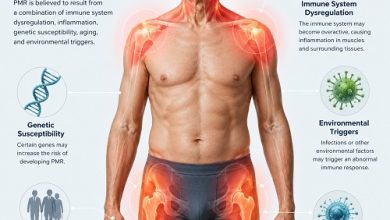
Polymyalgia Rheumatica: Symptoms, Causes, Diagnosis & Treatment


Polymyalgia rheumatica, often abbreviated as PMR, is an inflammatory condition that commonly causes pain and stiffness around the shoulders, neck, hips, and upper thighs. The symptoms can develop relatively quickly and may become particularly noticeable in the morning or after periods of inactivity.
For many people, the stiffness can interfere with ordinary activities such as getting dressed, getting out of bed, climbing stairs, or getting into a car. Although polymyalgia rheumatica primarily affects adults over age 50, it is particularly common among older adults.
The exact cause of polymyalgia rheumatica remains unknown. Researchers believe that a combination of age-related, genetic, and environmental factors may contribute to the development of the condition. PMR is associated with inflammation, and its symptoms often respond rapidly to corticosteroid treatment.
Diagnosing PMR can sometimes be challenging because there is no single blood test or imaging study that definitively confirms the condition. Doctors generally consider a person’s age, symptoms, physical examination, inflammatory blood tests, response to treatment, and the possibility of other conditions that can cause similar symptoms.
What is Polymyalgia Rheumatica?
Polymyalgia rheumatica is an inflammatory rheumatic condition characterized mainly by aching and stiffness in areas around the shoulders, neck, hips, and thighs. The condition is not simply ordinary muscle soreness caused by exercise or physical activity.
The term “polymyalgia” means pain in many muscles, although the inflammation associated with PMR may involve tissues around joints, including bursae and other structures. The American College of Rheumatology notes that PMR commonly produces widespread aching and stiffness involving areas such as the upper arms, neck, lower back, and thighs.
PMR generally affects both sides of the body. Morning stiffness is especially characteristic, and symptoms may become severe enough to make everyday movements difficult.
The condition is strongly associated with age. It is uncommon before age 50 and occurs more frequently in older adults. Women are also affected somewhat more often than men.
Importantly, PMR can occur alongside giant cell arteritis (GCA), a related inflammatory condition affecting arteries. Because GCA can threaten vision and cause other serious complications, people with suspected or diagnosed PMR should know its warning signs.
Polymyalgia Rheumatica Symptoms
The symptoms of polymyalgia rheumatica can appear over several days or weeks. In some people, the onset may seem surprisingly sudden.
1. Shoulder Pain and Stiffness
Shoulder pain and stiffness are among the most characteristic PMR symptoms. People may have difficulty lifting their arms, reaching overhead, putting on clothing, or performing other activities involving the shoulders.
The discomfort generally affects both shoulders rather than only one side.
2. Hip and Thigh Pain
Polymyalgia rheumatica pain can also affect the hips, buttocks, and upper thighs. Some people notice difficulty getting out of a chair or climbing stairs because of stiffness around the hip area.
3. Morning Stiffness
Morning stiffness is a major feature of PMR. It may last for 45 minutes or longer and often improves gradually as the person becomes more active.
Stiffness can also become worse after sitting or remaining inactive for a prolonged period.
4. Neck Pain and Stiffness
The neck may become painful or stiff, sometimes occurring alongside shoulder symptoms.
5. Difficulty With Everyday Activities
Because stiffness can be significant, ordinary tasks may become challenging. Someone with PMR may have trouble:
- Getting dressed
- Getting out of bed
- Getting up from a chair
- Getting into or out of a vehicle
- Reaching overhead
- Turning in bed
- Climbing stairs
These limitations can have a considerable effect on quality of life.
6. Fatigue
Some people with PMR experience significant tiredness or a general feeling of being unwell. Fatigue can occur alongside the musculoskeletal symptoms.
7. Reduced Appetite and Weight Loss
Loss of appetite and unintentional weight loss can occur in some individuals. These symptoms are important to discuss with a healthcare professional because they can also occur with many other conditions.
8. Sleep Disturbance
Pain and stiffness may make it difficult to sleep comfortably or change position during the night.
What Causes Polymyalgia Rheumatica?
One of the most important facts about PMR is that its precise cause remains unknown.
Researchers believe that the condition may result from interactions between the immune system, genetic susceptibility, aging, and environmental factors. However, there is no single confirmed trigger that explains every case.
Age
Age is one of the strongest known associations. PMR is rare in people younger than 50 and becomes much more common with increasing age.
Genetic Factors
Genetic susceptibility may influence who develops PMR. However, having a family member with PMR does not mean that a person will necessarily develop the disease.
Immune System and Inflammation
PMR involves inflammation. Researchers continue to study how immune-system activity contributes to inflammation around the shoulders, hips, and other affected areas.
Environmental Factors
Environmental influences have also been investigated, although researchers have not identified a single environmental cause that explains PMR.
Therefore, it is more accurate to describe PMR causes as multifactorial and incompletely understood rather than attributing the condition to one specific factor.
Who Is at Risk of PMR?
The main risk factor is age. PMR generally develops in people over 50 and is particularly common among older adults. Women are affected more frequently than men.
A person’s overall health and medical history may also influence how doctors evaluate new shoulder, hip, or neck symptoms. However, typical PMR should not be assumed simply because an older adult develops muscle or joint pain.
Many other conditions can produce similar symptoms, which is why professional evaluation is important.
How Is Polymyalgia Rheumatica Diagnosed?
There is no single test that confirms polymyalgia rheumatica. Instead, PMR diagnosis involves putting together several pieces of information while excluding other possible causes of pain and stiffness.
A doctor may consider:
- Age
- Location and pattern of pain
- Duration of symptoms
- Morning stiffness
- Physical examination findings
- Blood tests
- Imaging when appropriate
- Symptoms suggesting other diseases
- Response to corticosteroid treatment
Medical History
Your doctor may ask when symptoms started, whether they affect both sides of the body, how long morning stiffness lasts, and whether the symptoms interfere with daily activities.
The doctor may also ask about headaches, visual changes, jaw pain, fever, weight loss, and other systemic symptoms because some may suggest giant cell arteritis or another condition.
Physical Examination
A physical examination can help determine whether symptoms are more consistent with PMR or another musculoskeletal or inflammatory condition.
Doctors may assess shoulder and hip movement, joint swelling, muscle strength, tenderness, and other physical findings.
Blood Tests
Blood tests are important because PMR is associated with inflammation.
Two commonly measured inflammatory markers are:
- Erythrocyte sedimentation rate (ESR)
- C-reactive protein (CRP)
These markers can be elevated in PMR, although elevated inflammatory markers are not specific to the condition. Other diseases can also increase ESR and CRP.
Additional blood tests may be used to investigate alternative diagnoses, including rheumatoid arthritis, thyroid disorders, infection, or other inflammatory diseases.
Imaging
In selected cases, doctors may use ultrasound or X-rays to investigate the shoulders, hips, or other affected areas and help distinguish PMR from other disorders.
Response to Corticosteroids
A rapid improvement after corticosteroid treatment can support the diagnosis, but response to steroids alone should not be treated as a definitive diagnostic test. The overall clinical picture remains important.
Conditions That Can Resemble PMR
Several conditions may cause pain and stiffness similar to polymyalgia rheumatica. These can include:
- Rheumatoid arthritis
- Osteoarthritis
- Rotator cuff disorders
- Thyroid disease
- Other inflammatory rheumatic diseases
- Certain infections
- Other muscle disorders
- Some cancers and systemic conditions
This is one reason why self-diagnosis is not recommended.
A person with persistent shoulder or hip pain should receive an appropriate medical assessment rather than assuming the symptoms are PMR.
PMR Treatment
The primary treatment for polymyalgia rheumatica is corticosteroid medication, usually prednisolone or prednisone depending on the healthcare system and individual circumstances.
Corticosteroids
Corticosteroids reduce inflammation and can produce a substantial improvement in PMR symptoms.
Many patients notice significant improvement relatively quickly after starting treatment. The American College of Rheumatology notes that low-dose corticosteroids can rapidly relieve PMR aching and stiffness.
However, the exact dose and treatment duration must be determined by a healthcare professional.
Gradual Steroid Reduction
PMR treatment usually involves gradually reducing the corticosteroid dose rather than stopping it suddenly.
Treatment may continue for many months and, in some people, around two years or longer. Symptoms can return during dose reduction, requiring medical reassessment and adjustment of treatment.
Patients should never abruptly stop long-term corticosteroid treatment unless specifically instructed by their healthcare professional.
Other Medications
Some people with recurrent symptoms or difficulty reducing corticosteroids may be considered for additional medicines.
Methotrexate is one medication that may be used in selected patients. The American College of Rheumatology also notes that newer treatment options, including sarilumab, may be considered in appropriate circumstances.
The choice depends on the individual’s symptoms, disease course, other health considerations, medication risks, and specialist guidance.
Monitoring During Treatment
Long-term corticosteroid therapy requires monitoring because corticosteroids can cause side effects.
Depending on the individual, doctors may monitor:
- Blood pressure
- Blood glucose
- Bone health
- Weight
- Eye health
- Infection risk
- Other medication-related complications
The American College of Rheumatology highlights potential corticosteroid complications such as osteoporosis, high blood pressure, weight gain, cataracts, insomnia, and skin changes.
Lifestyle and Self-Care With PMR
Medication is the central part of PMR management, but healthy lifestyle habits can support overall well-being.
Stay Physically Active
Once symptoms are adequately controlled, appropriate physical activity can help maintain mobility, muscle strength, balance, and independence.
Exercise should be adapted to the individual’s age, fitness level, symptoms, and other health conditions.
Prioritize Bone Health
Because corticosteroids may increase the risk of bone loss, bone health is an important consideration for people who require prolonged treatment.
Doctors may assess fracture risk and recommend appropriate measures based on the person’s individual circumstances.
Eat a Balanced Diet
A nutritious diet containing adequate protein, fruits, vegetables, whole grains, and other nutrient-dense foods supports general health.
Diet alone does not cure PMR, but healthy nutrition is particularly important during prolonged treatment.
Get Adequate Rest
Fatigue and sleep disturbance can occur with PMR. Maintaining a regular sleep schedule and addressing persistent sleep problems can support recovery and quality of life.
Polymyalgia Rheumatica and Giant Cell Arteritis
One of the most important complications associated with PMR is giant cell arteritis, also called temporal arteritis.
Giant cell arteritis is a more serious inflammatory disease involving arteries, particularly arteries around the head and neck. PMR and giant cell arteritis can occur together.
Warning Signs of Giant Cell Arteritis
Anyone with PMR should seek urgent medical assessment if they develop:
- A new or severe headache
- Scalp tenderness
- Jaw pain while chewing or talking
- New visual disturbances
- Double vision
- Partial or complete vision loss
These symptoms can indicate giant cell arteritis, which requires prompt treatment because untreated inflammation can result in serious complications, including permanent vision loss.
Do not wait for a routine PMR appointment if these symptoms occur.
How Long Does Polymyalgia Rheumatica Last?
The duration varies from person to person.
Many people require corticosteroid treatment for approximately one to two years, although some recover sooner while others experience relapses or need treatment for longer.
PMR can return after symptoms have improved, particularly while the corticosteroid dose is being reduced. A relapse should be discussed with a healthcare professional rather than treated by independently increasing or restarting medication.
Can Polymyalgia Rheumatica Be Cured?
There is no single treatment that instantly cures PMR. However, the condition is generally manageable, and symptoms often respond very well to corticosteroid therapy.
Over time, many people can reduce and eventually stop corticosteroids under medical supervision. Because the course varies, ongoing follow-up is important.
The goal of treatment is not only to reduce pain but also to control inflammation, prevent relapses, maintain mobility, and minimize treatment-related complications.
When Should You See a Doctor?
Persistent shoulder, neck, or hip pain and stiffness should be evaluated, particularly in adults over 50.
You should arrange medical assessment if:
- Pain and stiffness persist for more than a week.
- Morning stiffness is prolonged.
- Both shoulders or the hips become painful and stiff.
- Symptoms interfere with daily activities.
- You develop unexplained fatigue, appetite loss, or weight loss.
- Symptoms return while reducing corticosteroids.
The NHS recommends medical assessment for persistent pain and stiffness because PMR can resemble other diseases that require different treatment.
Seek urgent medical attention if PMR is suspected or diagnosed and you develop a new headache, jaw pain while chewing, or vision changes because these can be signs of giant cell arteritis.
Frequently Asked Questions About Polymyalgia Rheumatica
Is polymyalgia rheumatica the same as arthritis?
No. PMR is an inflammatory rheumatic condition, but it is not the same as common osteoarthritis. Its characteristic symptoms include aching and stiffness around the shoulders, hips, and neck, particularly in the morning.
Does PMR cause muscle weakness?
People with PMR may feel weak because pain and stiffness make movement difficult. True loss of muscle strength suggests that another condition may need to be investigated.
Can PMR go away on its own?
PMR can eventually improve and go into remission, but medical treatment is generally used to control symptoms and inflammation while the condition is active.
How quickly does PMR treatment work?
Corticosteroids often produce noticeable improvement within a few days, although the response varies. A rapid response can support the clinical diagnosis but should be interpreted alongside the person’s symptoms, examination, and test results.
Can PMR come back?
Yes. Relapses can occur, particularly while corticosteroids are being reduced. Recurring symptoms should be discussed with the treating clinician.
Is polymyalgia rheumatica dangerous?
PMR itself is generally treatable, but it can occur alongside giant cell arteritis. New headaches, jaw pain when chewing, or visual symptoms require urgent assessment because GCA can cause serious complications.
Can diet cure PMR?
There is no established diet that cures polymyalgia rheumatica. A balanced diet can support general health, but it should not replace prescribed treatment.
Should people with PMR exercise?
Once symptoms are controlled, appropriate physical activity can be beneficial for maintaining strength, flexibility, and overall function. Exercise should be tailored to the person’s abilities and medical circumstances.
Conclusion
Polymyalgia rheumatica is an inflammatory condition that primarily affects adults over 50 and commonly causes pain and stiffness around the shoulders, neck, hips, and thighs. Morning stiffness and difficulty with everyday movements are characteristic features.
Although the exact PMR causes remain unknown, age, genetic susceptibility, and environmental influences may contribute. Because several other conditions can produce similar symptoms, PMR diagnosis generally requires a combination of medical history, physical examination, inflammatory blood tests, and evaluation for alternative diagnoses.
The main approach to PMR treatment is corticosteroid therapy, usually followed by a gradual reduction in dosage under medical supervision. Some people need additional medication when relapses occur or when reducing corticosteroids becomes difficult. Regular follow-up is important because both PMR and its treatments require monitoring.
Perhaps most importantly, people with PMR should understand the relationship between PMR and giant cell arteritis. A new headache, jaw pain while chewing, scalp tenderness, or visual changes can indicate giant cell arteritis and should be assessed urgently.
If you have persistent shoulder, hip, or neck pain and stiffness, particularly if symptoms are worse in the morning, speak with a qualified healthcare professional. Early evaluation and appropriate treatment can substantially improve symptoms and help you maintain normal daily activities.
Medical disclaimer: This article is for general educational purposes and does not replace professional medical advice, diagnosis, or treatment. Medication doses and treatment plans should always be determined by a qualified healthcare professional.