
Voice changes can affect everyday communication, work, relationships and confidence. Persistent hoarseness, a rough-sounding voice or difficulty speaking for long periods may indicate a problem with the vocal folds, commonly called vocal cords. Two possible causes are vocal cord nodules and vocal cord cysts. Although both conditions can produce similar symptoms, they differ in their structure, development and treatment.
Understanding Vocal cord nodules vs cysts can help you recognise when voice changes need medical assessment. Nodules usually develop because of repeated mechanical stress on the vocal folds, while cysts are enclosed lesions that form within the tissue. Both can interfere with the smooth vibration required to produce a clear voice.
These conditions are generally non-cancerous, but persistent hoarseness should not automatically be attributed to a benign vocal lesion. A specialist assessment is important to identify the cause, particularly if symptoms continue or worsen. The differences between vocal cord nodules and cysts, their symptoms, causes, diagnosis, treatment options and practical steps to protect your voice.
What Are Vocal Cord Nodules?
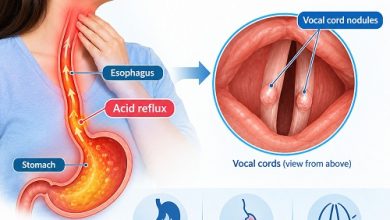
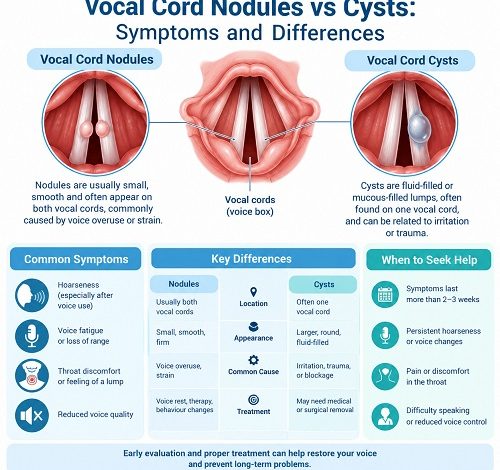
What Are Vocal Cord Nodules? Vocal cord nodules are small, non-cancerous growths that usually develop on both vocal folds. They commonly appear at corresponding points where the vocal folds make repeated contact during speaking, singing or shouting.
Repeated vocal strain can irritate the delicate tissue covering the vocal folds. Over time, this irritation may lead to changes in the tissue and the formation of nodules. They are sometimes called singer’s nodes because professional singers frequently place considerable demands on their voices. However, anyone who regularly uses their voice intensively can develop them.
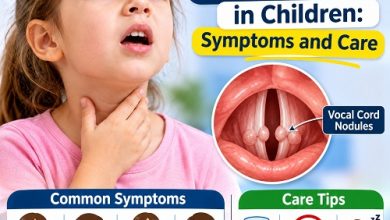
Teachers, call-centre workers, fitness instructors, performers and people who frequently shout may have an increased risk. Children who habitually shout or speak loudly can also develop vocal nodules.
Common symptoms of vocal cord nodules
Vocal Cord Nodules Symptoms may develop gradually and become more noticeable after prolonged speaking.
Common signs include:
- Persistent hoarseness or a rough voice.
- A breathy or weak speaking voice.
- Vocal fatigue after talking or singing.
- Difficulty reaching high notes when singing.
- A reduced vocal range.
- A scratchy sensation or discomfort when speaking.
- Frequent throat clearing.
- Difficulty projecting the voice without straining.
Nodules may affect the voice more noticeably after a busy day of speaking. Some people find that their voice improves after resting but becomes rough again when they resume their usual activities.
The severity of symptoms depends on the size and characteristics of the nodules, the way the vocal folds vibrate and the amount of voice use.
What Are Vocal Cord Cysts?
Vocal cord cysts are enclosed, fluid-filled or material-filled lesions that develop within the vocal fold tissue. Their contents and structure depend on the type of cyst.
Two commonly described types are mucus-retention cysts and epidermoid cysts. A mucus-retention cyst develops when a mucus-producing gland becomes blocked. An epidermoid cyst contains keratin and develops within the surface layers of the vocal fold.
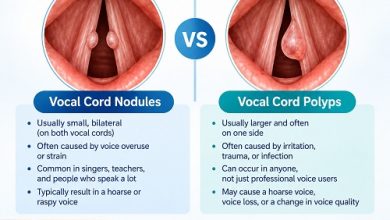
Unlike typical vocal nodules, which often develop on both sides, a vocal cord cyst usually appears on one vocal fold. Its presence can interfere with the normal flexibility and vibration of the affected tissue.
Cysts may develop without a clear history of vocal overuse. Some may be associated with local tissue changes or repeated irritation, but their causes vary.
Vocal cord cyst symptoms
Vocal cord cyst symptoms can resemble those of nodules, which is why symptoms alone cannot reliably distinguish the two conditions.
Possible symptoms include:
- Persistent hoarseness.
- A rough, strained or breathy voice.
- A voice that sounds consistently different from normal.
- Difficulty producing certain pitches.
- Reduced vocal flexibility.
- Vocal fatigue during prolonged speaking.
- A weak voice or difficulty projecting it.
- Occasional discomfort associated with excessive vocal effort.
A cyst may cause symptoms that persist despite periods of voice rest because the structural lesion remains within the vocal fold. However, this pattern is not exclusive to cysts, and nodules can also cause ongoing voice changes.
Most vocal fold cysts are benign. Nevertheless, a specialist must examine a persistent vocal lesion rather than relying on symptoms or appearance alone.
Vocal Cord Nodules vs Cysts: Key Differences
The most useful distinction is the physical structure of the lesion and how it affects vocal fold vibration. A laryngologist can assess these characteristics using an examination of the larynx.
| Feature | Vocal cord nodules | Vocal cord cysts |
| Typical location | Often on both vocal folds at corresponding contact points | Usually on one vocal fold |
| Structure | Tissue changes associated with repeated mechanical stress | An enclosed lesion containing fluid or other material |
| Common contributing factors | Repeated shouting, singing or speaking with excessive force | Blocked mucus gland or an epidermoid lesion, depending on the type |
| Symptom pattern | Often worse after heavy voice use | May remain persistent because the lesion is contained within the tissue |
| Voice effects | Hoarseness, breathiness and vocal fatigue | Hoarseness, reduced vocal flexibility and vocal fatigue |
| Main treatment approach | Often voice therapy and changes in vocal habits | Observation or voice therapy in selected cases; surgery may be considered |
| Response to voice therapy | Many improve with appropriate therapy | Voice therapy may reduce strain but does not necessarily remove the cyst |
| Surgery | Reserved for selected persistent cases | May be considered when the cyst significantly affects voice or persists |
Neither the size of a lesion nor the severity of hoarseness alone establishes whether it is a nodule or a cyst. A small lesion can still affect voice quality if it interferes with vocal fold vibration.
What Causes Vocal Cord Nodules and Cysts?
Causes of vocal cord nodules
Vocal nodules are associated with repeated mechanical stress on the vocal folds. During speech, the vocal folds repeatedly come together and vibrate. Excessive force, prolonged voice use or inefficient voice production can increase tissue stress.
Contributing factors may include:
- Speaking loudly for long periods.
- Frequent shouting or cheering.
- Singing without appropriate vocal technique.
- Speaking over background noise.
- Poor voice projection habits.
- Repeated coughing or throat clearing.
- Irritation associated with smoke or other airborne irritants.
- Vocal strain related to an untreated voice disorder.
Reflux, allergies or respiratory conditions may contribute to throat symptoms or irritation in some people, but they should not automatically be assumed to be the cause of a vocal lesion.
Causes of vocal cord cysts
The cause depends on the type of cyst. A mucus-retention cyst can form when a small gland becomes obstructed. An epidermoid cyst develops when keratin-producing tissue becomes enclosed within the vocal fold.
Some cysts may be present without an obvious triggering event. Others may be identified after a person develops persistent hoarseness or another voice complaint.
Although excessive voice use can aggravate symptoms, a cyst is a structural lesion rather than simply an area of vocal strain. Reducing shouting and speaking more efficiently can protect the surrounding tissue, but these measures do not guarantee that the cyst will disappear.
How Are Vocal Cord Nodules and Cysts Diagnosed?
A healthcare professional may initially ask when the voice changes began, whether symptoms fluctuate, how much you use your voice and whether you have other symptoms.
A Vocal Cord Nodules diagnosis generally requires visual examination of the vocal folds.
Laryngoscopy
Laryngoscopy allows a clinician to inspect the larynx and vocal folds. A flexible scope may pass through the nose, while a rigid scope may be used through the mouth in selected circumstances.
The examination can reveal the location, appearance and general characteristics of a lesion. Nodules commonly appear as paired lesions, whereas cysts are often unilateral and may look like a more localised swelling.
Videostroboscopy
Videostroboscopy uses specialised lighting to assess vocal fold vibration. It can help a voice specialist evaluate the mucosal wave, the movement of the vocal folds and the effect of a lesion on voice production.
This examination may be particularly useful when a cyst is suspected or when persistent hoarseness has not been fully explained by an initial assessment.
Additional assessment
A speech and language therapist with expertise in voice disorders may assess vocal technique, breathing patterns and voice use. The clinician may also consider other Vocal Cord Nodules causes of hoarseness, including inflammation, vocal fold weakness, polyps and other laryngeal conditions.
A lesion’s appearance may guide diagnosis, but some cases require further assessment to establish its nature. Do not attempt to diagnose a vocal lesion from symptoms alone.
Treatment Options for Vocal Cord Nodules
Vocal Cord Nodules Treatment aims to reduce excessive stress on the vocal folds and improve the way you produce your voice.
Voice therapy
Voice therapy is often the first-line treatment for vocal nodules. A qualified speech and language therapist can teach techniques that reduce unnecessary vocal effort and improve voice production.
Therapy may include breathing exercises, resonant voice techniques, adjustments to pitch and volume, and strategies for speaking efficiently. Your therapist may also help you identify habits that contribute to vocal strain.
The duration of treatment varies. Improvement depends on the severity of the nodules, the person’s voice demands and consistent use of the techniques taught.
Vocal hygiene
Vocal hygiene refers to everyday habits that support healthy voice production. Useful measures include:
- Drinking enough water.
- Taking regular voice breaks.
- Avoiding repeated shouting.
- Using a microphone when speaking to large groups, where practical.
- Reducing background noise instead of speaking over it.
- Avoiding smoking and second-hand smoke.
- Replacing habitual throat clearing with gentler strategies recommended by a clinician.
- Seeking help for persistent coughing or other symptoms that affect the voice.
Whispering is not always a good substitute for normal speech because it can create additional strain in some people. Follow your clinician’s advice about how to modify voice use during recovery.
Surgery for vocal nodules
Surgery is not usually the first treatment for nodules. A specialist may consider a procedure if the lesion persists, significantly affects voice function and has not responded adequately to appropriate conservative treatment.
The decision should account for the person’s voice requirements and the potential risks of operating on delicate vocal fold tissue.
Treatment Options for Vocal Cord Cysts
Treatment depends on the cyst’s size, location, effect on voice quality and the person’s needs.
Monitoring and voice therapy
A clinician may recommend monitoring a cyst when symptoms are mild and it does not substantially interfere with everyday communication. Voice therapy can help reduce compensatory strain, allowing the person to use their voice more efficiently.
However, voice therapy does not reliably eliminate a structural cyst. A patient may speak more comfortably while the lesion remains present.
Microlaryngoscopic surgery
A vocal fold cyst that causes persistent, significant voice problems may require microlaryngoscopic surgery. The surgeon uses specialised instruments under magnification to access and remove the lesion while preserving as much healthy vocal fold tissue as possible.
Protecting the delicate tissue is essential because scarring can affect the mucosal wave and long-term voice quality. Surgery therefore requires careful planning by a clinician experienced in voice disorders.
Recovery after cyst surgery
Recovery varies according to the procedure, the condition of the vocal folds and individual healing. Your surgical team may recommend a period of voice rest followed by a gradual return to speaking.
Voice therapy may be recommended before or after surgery to improve technique and reduce the risk of further strain. Follow the specific instructions provided by your surgeon rather than relying on a general recovery schedule.
Can Vocal Cord Nodules and Cysts Go Away on Their Own?
Vocal nodules may improve when a person reduces vocal strain and follows appropriate voice therapy. Early or less established lesions may respond particularly well to changes in vocal habits, although recovery varies.
Cysts are less likely to disappear through voice rest alone because they are enclosed structural lesions. Some may remain stable, while others continue to affect voice quality. A specialist can advise whether monitoring, therapy or surgery is appropriate.
Neither condition should be treated with unproven Natural Remedies for Vocal Cord Nodules intended to dissolve or remove a lesion. Drinking water, resting the voice appropriately and avoiding irritants can support vocal health, but these measures are not substitutes for diagnosis.
Home Care and Prevention Tips
Whether you have nodules, a cyst or another voice disorder, everyday habits can help reduce unnecessary stress on the vocal folds.
Stay hydrated
Drink water regularly throughout the day. Adequate hydration supports the body’s normal functioning and may help reduce the sensation of dryness that encourages throat clearing.
Avoid vocal overuse
Plan breaks during long speaking sessions. If your work involves frequent talking, consider amplification equipment and quieter environments where possible.
Address persistent throat irritation
Allergies, coughing, smoke exposure and reflux symptoms may contribute to discomfort or voice problems in some people. Discuss persistent symptoms with a healthcare professional rather than starting medication or supplements without guidance.
Use healthy speaking techniques
Avoid forcing your voice to compete with noise. A voice therapist can teach practical techniques for projection, breathing and reducing excessive muscular tension.
Do not rely on supplements to remove lesions
There is no established evidence that herbal supplements, vitamins or other dietary supplements can dissolve vocal cord nodules or cysts. Supplements may also cause side effects or interact with medicines. Discuss their use with a healthcare professional, especially before surgery.
When Should You See a Doctor?
Arrange a medical assessment if hoarseness persists for more than four weeks, or sooner if you have risk factors or concerning symptoms. A clinician may recommend earlier laryngeal examination depending on your history and presentation.
Seek prompt assessment if you have:
- A new or worsening voice change.
- Pain or difficulty when swallowing.
- A neck lump.
- Coughing up blood.
- Persistent throat pain or unexplained ear pain.
- Unexplained weight loss alongside voice changes.
- A history of smoking with persistent hoarseness.
Seek emergency medical care if you develop difficulty breathing, noisy breathing or rapidly worsening throat swelling.
Professional voice users may need earlier assessment because even modest changes can significantly affect their work.
Frequently Asked Questions
1. What is the main difference between vocal cord nodules and cysts?
Nodules are usually paired tissue changes associated with repeated vocal stress. Cysts are enclosed lesions that typically affect one vocal fold. Both can cause hoarseness, but their structure and treatment may differ.
2. Are vocal cord nodules more common than cysts?
Vocal nodules are a recognised cause of voice problems, particularly among people who frequently use their voices. The relative frequency of nodules and cysts varies across clinical populations, so a universal comparison is difficult to make.
3. Can vocal cord cysts cause permanent voice changes?
A cyst can continue to affect voice quality while it remains present. Some patients improve after appropriate treatment, but scarring or other vocal fold changes can affect the outcome. Early specialist assessment helps guide treatment.
4. Can voice therapy treat both conditions?
Voice therapy is commonly used to treat nodules and can help people with cysts reduce vocal strain. However, therapy does not reliably remove a structural cyst, and some cysts require surgery.
5. Do vocal cord nodules and cysts cause pain?
Neither condition necessarily causes pain. Hoarseness and vocal fatigue are more typical. Pain may result from excessive effort or another underlying problem, so persistent pain should be assessed.
6. Can I continue singing if I have a vocal lesion?
That depends on the diagnosis, symptoms and degree of vocal fold irritation. Continuing to sing through significant hoarseness may aggravate the problem. Consult a laryngologist or voice therapist before resuming demanding vocal activities.
7. Are vocal cord nodules and cysts cancerous?
Typical vocal nodules and vocal fold cysts are benign. However, persistent hoarseness or an unexplained lesion requires appropriate examination because other laryngeal conditions can produce similar symptoms.
Conclusion
The distinction between Vocal cord nodules vs cysts is important because these lesions can produce similar symptoms but may respond differently to treatment. Nodules are often associated with repeated vocal strain and may improve with voice therapy and healthier speaking habits. Cysts are enclosed structural lesions that may require monitoring or surgery when they significantly affect voice function.
Persistent hoarseness deserves medical attention rather than self-diagnosis. A laryngologist can examine the vocal folds, identify the cause of symptoms and recommend an appropriate treatment plan. With an accurate diagnosis and suitable care, many people can improve their voice function and reduce the risk of further vocal strain.
Medical Disclaimer
This article is for educational purposes only and does not replace professional medical advice, diagnosis or treatment. Consult a qualified healthcare professional for persistent hoarseness or other concerning symptoms. Do not delay seeking medical care because of information in this article.