
Your voice plays an important role in everyday communication, professional activities, singing, teaching, and public speaking. However, frequent speaking, shouting, singing, or using your voice incorrectly can put excessive pressure on your vocal cords. Over time, this repeated stress may lead to vocal cord nodules, a common voice disorder that can cause persistent hoarseness and difficulty speaking clearly.
Understanding the causes of vocal cord nodules is essential for protecting your vocal health and preventing long-term voice problems. Although these growths are usually noncancerous, they can interfere with vocal cord vibration and affect the quality, strength, and clarity of your voice.
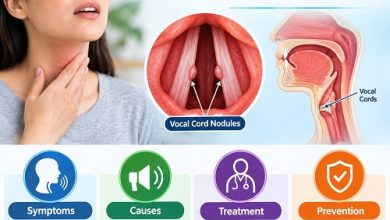
Vocal cord nodules are particularly common among people who rely heavily on their voices, including teachers, singers, coaches, actors, and public speakers. However, anyone who repeatedly strains or overuses their voice may develop this condition. The primary causes of vocal cord nodules, common symptoms, risk factors, treatment options, and practical ways to protect your voice.
What Are Vocal Cord Nodules?
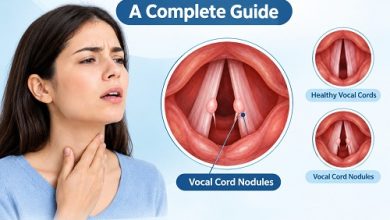
What Are Vocal Cord Nodules? Vocal cord nodules, also known as vocal fold nodules or singer’s nodes, are small, noncancerous growths that develop on the vocal folds inside the larynx, commonly called the voice box.
Your vocal folds are two bands of flexible tissue that vibrate as air passes through them from your lungs. These vibrations create the sound you produce when speaking or singing.
When your vocal folds repeatedly collide with excessive force, the tissue can become irritated and inflamed. Continued stress may cause small, callus-like growths to develop. These nodules typically appear on both vocal folds, often opposite each other in the area that experiences repeated contact.
Vocal cord nodules are similar to calluses that form on your hands or feet after repeated friction. They develop as a response to ongoing mechanical stress rather than usually appearing from a single isolated incident.
According to the Cleveland Clinic and Johns Hopkins Medicine, repeated vocal misuse and overuse are important contributors to these growths.
The good news is that many vocal cord nodules improve with appropriate voice therapy, vocal rest, and changes in speaking habits.
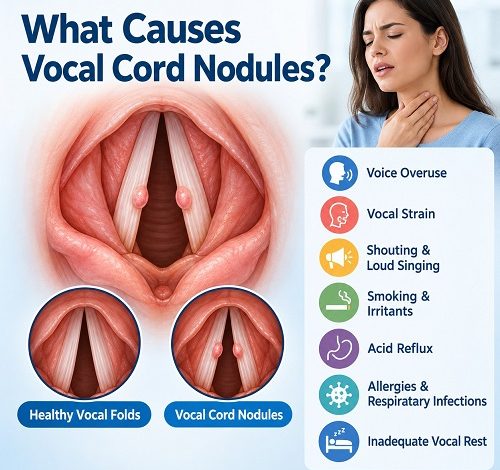
What Causes Vocal Cord Nodules?
The primary cause of vocal cord nodules is repeated stress on the vocal folds. However, several habits, environmental conditions, and health problems can contribute to their development.
Below are seven important factors that may increase your risk.
1. Excessive Voice Use
One of the most common causes of vocal cord nodules is using your voice for extended periods without sufficient rest.
Every time you speak, your vocal folds come together and vibrate. When you talk continuously for hours, particularly at a high volume, the repeated contact can place considerable stress on the delicate tissue.
Over time, this repeated pressure may cause inflammation and contribute to nodule formation.
People at increased risk include:
- Teachers who speak throughout the school day.
- Singers who rehearse or perform frequently.
- Call center employees who speak continuously.
- Sales professionals who communicate with customers for long periods.
- Tour guides who talk over background noise.
- Actors, broadcasters, and public speakers.
For example, a teacher who delivers several long lessons daily without taking vocal breaks may experience persistent hoarseness and vocal fatigue.
How to reduce the risk: Schedule short voice breaks, avoid unnecessary prolonged conversations, and use a microphone when speaking to large groups. If your job requires extensive speaking, consider working with a voice specialist to improve vocal efficiency.
2. Vocal Strain and Incorrect Speaking Techniques
Vocal strain is another major factor associated with vocal cord nodules. It occurs when you use excessive effort or tension to produce your voice.
Some people habitually speak too loudly, force their voices into uncomfortable pitches, or tighten their throat muscles while talking. Others try to project their voices without adequate breath support.
These habits can increase pressure and friction between the vocal folds.
Common examples of vocal strain include:
- Speaking loudly in noisy environments.
- Forcing your voice to sound deeper or higher than is comfortable.
- Shouting instead of using amplification.
- Speaking with excessive throat tension.
- Pushing your voice when it feels tired.
- Continuing to talk despite discomfort or hoarseness.
The relationship between vocal strain causes and voice overuse is particularly important. Even someone who does not speak all day may develop vocal problems if they consistently use inefficient techniques.
How to reduce the risk: Practice relaxed speaking, maintain comfortable pitch and volume, and use steady breath support. A speech-language pathologist specializing in voice disorders can help identify harmful habits and teach more efficient techniques.
3. Frequent Shouting, Screaming, and Loud Singing
Shouting and screaming can place substantial mechanical stress on the vocal folds. Loud singing, particularly without proper technique or preparation, can create similar problems.
Although a single episode of shouting is more commonly associated with temporary irritation or other acute vocal injuries, repeated high-intensity vocal activity can contribute to the development of nodules.
This risk is particularly relevant during sporting events, concerts, celebrations, and situations where people try to make themselves heard over crowds.
Singers may also strain their voices by repeatedly attempting high notes, performing for long periods, or continuing to sing when their vocal quality deteriorates.
For example, a singer who rehearses difficult passages repeatedly without appropriate technique or recovery time may gradually develop hoarseness and reduced vocal flexibility.
How to reduce the risk: Warm up before demanding vocal activities, avoid shouting whenever possible, and stop singing when your voice becomes unusually tired or strained. Use amplification instead of forcing your voice to compete with loud surroundings.
Remember that persistent hoarseness should not be treated as a normal part of singing or speaking.
4. Smoking and Exposure to Irritants
Smoking can irritate the tissues of the larynx and negatively affect vocal health. Cigarette smoke contains substances that may contribute to inflammation, dryness, coughing, and changes in vocal quality.
Secondhand smoke and other airborne irritants may also aggravate the throat and vocal folds.
Although smoking is not considered the primary direct cause of typical vocal cord nodules, it can worsen vocal irritation and contribute to other laryngeal disorders. People who smoke may develop several different voice problems, so persistent hoarseness should always be evaluated rather than automatically attributed to nodules.
Other potential irritants include:
- Dust and airborne particles.
- Chemical fumes.
- Air pollution.
- Strong cleaning products.
- Dry, irritating indoor environments.
Frequent exposure to irritants may lead to coughing or throat clearing, which can add further mechanical stress to the vocal folds.
How to reduce the risk: Avoid smoking, minimize exposure to secondhand smoke, improve ventilation, and use appropriate protective equipment when working around airborne irritants.
If your workplace exposes you to chemicals or dust, follow established occupational safety recommendations.
5. Acid Reflux and Laryngopharyngeal Reflux
Acid reflux occurs when stomach contents flow backward into the esophagus. In some cases, reflux reaches the throat and voice box, a condition known as laryngopharyngeal reflux (LPR).
When reflux irritates the laryngeal tissues, it may contribute to inflammation, throat discomfort, coughing, and hoarseness.
People with reflux-related throat irritation may experience:
- Frequent throat clearing.
- A sensation of something stuck in the throat.
- A persistent cough.
- Hoarseness, especially in the morning.
- Throat irritation after meals.
- A bitter or sour taste in the mouth.
Reflux is best understood as a potential contributing factor rather than a proven cause of every case of vocal cord nodules. The relationship between reflux and voice symptoms varies from person to person, and similar symptoms can have other explanations.
How to reduce the risk: If you experience frequent reflux symptoms, speak with a healthcare professional about appropriate management. Depending on your circumstances, lifestyle changes may include avoiding meals shortly before bedtime, identifying personal food triggers, and elevating the head of the bed.
Do not assume that hoarseness is caused by reflux without considering other possible conditions.
6. Allergies, Respiratory Infections, and Persistent Coughing
Allergies and respiratory infections can irritate the upper airway and affect the vocal folds.
Conditions such as allergic rhinitis, sinusitis, colds, and other upper respiratory infections may cause congestion, postnasal drainage, coughing, and frequent throat clearing.
These Vocal Cord Nodules symptoms can indirectly increase vocal fold stress. Repeated coughing or forceful throat clearing causes the vocal folds to come together abruptly, potentially aggravating already irritated tissue.
Using your voice heavily while sick may increase the strain further.
For example, a person with a respiratory infection who continues teaching, singing, or shouting for extended periods may experience more significant vocal fatigue than someone who reduces vocal activity while recovering.
Allergies and infections do not automatically cause nodules, but they can contribute to vocal irritation and make existing voice problems worse.
How to reduce the risk: Allow your voice to recover during illness, manage allergies with appropriate medical guidance, and avoid forceful throat clearing. Sipping water or swallowing gently may help reduce the urge to clear your throat repeatedly.
If coughing or hoarseness persists after an infection has resolved, arrange a medical assessment.
7. Inadequate Vocal Rest and Poor Vocal Care
Your vocal folds need opportunities to recover from prolonged or demanding use. Repeatedly ignoring vocal fatigue may increase the risk of ongoing irritation and injury.
Poor vocal care does not necessarily cause nodules on its own, but it can reinforce harmful patterns when combined with excessive voice use or incorrect technique.
Factors that may contribute to vocal fatigue include:
- Speaking continuously without breaks.
- Using a loud voice throughout the day.
- Continuing to sing when the voice feels tired.
- Getting insufficient sleep.
- Drinking too little water.
- Ignoring early signs of hoarseness.
- Using the voice intensively during illness.
Dehydration can make phonation less comfortable and increase the effort needed to produce sound. Insufficient sleep and general fatigue may also make it harder to maintain efficient vocal technique.
How to reduce the risk: Drink water regularly, take breaks during demanding speaking activities, get adequate sleep, and respond early to changes in your voice.
If you regularly depend on your voice for work, developing a consistent vocal care routine can help protect your long-term vocal health.
Who Is Most at Risk of Developing Vocal Cord Nodules?
Although anyone can develop vocal cord nodules, some groups are more likely to experience them because of their daily activities or vocal habits.
These include:
- Teachers: Frequent classroom speaking and projecting over background noise can increase vocal demands.
- Professional singers: Rehearsals, performances, and demanding vocal techniques may create repeated stress.
- Actors and public speakers: Extended speaking and forceful projection can contribute to vocal fatigue.
- Coaches and fitness instructors: Giving instructions in noisy environments may encourage shouting.
- Call center workers: Prolonged telephone conversations can reduce opportunities for vocal recovery.
- Children: Frequent shouting and loud play can contribute to vocal strain.
Risk depends on several factors, including the intensity of voice use, technique, recovery time, and the presence of other sources of irritation.
Having a voice-intensive occupation does not mean you will inevitably develop nodules. Good technique, appropriate rest, and early attention to symptoms can help reduce the risk.
What Are the Symptoms of Vocal Cord Nodules?
The symptoms of vocal cord nodules may develop gradually as changes in the vocal fold tissue begin to interfere with normal vibration.
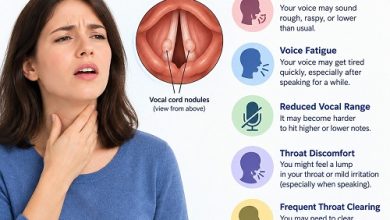
Common symptoms include:
- Persistent hoarseness or a raspy voice.
- A breathy or weak voice.
- Vocal fatigue after speaking.
- Difficulty projecting your voice.
- A reduced singing range.
- Frequent voice breaks.
- A scratchy or rough vocal quality.
- Increased effort when speaking.
- Frequent coughing or throat clearing.
Some people notice that their voice sounds relatively normal in the morning but becomes weaker or rougher after a day of speaking.
Singers may find it increasingly difficult to reach high notes or sustain certain sounds. Teachers and other professional voice users may notice that speaking becomes uncomfortable toward the end of the workday.
However, these symptoms are not specific to vocal cord nodules. Other conditions, including laryngitis, vocal polyps, cysts, and vocal fold dysfunction, can produce similar changes.
A medical examination is necessary to identify the underlying problem accurately.
How Are Vocal Cord Nodules Diagnosed?
If your voice remains hoarse or changes noticeably, an ear, nose, and throat (ENT) specialist can assess your vocal folds and determine whether nodules are present.
Diagnosis generally involves several steps.
Medical history: Your clinician may ask about your symptoms, occupation, singing habits, smoking history, reflux symptoms, allergies, and recent respiratory infections.
Physical examination: The clinician may examine your mouth, throat, and neck and listen to the quality of your voice.
Laryngoscopy: This procedure uses a thin viewing instrument to examine the larynx and vocal folds.
Videostroboscopy: When appropriate, a specialized light and camera system can help the clinician assess vocal fold vibration and identify abnormalities that may not be obvious during a routine examination.
These tests help distinguish nodules from other vocal fold lesions and determine the most appropriate treatment.
If you experience persistent hoarseness for more than three weeks, seek medical evaluation, particularly if there is no clear explanation such as a short-lived respiratory infection.
Seek prompt medical attention for breathing difficulties, coughing up blood, a neck lump, painful or difficult swallowing, or sudden major voice loss after strenuous vocal activity.
How Are Vocal Cord Nodules Treated?
Treatment depends on the size and nature of the nodules, the severity of symptoms, and the factors contributing to their development.
Many cases improve without surgery.
Voice Therapy
Voice therapy is often a central part of treatment. A speech-language pathologist with specialized training in voice disorders can teach techniques that reduce unnecessary vocal strain.
Therapy may address breathing patterns, pitch, volume, vocal projection, throat tension, and speaking habits.
The goal is to help you produce sound more efficiently while reducing repeated trauma to the vocal folds.
Vocal Rest and Activity Modification
Your clinician may recommend reducing speaking or singing temporarily, depending on the severity of your symptoms.
Vocal rest does not necessarily mean complete silence in every case. Follow the specific instructions of your treating professional, and avoid whispering forcefully because whispering can also be effortful for some people.
Reducing shouting, limiting prolonged conversations, and taking regular breaks can support recovery.
Treating Contributing Conditions
If allergies, reflux, sinus problems, or other medical conditions contribute to throat irritation, treating those conditions may improve your symptoms.
Medication should be selected according to the underlying diagnosis rather than used routinely for every voice problem.
Surgery
Surgery is not usually the first treatment for typical vocal cord nodules. It may be considered in selected cases when a specialist determines that conservative treatment has not been sufficient or that the lesion requires a different approach.
Correct diagnosis is particularly important because nodules, polyps, and cysts do not always respond to the same treatments.
Voice therapy and changes in vocal habits may also be recommended after a procedure to reduce the risk of further injury.
Natural Treatment for Vocal Cord Nodules
Vocal cord nodules are small, benign growths that develop on the vocal cords, often due to excessive voice use, shouting, or improper speaking techniques. They can cause hoarseness, vocal fatigue, and difficulty speaking clearly. Fortunately, several Natural Remedies for Vocal Cord Nodules may help soothe the throat and support vocal health.
Effective Natural Remedies for Vocal Cord Nodules
- Rest Your Voice: Reducing unnecessary talking and avoiding shouting can help your vocal cords recover. Avoid whispering, as it can also strain your voice.
- Stay Hydrated: Drinking plenty of water keeps your vocal cords moist and supports healthy voice production. Warm, non-caffeinated drinks may also soothe throat discomfort.
- Try Steam Inhalation: Gentle humidification may relieve throat dryness and irritation. Avoid inhaling steam directly from boiling water to prevent burns.
- Avoid Irritants: Smoking, secondhand smoke, and other irritants can worsen vocal problems. Managing acid reflux, when present, may also help.
- Practice Healthy Vocal Techniques: A speech-language pathologist can teach vocal exercises and techniques that reduce strain and improve voice quality.
How Can You Prevent Vocal Cord Nodules?
Preventing vocal cord nodules mainly involves reducing unnecessary stress on your vocal folds and maintaining healthy voice habits.
Consider the following practical strategies:
- Stay hydrated. Drink water regularly throughout the day.
- Avoid shouting. Use a microphone or other amplification when necessary.
- Warm up before singing. Prepare your voice before prolonged or demanding performances.
- Take regular vocal breaks. Give your voice recovery time between demanding activities.
- Use efficient speaking techniques. Avoid forcing your pitch, volume, or vocal projection.
- Avoid smoking. Reduce exposure to smoke and other airborne irritants.
- Manage allergies and reflux. Seek professional advice if symptoms persist.
- Rest when you are ill. Avoid intensive speaking or singing when your voice is hoarse.
- Avoid habitual throat clearing. Try gentle swallowing or sipping water instead.
- Seek help early. Persistent voice changes deserve professional assessment.
People who rely on their voices professionally may benefit from preventive voice training even before symptoms develop.
Frequently Asked Questions
1. What is the most common cause of vocal cord nodules?
The most common cause is repeated vocal overuse or misuse. Prolonged speaking, shouting, loud singing, and inefficient voice techniques can place excessive pressure on the vocal folds and contribute to nodule formation.
2. Can vocal cord nodules go away naturally?
Some nodules improve when the person reduces vocal strain and follows appropriate treatment. Voice therapy, changes in vocal habits, and management of contributing conditions can help. Recovery varies, so persistent symptoms should be assessed by a specialist.
3. Are vocal cord nodules permanent?
Not necessarily. Many improve with conservative treatment, although recovery depends on the nature and severity of the tissue changes and whether the factors causing repeated irritation are addressed.
4. Can talking too much cause vocal cord nodules?
Yes. Repeated prolonged speaking, especially when combined with loudness, poor technique, or inadequate recovery, can contribute to the development of nodules.
5. Are vocal cord nodules cancerous?
Typical vocal cord nodules are benign, meaning they are noncancerous. However, persistent hoarseness or an unexplained vocal fold lesion should be examined by a qualified clinician because other conditions can cause similar symptoms.
6. When should I see a doctor for hoarseness?
Arrange a medical assessment if hoarseness persists for more than three weeks, or sooner if you have concerning symptoms. Difficulty breathing, coughing up blood, painful or difficult swallowing, or sudden voice loss after strenuous vocal use warrants prompt attention.
Conclusion
Understanding the causes of vocal cord nodules is an important step toward maintaining a healthy, reliable voice. Repeated voice overuse, vocal strain, shouting, incorrect speaking techniques, smoking, reflux-related irritation, allergies, and inadequate vocal recovery can all contribute to vocal problems.
Although vocal cord nodules are generally noncancerous, they can affect communication, singing performance, and everyday comfort. Recognizing early symptoms and addressing harmful vocal habits can help prevent further irritation and support recovery.
If you use your voice frequently for work or personal activities, prioritize hydration, appropriate vocal rest, efficient speaking techniques, and preventive voice care. If hoarseness persists, consult an ENT specialist rather than relying on self-diagnosis.
Medical Disclaimer
The information provided in this article, “What Causes Vocal Cord Nodules?”, is intended for general educational and informational purposes only. It should not be considered a substitute for professional medical advice, diagnosis, or treatment. Vocal cord nodules and related voice symptoms can vary from person to person. Always consult a qualified healthcare professional or an ear, nose, and throat (ENT) specialist for an accurate diagnosis and appropriate treatment. Do not ignore persistent hoarseness or delay seeking medical advice because of information presented in this article. If you experience difficulty breathing or other severe symptoms, seek immediate medical attention.
Medical references
The article’s medical information is supported by the following resources:
-
Cleveland Clinic — Vocal Cord Lesions: Nodules, Polyps and Cysts.
-
National Institute on Deafness and Other Communication Disorders — What Is Hoarseness?.
-
Johns Hopkins Medicine — Vocal Cord Disorders.
Editorial note: This article is intended for general education and should not replace an individual medical assessment. Have a qualified healthcare professional review the content before publication on a medical or healthcare website.