

For singers, the voice is more than an instrument; it is an essential part of their identity, creativity, and professional life. Whether you are a professional vocalist, choir member, music teacher, or passionate amateur singer, experiencing vocal nodules can be frustrating and emotionally challenging. Hoarseness, vocal fatigue, reduced vocal range, and difficulty reaching high notes can significantly affect your ability to sing comfortably.
The good news is that recovering your singing voice after nodules is possible with appropriate treatment, patience, and consistent vocal rehabilitation. Many singers experience meaningful improvements through professional voice therapy, changes in vocal habits, and carefully guided singing exercises.
Vocal nodules do not necessarily mean the end of a singing career. However, returning to singing too quickly or continuing unhealthy vocal habits can delay recovery and potentially worsen the condition.
How vocal nodules affect your singing voice, what recovery involves, how singing voice rehabilitation works, and which habits can help you maintain long-term vocal health.
Understanding Vocal Nodules and Their Effects on Your Singing Voice
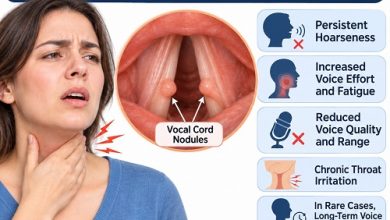
Vocal nodules are small, non-cancerous growths that develop on the vocal folds, commonly in areas exposed to repeated mechanical stress. They are sometimes called singer’s nodules because they frequently affect people who use their voices extensively.
The vocal folds are two flexible bands of tissue located inside the larynx (voice box). When you sing or speak, they come together and vibrate as air passes through them, producing sound.
Repeated vocal strain, excessive singing, shouting, and incorrect vocal techniques can contribute to irritation and tissue changes. Over time, these changes may develop into nodules that interfere with normal vocal fold vibration.
Common symptoms of vocal nodules include:
- Persistent hoarseness or a breathy voice.
- Difficulty singing high or low notes.
- Reduced vocal flexibility and range.
- Vocal fatigue after short periods of singing.
- A rough, weak, or unstable singing voice.
- Difficulty maintaining long notes.
- Increased effort when speaking or singing.
- Frequent throat clearing or discomfort.
For singers, even relatively small changes in vocal function can have a noticeable impact on performance. High notes may become difficult, transitions between registers may feel uncomfortable, and the voice may lose its previous clarity.
Understanding these symptoms is the first step towards effective recovery.
Can You Recover Your Singing Voice After Vocal Nodules?
Yes, many people can regain significant vocal function after developing vocal nodules. However, recovery depends on several factors, including the size and maturity of the nodules, how long they have been present, the underlying causes, and the treatment approach.
Soft or relatively recent nodules may respond well to conservative treatment, particularly when accompanied by professional voice therapy. More established or fibrotic nodules may require additional medical intervention.
A systematic review published in 2024 identified voice therapy as an important non-invasive treatment option for vocal nodules. It also highlighted that treatment outcomes depend on factors such as lesion characteristics, age, and adherence to rehabilitation.
Recovery does not simply mean making the hoarseness disappear. For singers, successful rehabilitation also involves restoring:
- Vocal range and flexibility.
- Clear and consistent tone production.
- Breath coordination.
- Vocal endurance.
- Comfortable transitions between registers.
- Confidence during singing.
- Healthy vocal technique.
It is important to remember that symptom improvement does not always mean the nodules have completely disappeared. A qualified ear, nose, and throat (ENT) specialist should assess the vocal folds to monitor structural healing and guide your return to singing.
Get a Professional Voice Assessment Before Returning to Singing
One of the most important steps in recovering your singing voice after nodules is receiving an accurate medical assessment.
An ENT specialist, preferably a laryngologist with experience treating professional voice users, can examine your vocal folds and determine the condition of the tissue.
Common assessment methods include:
Laryngoscopy: A small camera is used to examine the larynx and vocal folds. This helps identify vocal nodules and other possible causes of voice changes.
Videostroboscopy: This examination uses a specialised light to assess vocal fold vibration. It can help clinicians evaluate how the vocal folds move and whether their vibration is symmetrical and regular.
Voice evaluation: A speech-language pathologist (SLP) specialising in voice disorders may assess vocal quality, pitch, loudness, breathing patterns, and speaking habits.
Singing voice assessment: For singers, the assessment may also consider vocal range, register transitions, pitch stability, endurance, and performance-related demands.
These evaluations help establish a baseline and identify the areas that need attention during singing voice rehabilitation.
Avoid relying solely on how your voice sounds or feels. Some vocal problems may persist even when symptoms temporarily improve.
Follow an Appropriate Vocal Rest Plan
Vocal rest is often an important part of early recovery, particularly when the vocal folds are irritated or inflamed.
However, vocal rest does not mean that every person with nodules needs complete silence for a fixed number of days. The appropriate amount of rest depends on the condition of the vocal folds and your specialist’s recommendations.
Your ENT specialist may recommend:
- Temporary avoidance of singing.
- Reducing unnecessary speaking.
- Avoiding shouting and whispering.
- Limiting long conversations.
- Taking regular vocal breaks.
- Avoiding speaking over loud background noise.
Whispering is not necessarily safer than normal speech. Depending on how it is produced, it may increase tension and vocal effort.
Professional voice users should also avoid testing their vocal range repeatedly to see whether their voice has recovered.
Repeatedly attempting difficult high notes can place additional stress on recovering vocal folds.
Instead, follow a structured rehabilitation plan and allow your voice to progress gradually under professional supervision.
Start Singing Voice Rehabilitation with Professional Guidance
Singing voice rehabilitation is one of the most important parts of recovering vocal function after nodules.
It focuses on improving the way your vocal system works rather than simply encouraging you to sing more often.
A voice-specialised speech-language pathologist can help identify unhealthy vocal habits and develop exercises suited to your individual needs.
The primary goals of singing voice rehabilitation include:
Improving vocal efficiency
You learn to produce sound without unnecessary muscular tension or excessive effort.
Developing better breath coordination
Breathing patterns are improved to support comfortable and consistent sound production.
Reducing vocal strain
You learn to avoid excessive pressure, shouting, and other behaviours that place unnecessary stress on the vocal folds.
Improving resonance
Resonance exercises can help you produce a clearer, more balanced sound without forcing your voice.
Restoring vocal flexibility
Gradual exercises help rebuild coordination across different pitches and registers.
Singing voice rehabilitation should be individualised. An exercise that benefits one singer may not be appropriate for another, particularly during early recovery.
How Voice Therapy Helps Singers Recover
Voice therapy is a structured treatment delivered by a qualified speech-language pathologist who specialises in voice disorders.
It addresses the behavioural and physical patterns that contribute to inefficient voice production.
For people with vocal nodules, voice therapy may help reduce harmful vocal behaviours, improve vocal technique, and support healthier vocal fold function.
According to the American Speech-Language-Hearing Association (ASHA), voice therapy may combine direct exercises with indirect approaches such as vocal hygiene education and counselling.
Common approaches include:
Resonant voice therapy
This technique encourages comfortable sound production with a focus on oral and facial vibration sensations. It aims to improve vocal efficiency while reducing unnecessary effort.
Semi-occluded vocal tract exercises
These exercises partially restrict airflow through the vocal tract, helping coordinate airflow and vocal fold vibration.
Examples include:
- Gentle straw phonation.
- Lip trills.
- Tongue trills.
- Gentle humming when prescribed.
Breathing coordination exercises
These exercises help coordinate breathing and phonation so that singers do not push or squeeze their voices to produce sound.
Vocal function exercises
These are structured exercises designed to improve vocal coordination, strength, and endurance. They should be selected and adjusted by a qualified clinician.
Voice therapy is not simply a collection of singing exercises. It is a personalised rehabilitation process that addresses the underlying factors affecting vocal health.
Gentle Vocal Exercises That May Support Recovery
Once your ENT specialist and voice therapist confirm that you can begin appropriate vocal exercises, gradual practice may help restore coordination.
The following are examples of commonly used exercises. They are not a substitute for an individual rehabilitation programme.
1. Gentle humming
Humming can encourage easy sound production without requiring a wide mouth opening.
Start with a comfortable pitch and produce a soft, relaxed hum. Avoid increasing volume or moving into difficult pitches.
2. Straw phonation
Straw phonation involves producing gentle sounds through a drinking straw.
It is a commonly used semi-occluded vocal tract exercise that can help improve coordination between airflow and vocal fold vibration.
A clinician can demonstrate the correct technique and recommend the appropriate straw size and exercise duration.
3. Lip trills
Lip trills involve gently vibrating the lips while producing a comfortable sound.
They can help singers coordinate airflow and phonation without forcing the voice.
4. Gentle pitch glides
When approved by your therapist, you may gradually slide between comfortable pitches.
The aim is smooth, easy movement rather than reaching the highest or lowest possible notes.
5. Relaxation exercises
Gentle neck, shoulder, and jaw relaxation can help reduce unnecessary muscular tension associated with voice production.
Stop any exercise that causes pain, increased hoarseness, vocal fatigue, or discomfort. Do not attempt to push through symptoms.
Maintain Proper Vocal Hygiene During Recovery
Vocal hygiene refers to daily habits that help protect your vocal folds and reduce unnecessary vocal stress.
Good vocal hygiene is essential during recovery and remains important after returning to singing.
Stay hydrated
Drink water regularly throughout the day. Adequate hydration supports the normal functioning of the vocal tract.
Avoid smoking
Smoking exposes the vocal folds to irritants and can negatively affect vocal health. Avoid smoking and exposure to second-hand smoke.
Reduce throat clearing
Frequent throat clearing can create additional mechanical irritation. Try swallowing or taking a sip of water instead, where appropriate.
Manage allergies
Allergies can contribute to nasal congestion, coughing, and throat irritation. Discuss persistent symptoms with a healthcare professional.
Get sufficient sleep
Sleep supports general recovery and helps reduce fatigue that may affect vocal performance.
Avoid excessive caffeine if it affects your hydration or symptoms
Moderate your intake and maintain adequate fluid consumption.
Limit shouting
Avoid shouting, cheering loudly, or speaking over background noise.
Use a microphone when necessary
Singers, teachers, and performers may benefit from amplification instead of increasing vocal intensity.
Healthy vocal habits help reduce the risk of repeated vocal strain and support long-term rehabilitation.
Manage Acid Reflux and Other Contributing Conditions
Acid reflux, allergies, respiratory infections, and other health conditions may contribute to throat symptoms or worsen existing voice problems.
Some people experience laryngopharyngeal reflux (LPR), in which stomach contents reach the throat area. Possible symptoms include throat clearing, coughing, a sensation of something stuck in the throat, and hoarseness.
However, these symptoms do not automatically indicate reflux.
If you experience persistent symptoms, consult your healthcare professional for an appropriate assessment.
Depending on your medical history, your clinician may recommend:
- Identifying foods that trigger reflux symptoms.
- Avoiding large meals close to bedtime.
- Managing allergies appropriately.
- Addressing chronic coughing.
- Treating confirmed underlying medical conditions.
Avoid taking reflux medication, steroids, or other medicines specifically to treat vocal nodules without medical advice.
Medication is not a universal treatment for nodules. It should be used when there is an appropriate medical indication.
When Can You Start Singing Again?
One of the most common questions singers ask is how long they must wait before returning to singing.
There is no universal recovery timeline.
Some singers improve over weeks, while others require several months of treatment and rehabilitation. Recovery depends on the severity of the nodules, vocal habits, Vocal Cord Nodules treatment response, and individual healing.
Rather than following a fixed calendar, your return to singing should be based on clinical assessment and functional progress.
A gradual return may involve the following stages:
| Stage | Rehabilitation focus |
| Early recovery | Follow medical advice and reduce vocal strain |
| Initial rehabilitation | Begin clinician-approved gentle vocal exercises |
| Coordination | Improve comfortable sound production and breathing |
| Singing preparation | Gradually introduce suitable singing exercises |
| Performance preparation | Build endurance and practise repertoire carefully |
| Long-term maintenance | Maintain healthy technique and vocal habits |
You should not progress to the next stage simply because a certain number of days has passed.
Your voice therapist and ENT specialist should guide the process according to your vocal fold condition and recovery.
Rebuild Your Vocal Range and Singing Technique Gradually
After vocal nodules, many singers notice that their previous vocal range has changed. High notes may feel inaccessible, low notes may sound weak, and transitions between vocal registers may become less predictable.
This can happen because vocal fold vibration, closure, and coordination have been affected.
Rebuilding your range requires patience and proper technique.
Consider the following recommendations:
Begin with comfortable pitches
Do not immediately attempt the highest or lowest notes in your previous range. Start within a comfortable range approved by your voice therapist.
Avoid excessive volume
Loud singing can increase vocal effort. Focus on comfortable sound production instead of trying to achieve maximum volume.
Practise register transitions carefully
Moving between chest voice, mixed voice, and head voice should feel coordinated rather than forced.
Use appropriate warm-ups
Follow the exercises recommended by your voice therapist. Avoid lengthy or intensive warm-up sessions during early rehabilitation.
Increase practice time gradually
Begin with short, manageable sessions and increase duration only when your voice responds comfortably.
Monitor your voice after practice
Notice whether your voice becomes tired, rough, breathy, or uncomfortable after singing. These changes may indicate that you need to reduce vocal demands and discuss your progress with your clinician.
Remember that recovering your previous range is not the only measure of success. Comfortable, reliable, and healthy singing is equally important.
Do You Need Surgery for Vocal Nodules?
Not every person with vocal nodules requires surgery.
Conservative treatment, particularly voice therapy and modification of harmful vocal habits, is commonly considered before surgical intervention.
However, surgery may be discussed when:
- Nodules remain despite appropriate conservative treatment.
- The lesions are mature, hard, or fibrotic.
- Voice quality remains significantly impaired.
- The condition substantially affects professional or everyday communication.
- An ENT specialist identifies a clinical reason for surgical management.
The decision should be individualised according to the lesion’s characteristics, the singer’s needs, and the response to previous treatment.
A systematic review published in 2024 found that voice therapy is an important non-invasive treatment, while surgery may be more appropriate in selected cases involving hard or mature nodules. It also emphasised the importance of postoperative voice therapy.
If surgery is recommended, it is important to understand that removing the nodules does not automatically correct the vocal habits that contributed to their development.
Postoperative rehabilitation helps singers develop healthier vocal techniques and reduce the risk of recurring problems.
Research published in 2025 also supports the importance of voice training following surgery for benign vocal fold lesions.
Common Mistakes to Avoid During Vocal Recovery
Some singers unintentionally delay their recovery by returning to old habits too quickly.
Avoid these common mistakes:
Returning to full singing too soon
Feeling better does not necessarily mean that the vocal folds have fully recovered. Follow your clinician’s recommendations.
Practising high notes repeatedly
Testing your upper range every day can increase vocal strain.
Ignoring vocal fatigue
Persistent tiredness or worsening hoarseness should not be treated as a normal part of rehabilitation.
Copying exercises from online videos
Not every exercise is suitable for someone recovering from vocal nodules. Some exercises may increase strain if performed incorrectly or at the wrong stage.
Skipping voice therapy sessions
Consistency is important because rehabilitation involves learning and maintaining healthier vocal behaviours.
Relying on medication alone
Medication cannot replace appropriate voice therapy and vocal technique modification when these are needed.
Neglecting vocal hygiene
Poor hydration, smoking, shouting, and excessive throat clearing can continue to irritate the vocal system.
Avoiding these mistakes can make your rehabilitation more effective and help you develop healthier singing habits.
How to Prevent Vocal Nodules from Returning
Preventing recurrence is an essential part of long-term singing voice rehabilitation.
Once your voice has improved, maintaining the right habits can help protect your vocal folds from repeated strain.
Here are some practical ways to maintain vocal health:
- Warm up appropriately: Follow a suitable warm-up routine before rehearsals and performances.
- Use proper singing techniques: Work with a qualified singing teacher who understands vocal health.
- Take regular breaks: Avoid continuous singing without sufficient recovery time.
- Stay hydrated: Drink water regularly throughout the day.
- Avoid unnecessary shouting: Use amplification when speaking or performing in noisy environments.
- Listen to your voice: Reduce vocal demands when you notice unusual fatigue or hoarseness.
- Attend follow-up appointments: Follow your ENT specialist’s recommendations for monitoring your vocal health.
- Maintain voice therapy techniques: Continue using the healthy vocal production strategies learned during rehabilitation.
Professional singers should also consider their weekly vocal workload. Rehearsals, performances, teaching, interviews, and everyday conversations all contribute to total vocal demand.
Planning appropriate recovery periods between demanding activities can help prevent excessive vocal use.
When Should You Seek Medical Attention?
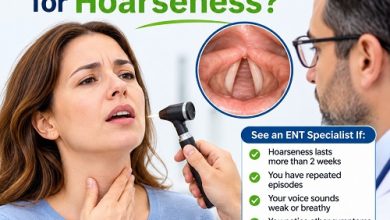
Although vocal nodules are usually non-cancerous, persistent voice changes should never be ignored.
Consult an ENT specialist if you experience:
- Hoarseness that persists for more than four weeks.
- Sudden or unexplained changes in your singing voice.
- Persistent vocal fatigue.
- Difficulty speaking or singing comfortably.
- Repeated loss of vocal range.
- Pain associated with voice production.
- Symptoms that worsen despite reducing vocal use.
The American Academy of Otolaryngology–Head and Neck Surgery recommends laryngeal examination when dysphonia does not improve within four weeks, or sooner when there is concern about a serious underlying cause. Professional voice users may require earlier assessment.
Seek urgent medical attention for breathing difficulties, noisy breathing, or significant coughing up of blood.
Early diagnosis and appropriate treatment can help prevent prolonged voice problems and support better recovery.
Emotional Recovery: Rebuilding Confidence as a Singer
Vocal nodules can affect more than the physical ability to sing. They can also influence confidence, motivation, and emotional well-being.
For professional singers, losing access to familiar vocal abilities may create anxiety about performances, auditions, and career opportunities.
Some singers become afraid of producing certain notes or experience frustration when their voices do not respond as expected.
It is important to recognise that emotional recovery is also part of the rehabilitation process.
Consider these strategies:
- Set realistic, achievable rehabilitation goals.
- Celebrate small improvements rather than expecting immediate results.
- Avoid comparing your progress with other singers.
- Communicate openly with your voice therapist.
- Work with a supportive singing teacher.
- Allow yourself sufficient time to recover.
- Seek psychological support if vocal difficulties cause significant anxiety or emotional distress.
Your singing voice may need time to regain its previous flexibility and endurance. Progress should be measured by improved vocal health and function rather than by how quickly you return to demanding performances.
Conclusion: Give Your Singing Voice Time to Recover
Recovering your singing voice after nodules requires patience, appropriate medical care, and consistent rehabilitation. Although vocal nodules can interfere with your range, tone, flexibility, and endurance, many singers experience meaningful improvement through professional assessment, voice therapy, and healthier singing techniques.
The most important step is to understand the condition of your vocal folds before returning to intensive singing. Work with an experienced ENT specialist and a voice-specialised speech-language pathologist to develop an individual recovery plan.
Through singing voice rehabilitation, appropriate vocal exercises, good hydration, and improved vocal habits, you can work towards restoring comfortable and reliable singing.
Remember that recovery is not about forcing your voice to sound the way it did before. It is about developing a healthier, more efficient, and sustainable way to use your voice.
With the right guidance and commitment, you can give your voice the best opportunity to recover and continue enjoying the music you love.
Frequently Asked Questions (FAQs)
1. How long does it take to recover your singing voice after vocal nodules?
Recovery varies depending on the severity and duration of the nodules, individual healing, and treatment response. Some people improve within weeks, while others require several months of voice therapy and rehabilitation.
2. Can vocal nodules disappear without surgery?
Yes. Some vocal nodules, particularly softer lesions, may improve with appropriate voice therapy and changes in vocal habits. Surgery is generally considered when conservative treatment is insufficient or when clinical findings justify it.
3. Can I sing while recovering from vocal nodules?
It depends on the condition of your vocal folds. Some people need temporary singing restrictions, while others may begin carefully supervised exercises. Always follow your ENT specialist’s and voice therapist’s recommendations.
4. Is humming good for vocal nodules?
Gentle humming may be included in voice rehabilitation because it can encourage comfortable sound production. However, it should only be introduced when appropriate for your condition and performed without strain.
5. Does voice therapy really help vocal nodules?
Voice therapy can improve vocal technique, reduce harmful vocal behaviours, and support better voice quality. Research reviews have identified it as an important non-invasive treatment for vocal fold nodules.
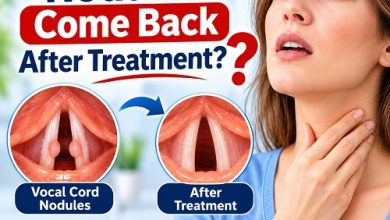
6. Can vocal nodules come back after treatment?
Yes. Nodules or related vocal problems may recur if the underlying causes, such as excessive vocal strain or inefficient singing techniques, are not addressed.
7. Should singers completely stop singing after developing nodules?
Not necessarily for the same length of time in every case. The appropriate level of vocal rest and the timing of returning to singing should be determined by an ENT specialist and voice therapist.
Medical Disclaimer
The information provided in this article, How to Recover Your Singing Voice After Vocal Nodules, is intended for general educational and informational purposes only. It is not intended to replace professional medical advice, diagnosis, or treatment.
Every individual’s vocal health and recovery process are different. If you experience persistent hoarseness, vocal fatigue, difficulty singing, or other voice-related symptoms, consult a qualified ear, nose, and throat (ENT) specialist or a speech-language pathologist specialising in voice disorders.
Do not attempt vocal exercises, resume intensive singing, or discontinue prescribed treatment without consulting an appropriate healthcare professional. The exercises and rehabilitation techniques discussed in this article may not be suitable for everyone.
Always seek personalised medical guidance before making decisions about your vocal health. Never ignore professional medical advice or delay seeking treatment because of information published on this website.
The website and its authors are not responsible for any adverse outcomes resulting from the use or misuse of the information provided in this article.
Medical References
The following medical and scientific sources support the article’s clinical information. These references are suitable for inclusion at the end of the blog post.
- Baali et al. (2024)
Optimizing Management Strategies for Vocal Cord Nodules: A Systematic Review.
Cureus, 16(12), e75916.
- Discusses voice therapy, surgery, and medical management of vocal nodules.
- Explains the importance of lesion characteristics and treatment adherence.
Read the full research article.
- American Speech-Language-Hearing Association (ASHA)
Voice Disorders – Practice Portal.
- Provides professional guidance on voice assessment, vocal hygiene, and voice therapy.
- Explains direct and indirect approaches to voice rehabilitation.
Read ASHA Voice Disorders guidance.
- American Academy of Otolaryngology–Head and Neck Surgery (2026)
Consensus Statement on the Use of Voice Therapy in the Treatment of Dysphonia.
- Highlights the role of voice therapy in medical and surgical treatment.
- Supports collaboration between ENT specialists and speech-language pathologists.
- White et al. (2023)
Pre and Post-operative Voice Therapy Intervention for Benign Vocal Fold Lesions: A Systematic Review.
Journal of Voice, 37(6), 857–874.
DOI: 10.1016/j.jvoice.2021.06.005
– Reviews voice therapy before and after vocal fold surgery.
- Fan et al. (2025)
Efficacy of Voice Training on Benign Vocal Cord Lesions After Surgery: A Systematic Review, Meta-analysis, and Trial Sequential Analysis of Randomized Clinical Trials.
Medicine, 104(35), e44024.
– Examines the benefits of voice training following surgery for benign vocal fold lesions.
- Effectiveness of Voice Therapy in Patients with Vocal Fold Nodules (2020)
A Systematic Search and Narrative Review.
– Reviews evidence concerning voice therapy outcomes in adults with vocal fold nodules.