
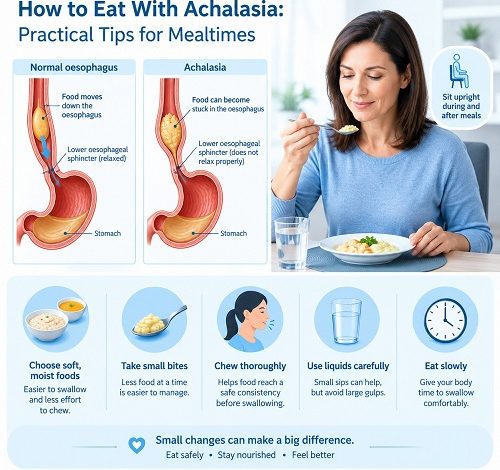
Living with achalasia can make everyday meals challenging. Food may feel stuck in your chest, swallowing may take longer than usual, and eating can sometimes lead to discomfort, coughing or regurgitation. These difficulties can affect your appetite, nutritional intake and enjoyment of food.
Learning how to eat with achalasia can help you make mealtimes more comfortable and support your overall health. Although dietary changes cannot correct the underlying muscle and nerve problems, choosing suitable food textures, eating slowly and maintaining an upright posture may help manage symptoms.
This guide explains practical eating tips, food choices, meal-planning strategies and important safety precautions for people living with achalasia.
What Is Achalasia and How Does It Affect Eating?
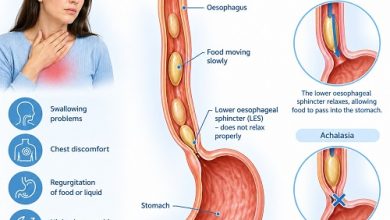
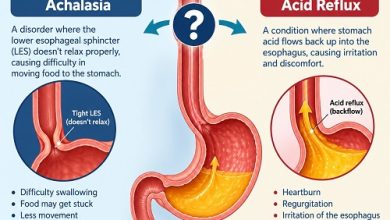
What Is Achalasia? Achalasia is a rare disorder that affects the oesophagus, the muscular tube that carries food and liquids from your mouth to your stomach. Normally, coordinated muscle contractions move food down the oesophagus while the lower oesophageal sphincter (LES), a ring of muscle at the entrance to the stomach, relaxes to let it pass through.
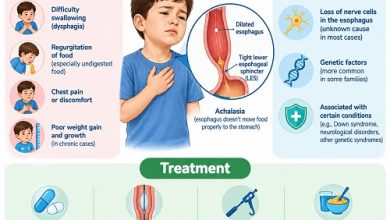
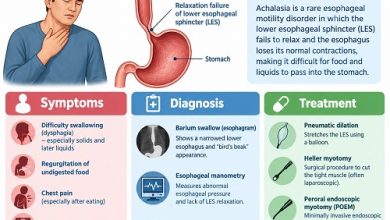
With achalasia, the oesophagus does not move food normally, and the LES does not relax properly. Consequently, food and liquids may remain in the oesophagus instead of reaching the stomach efficiently.
Common Achalasia symptoms include:
- Difficulty swallowing solid foods or liquids.
- A sensation that food is stuck in the chest or throat.
- Regurgitation of undigested food.
- Chest discomfort or pain during meals.
- Coughing, particularly when lying down or after eating.
- Unintentional weight loss when eating becomes difficult.
These symptoms vary from person to person. Some people manage soft foods relatively well, while others experience difficulties even with liquids.
The goal of an achalasia diet is to make eating more manageable, maintain adequate nutrition and reduce problems associated with food remaining in the oesophagus. Dietary adjustments can help, but they do not replace medical assessment or treatment.
1. Choose Soft, Moist and Easy-to-Swallow Foods
One of the most useful eating tips for achalasia is to pay attention to the texture of your food. Dry, tough, stringy or hard foods may be more difficult to swallow, particularly when your symptoms are active.
Soft foods generally require less chewing and can be easier to manage. However, no single food works for everyone, so notice which textures you tolerate comfortably.
Foods you may find easier to eat include:
- Soft proteins: Scrambled eggs, tender fish, minced meat with gravy, and slow-cooked chicken that has been shredded finely.
- Cooked vegetables: Soft carrots, pumpkin, courgettes and well-cooked spinach.
- Soft grains: Moist porridge, well-cooked oats and soft pasta with a smooth sauce, if tolerated.
- Dairy foods: Yoghurt, smooth cottage cheese and custard, if you tolerate dairy products.
- Soft fruits: Ripe bananas, stewed apples without skins and mashed pears.
- Moist meals: Smooth soups, soft casseroles and mashed vegetables with added liquid.
Try to avoid swallowing large pieces of food or eating dry meals without adequate moisture. Adding broth, gravy, yoghurt or a suitable sauce may make food easier to manage.
Remember that even soft foods can cause symptoms in some people. Choose textures based on your swallowing ability and any advice from your healthcare professional.
2. Take Small Bites and Chew Thoroughly
Large mouthfuls can be difficult to move through an oesophagus affected by achalasia. Eating smaller bites gives you more control over the amount of food you swallow at one time.
Cut your food into small pieces before you start eating. Take one bite, chew it thoroughly until it reaches a comfortable consistency, and swallow before preparing the next mouthful.
Avoid rushing to finish your meal or swallowing additional food when the previous mouthful still feels stuck. Give yourself enough time to assess how each bite feels.
Helpful habits include:
- Use a teaspoon or small forkful when necessary.
- Cut meat and other solid foods into manageable pieces.
- Remove bones, tough skins and stringy parts.
- Chew slowly rather than swallowing food after only a few chews.
- Pause between mouthfuls if you feel pressure or discomfort.
There is no universal number of chews that suits everyone. The aim is to reduce the size and toughness of each mouthful while allowing yourself time to swallow comfortably.
If food repeatedly feels lodged in your chest, do not keep forcing additional bites down. Stop eating and seek medical advice if the problem persists or worsens.
3. Eat Smaller Meals More Frequently
Large meals may leave you feeling overly full and can be harder to manage if food moves slowly through your oesophagus. Smaller, more frequent meals may be a practical alternative.
Instead of eating three large meals, you could try several smaller meals and snacks spread throughout the day. Adjust the schedule to suit your appetite, symptoms and nutritional needs.
For example, your daily routine might include:
- Breakfast: A small bowl of soft porridge.
- Mid-morning snack: Smooth yoghurt or a suitable nutritional drink.
- Lunch: Moist mashed vegetables with tender fish or another soft protein.
- Afternoon snack: A smoothie with yoghurt and fruit, if tolerated.
- Dinner: Smooth soup with a soft, protein-rich accompaniment.
- Evening snack: A small serving of custard or another tolerated food, if needed.
This is only an example, not a prescribed diet. You may need different foods or meal frequencies depending on your weight, medical history and swallowing difficulties.
Eating little and often may also help you maintain your calorie intake if you struggle to finish larger portions. If you are losing weight or eating substantially less than usual, ask your doctor or a registered dietitian for advice.
4. Sit Upright During Meals
Your posture can influence how comfortably food moves through the oesophagus. Sitting upright allows gravity to assist the movement of food towards your stomach.
When eating, sit at a table or in a supportive chair. Keep your back reasonably straight, your head in a comfortable neutral position and your feet supported where possible.
Avoid eating while lying on a sofa, reclining in bed or walking around. These positions may make mealtimes less comfortable and can increase the risk of regurgitation for some people.
After finishing your meal, remain upright rather than lying down immediately. Many patient resources recommend allowing approximately three hours between eating and going to bed to reduce regurgitation and reflux symptoms.
If you experience frequent nighttime coughing or food coming back into your throat, tell your healthcare professional. They may recommend additional measures to reduce the risk of aspiration, which occurs when food or liquid enters the airway.
5. Use Liquids Carefully to Help With Swallowing Food
Some people with achalasia find that small sips of liquid alongside food make swallowing more comfortable. Liquids may help moisten dry food, but they do not reliably clear food trapped in the oesophagus.
If your healthcare professional has confirmed that drinking liquids is safe for you, try taking small, comfortable sips between bites. Avoid gulping large amounts or forcing water down when food feels stuck.
You can also increase moisture in meals by adding:
- Broth to soups and cooked vegetables.
- Gravy to tender meat.
- Milk or a suitable alternative to porridge.
- Smooth sauces to soft pasta.
- Yoghurt to mashed foods, where appropriate.
Some people prefer warm or room-temperature drinks, while others tolerate cool drinks without difficulty. Temperature preferences vary, so choose what feels comfortable rather than assuming that a particular temperature will improve achalasia.
Important: If you cannot swallow liquids or saliva, or you experience persistent food blockage, seek urgent medical care. Do not attempt to force the blockage down with water or additional food.
6. Know Which Foods May Be Difficult to Swallow
There is no single diet that works for every person with achalasia. However, certain textures can be difficult to manage because they require extensive chewing, become dry in the mouth or form a dense mass.
You may need to limit or modify the following foods if they trigger symptoms:
Dry bread and crackers
Dry, crumbly bread, crackers and toast may be difficult to swallow. Try softer bread with a moist filling if your swallowing specialist considers it safe.
Tough or stringy meat
Chewy steak, dry chicken and fibrous meat may be difficult to chew and swallow. Tender, finely shredded meat with gravy may be easier.
Hard raw vegetables
Raw carrots, celery and other crunchy vegetables may be difficult to manage. Cook them until soft or use a suitable puréed alternative.
Hard fruits and fruit skins
Hard apples, fruit skins and some whole fruits may be troublesome. Soft ripe fruit or stewed fruit may be more comfortable.
Other foods, including dry rice, dense pasta, nuts and crunchy snacks, may also cause problems for some people. You do not necessarily need to eliminate every food on this list if you tolerate it well.
Instead, keep a record of foods that trigger symptoms and discuss persistent swallowing problems with your healthcare team. Avoid unnecessarily restricting your diet, as this may make it harder to obtain enough nutrients.
7. Make Sure You Get Enough Calories and Nutrients
Achalasia can make it difficult to eat enough food to maintain a healthy weight. If you frequently leave meals unfinished, you may not receive sufficient calories, protein, vitamins or minerals.
A balanced achalasia diet should provide adequate energy while respecting your swallowing limitations.
Include protein where possible. Soft eggs, tender fish, smooth yoghurt, puréed lentils and finely minced meat may help you meet your protein needs, depending on your tolerance.
Increase calories without increasing portion size too much. If you are losing weight, a dietitian may recommend adding suitable amounts of olive oil, smooth nut butter, full-fat yoghurt or other energy-dense ingredients to foods you can swallow safely.
Choose nutrient-rich drinks when appropriate. Smoothies and oral nutritional supplements may help when solid foods are difficult to manage. However, thin liquids are not safe for everyone with swallowing difficulties, so seek professional guidance if you cough or choke when drinking.
Monitor your weight. Unintentional weight loss, weakness, fatigue and reduced appetite may indicate that you are not meeting your nutritional needs.
A registered dietitian with experience in gastrointestinal disorders can help you create a practical meal plan. If your symptoms are severe, your care team may need to assess whether further nutritional support is necessary.
8. Plan Meals to Reduce Stress and Discomfort
Eating with achalasia can become stressful, especially when meals take longer than expected or you worry about food getting stuck. Planning ahead may make daily eating less demanding.
Try these practical eating tips:
- Allow enough time: Avoid rushing through breakfast, lunch or dinner because of work or other commitments.
- Reduce distractions: Turn off the television or put away your phone so you can concentrate on chewing and swallowing.
- Prepare food in advance: Keep suitable soups, soft meals and other tolerated foods available for busy days.
- Eat in a comfortable setting: Choose a supportive chair and a relaxed environment.
- Keep a food and symptom diary: Record what you eat, the texture, the amount and any symptoms that follow.
- Plan for eating out: Check menus in advance and ask whether meals can be prepared with softer textures or extra sauce.
A food diary can help identify patterns, but it cannot establish whether a food is medically safe. If certain foods repeatedly cause coughing, choking or a sensation of blockage, seek professional assessment rather than repeatedly testing them.
Remember that eating slowly is a useful strategy, not a substitute for appropriate treatment.
9. Avoid Eating Too Close to Bedtime
Food can remain in the oesophagus for longer than expected in people with achalasia. Lying down after eating may increase the chance of regurgitation and can allow food or liquid to reach the airway.
Where possible, finish your evening meal at least three hours before going to bed. If you need an evening snack, choose an amount and texture that you tolerate comfortably, and allow enough time before lying down.
If you experience nighttime regurgitation, coughing or choking, discuss these symptoms with your doctor. Repeated aspiration can contribute to respiratory complications, including chest infections.
10. Understand When Dietary Changes Are Not Enough
Dietary adjustments may improve comfort, but achalasia is a medical condition that often requires treatment. If swallowing becomes progressively harder, do not rely on changing food textures alone.
Depending on your condition, a specialist may discuss treatments such as pneumatic balloon dilation, laparoscopic Heller myotomy or peroral endoscopic myotomy (POEM). These treatments aim to improve the passage of food through the lower oesophageal sphincter. Botulinum toxin injections may be an option for selected patients.
Your treatment plan will depend on factors such as your symptoms, test results, overall health and previous treatment. Even after treatment, some people continue to need dietary adjustments or follow-up care.
Seek urgent medical attention if food becomes firmly stuck, you cannot swallow saliva or liquids, or you develop breathing difficulties. New or worsening swallowing problems, persistent coughing with meals, repeated chest infections or unexplained weight loss also warrant prompt medical assessment.
Sample One-Day Achalasia Meal Plan
The following example illustrates how you might organise meals around soft textures and smaller portions. Adjust it to your swallowing ability, dietary needs and healthcare professional’s advice.
| Meal | Example food choices |
| Breakfast | Soft porridge prepared with milk, if tolerated |
| Morning snack | Smooth yoghurt |
| Lunch | Tender fish with mashed pumpkin and a suitable sauce |
| Afternoon snack | Smooth fruit and yoghurt blend, if safe to swallow |
| Dinner | Puréed vegetable soup with a soft protein source |
| Optional snack | Custard or another tolerated, nutrient-rich food |
This is a general example rather than a prescribed diet. If you have difficulty swallowing liquids as well as solids, ask your healthcare professional which food and fluid textures are safe for you.
Natural Remedies for Achalasia
Achalasia is a rare oesophageal disorder that makes swallowing food and liquids difficult because the lower oesophageal sphincter does not relax properly. Although natural approaches may help manage symptoms, no proven Natural Cure for Achalasia can reverse the underlying muscle and nerve dysfunction.
Natural Ways to Manage Achalasia Symptoms
- Choose Soft, Moist Foods: Include foods such as porridge, mashed vegetables, smooth soups and tender fish if you tolerate them comfortably. Avoid dry, tough or chewy foods that worsen swallowing difficulties.
- Eat Small, Frequent Meals: Smaller portions may make mealtimes more manageable. Eat slowly, take small bites and chew food thoroughly before swallowing.
- Maintain an Upright Position: Sit upright while eating and remain upright afterwards. Avoid lying down immediately after meals to help reduce regurgitation.
- Stay Hydrated Safely: Drink adequate fluids if you can swallow them safely. If liquids cause coughing or choking, seek professional advice rather than forcing yourself to drink.
- Maintain Good Nutrition: Monitor your weight and choose nutrient-rich foods that suit your swallowing ability. A registered dietitian can help prevent nutritional deficiencies.
Can Natural Remedies Cure Achalasia?
Lifestyle changes may improve comfort, but they cannot reliably correct the underlying condition. Medical treatments, including pneumatic dilation, Heller myotomy and POEM, may be necessary.
Consult a gastroenterologist for personalised care. Seek urgent medical attention if food becomes stuck or you cannot swallow saliva or liquids.
Frequently Asked Questions
What is the best diet for achalasia?
There is no single best diet for everyone with achalasia. Many people find soft, moist foods easier to swallow than hard, dry or chewy foods. Your ideal diet should also provide enough calories, protein, vitamins and minerals.
Should I drink water while eating with achalasia?
Some people find small sips of water helpful during meals. However, liquids do not always clear food trapped in the oesophagus, and some people have difficulty swallowing liquids safely. Ask your healthcare professional for advice if drinking causes coughing, choking or discomfort.
Can I eat bread and rice if I have achalasia?
It depends on your symptoms and how you tolerate these foods. Dry bread and dense or sticky rice may be difficult for some people. Moistening food or choosing a softer alternative may help, but avoid foods that repeatedly cause swallowing difficulties.
How can I prevent food from getting stuck?
Take small bites, chew thoroughly, eat slowly and remain upright during meals. Choose suitable food textures and stop eating if food feels stuck. These measures may improve comfort, but they cannot guarantee that food will pass through the oesophagus normally.
Can achalasia cause weight loss?
Yes. Difficulty swallowing and regurgitation can make it harder to eat enough food. If you are losing weight without trying, arrange a medical assessment and ask whether you need nutritional support.
Conclusion
Learning how to eat with achalasia starts with recognising your swallowing limitations and making practical changes to everyday meals. Choosing soft, moist foods, taking small bites, chewing thoroughly, eating slowly and remaining upright may help make mealtimes more comfortable.
An effective achalasia diet should also provide enough nutrients to support your health and maintain a stable weight. Keep track of your symptoms, avoid foods that consistently cause problems and seek professional advice if swallowing becomes more difficult.
Most importantly, dietary changes should complement—not replace—medical care. Working with a gastroenterologist and a registered dietitian can help you find a safe, sustainable approach to eating with achalasia.