

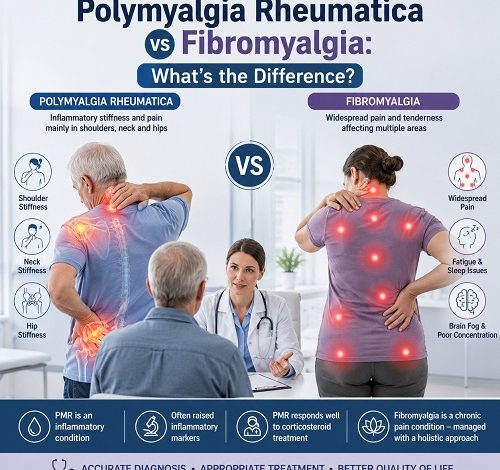
Polymyalgia rheumatica and fibromyalgia can both cause significant pain, stiffness and fatigue, but they are very different medical conditions. Understanding the differences is important because their symptoms can sometimes appear similar, particularly when a person reports muscle aches, tiredness or difficulty moving comfortably.
When comparing Polymyalgia Rheumatica vs Fibromyalgia, one of the most important distinctions is that polymyalgia rheumatica (PMR) is an inflammatory condition that primarily affects adults over 50, while fibromyalgia is a chronic pain condition that can occur at a younger age and is associated with abnormal pain processing in the nervous system.
The two conditions also differ in the location and pattern of pain, associated symptoms, diagnostic approach and treatment. PMR often causes pronounced stiffness and aching around the shoulders and hips, particularly in the morning. Fibromyalgia is more commonly associated with widespread pain, tenderness, fatigue, sleep problems and difficulties with concentration. How polymyalgia rheumatica and fibromyalgia differ, how doctors diagnose them and why getting the correct diagnosis matters.
What Is Polymyalgia Rheumatica?
What Is Polymyalgia Rheumatica? Polymyalgia rheumatica is an inflammatory rheumatic condition that causes pain and stiffness, particularly around the shoulders, neck and hips. It almost exclusively affects people aged 50 and over and becomes more common with increasing age.
The exact cause of PMR is not fully understood. Researchers believe that a combination of genetic and environmental factors may contribute to the development of the condition.
PMR can develop relatively suddenly. Some people notice symptoms over several days, while others develop them over a few weeks.
Typical Polymyalgia Rheumatica symptoms include:
- Aching or pain in both shoulders
- Pain or stiffness around the hips
- Neck stiffness
- Significant morning stiffness
- Difficulty getting out of bed or a chair
- Difficulty raising the arms
- Fatigue
- A mild fever in some people
- Reduced appetite or general feelings of illness in some cases
Inflammation is an important feature of PMR. Blood tests may therefore show increased inflammatory markers, although blood test results alone cannot establish the diagnosis.
What Is Fibromyalgia?
Fibromyalgia is a long-term condition characterised by widespread musculoskeletal pain, increased sensitivity to pain and a range of other symptoms.
Unlike PMR, fibromyalgia is not primarily an inflammatory disease. It is thought to involve changes in how the brain and nervous system process pain and other sensory signals.
Fibromyalgia can affect people of different ages, although it is more frequently diagnosed in women.
Common fibromyalgia symptoms include:
- Widespread muscle and body pain
- Increased sensitivity to touch or pressure
- Persistent tiredness
- Sleep difficulties
- Morning stiffness
- Headaches
- Difficulty concentrating or remembering things
- Increased sensitivity to light, sound, temperature or other stimuli in some people
- Mood changes
- Irritable bowel symptoms in some individuals
Symptoms can fluctuate over time. Some people experience periods when their symptoms become particularly severe, often described as flare-ups.
Polymyalgia Rheumatica vs Fibromyalgia: Key Differences
Although both conditions can cause pain and stiffness, several features help distinguish them.
1. Age of Onset
Age is one of the most useful clues.
Polymyalgia Rheumatica in Older Adults is a condition that almost exclusively develops in people aged 50 or older, with most cases occurring in older adults.
Fibromyalgia can develop at many different ages, including during adulthood and middle age. Therefore, persistent widespread pain in a younger adult is much less typical of PMR.
However, age alone should never be used to make a diagnosis.
2. Location of Pain
The location and distribution of pain are also different.
PMR typically causes pain and stiffness around the:
- Shoulders
- Upper arms
- Neck
- Hips
- Thighs
The symptoms are often relatively symmetrical, meaning both sides of the body are affected.
Fibromyalgia, on the other hand, commonly causes pain in multiple areas throughout the body. A person may experience discomfort in the back, neck, shoulders, arms, legs and other areas.
This difference in pain distribution is one of the most important considerations when assessing Polymyalgia Rheumatica vs fibromyalgia.
3. Morning Stiffness
Both conditions can cause stiffness after waking, but the experience may be different.
People with PMR often experience pronounced morning stiffness that can make ordinary activities difficult. Getting dressed, getting out of bed, climbing stairs or lifting the arms may become challenging.
Fibromyalgia can also cause morning stiffness, but it is usually accompanied by widespread pain, fatigue and poor-quality sleep rather than the prominent inflammatory stiffness typically seen with PMR.
4. Inflammation
PMR is associated with inflammation.
Blood tests commonly show raised inflammatory markers such as erythrocyte sedimentation rate (ESR) and C-reactive protein (CRP). These tests can support a diagnosis but are not specific to PMR.
Fibromyalgia does not normally cause systemic inflammation. Routine inflammatory blood tests are therefore generally normal.
This is an important distinction, although normal inflammatory markers do not automatically exclude every case of PMR.
5. Fatigue
Fatigue can occur in both conditions.
With Polymyalgia Rheumatica fatigue may occur alongside pain, stiffness and the body’s inflammatory response.
In fibromyalgia, fatigue is often a major and persistent symptom. Poor sleep, chronic pain and abnormal sensory processing may contribute to the feeling of exhaustion.
People with fibromyalgia may wake up feeling tired even after spending enough hours in bed.
6. Sleep and Cognitive Symptoms
Sleep problems are particularly common in fibromyalgia.
Some people experience difficulty falling asleep, frequent waking or sleep that does not feel restorative. They may also experience difficulty concentrating, forgetfulness or what is commonly described as “fibro fog”.
These symptoms are less characteristic of PMR.
7. Response to Treatment
PMR usually responds dramatically to corticosteroid treatment when the diagnosis is correct. Symptoms may improve significantly within a relatively short period after treatment begins.
Fibromyalgia is managed differently. Treatment may include physical activity, exercise programmes, sleep management, psychological approaches and selected medicines aimed at reducing pain or improving associated symptoms.
A person’s response to treatment can provide useful information to a clinician, but treatment response should not be used by itself to confirm a diagnosis.
Polymyalgia Rheumatica Diagnosis
A Polymyalgia Rheumatica diagnosis is based on the person’s symptoms, medical history, physical examination and laboratory tests.
There is no single blood test that definitively confirms PMR.
A doctor may assess:
- The person’s age
- Where the pain and stiffness occur
- How quickly symptoms developed
- Duration and severity of morning stiffness
- Physical examination findings
- ESR and CRP levels
- Other blood tests to exclude alternative conditions
- Response to appropriate treatment
Doctors may also consider other conditions that can cause similar symptoms, including rheumatoid arthritis, inflammatory muscle diseases, infections and other rheumatic disorders.
Imaging such as ultrasound may sometimes help identify inflammation around the shoulders or hips.
Because PMR can resemble other conditions, professional assessment is important rather than relying on symptoms alone.
How Is Fibromyalgia Diagnosed?
There is no single laboratory test that confirms fibromyalgia.
Doctors generally diagnose it by evaluating the person’s history and symptoms and considering whether another medical condition better explains them.
A doctor may ask about:
- The location and duration of pain
- Fatigue
- Sleep quality
- Cognitive difficulties
- Headaches
- Sensitivity to touch
- Other associated symptoms
- The effect of symptoms on everyday activities
Blood tests may be performed to investigate other possible causes of pain and fatigue.
This is important because conditions such as thyroid disorders, inflammatory rheumatic diseases, anaemia and other health problems can produce symptoms that overlap with fibromyalgia.
Can You Have Both Conditions?
It is possible for a person to have more than one medical condition.
Therefore, having fibromyalgia does not automatically prevent someone from developing PMR later in life. Conversely, a person diagnosed with PMR may develop another chronic pain condition.
If someone with an established diagnosis develops a significant change in their symptoms, they should discuss it with their healthcare professional rather than assuming that every new symptom is caused by their existing condition.
Polymyalgia Rheumatica Treatment
The primary treatment for Polymyalgia Rheumatica is usually corticosteroid medication prescribed and monitored by a doctor.
Symptoms often improve substantially after treatment begins. However, treatment commonly continues for an extended period, with the dose gradually adjusted according to symptoms and inflammatory markers.
Regular medical follow-up is important because corticosteroids can cause side effects, particularly when used for a long time.
Doctors may monitor factors such as:
- Blood pressure
- Blood glucose
- Bone health
- Weight
- Risk of infections
- Other steroid-related side effects
Patients should not suddenly stop corticosteroids unless specifically instructed by their healthcare professional.
Fibromyalgia Treatment
There is no single treatment that works for everyone with fibromyalgia. Management usually involves a combination of approaches.
Regular, appropriately paced physical activity can be helpful. Low-impact activities such as walking, swimming or gentle aerobic exercise may be introduced gradually according to an individual’s abilities.
Other approaches may include:
- Improving sleep habits
- Managing stress
- Psychological therapies such as cognitive behavioural therapy when appropriate
- Gentle strengthening and stretching exercises
- Medicines prescribed for particular symptoms
- Learning how to pace daily activities
The goal is generally to reduce symptoms and improve quality of life rather than to eliminate every symptom immediately.
Why Correct Diagnosis Matters
Understanding the difference between PMR and fibromyalgia is important because the treatment approaches are not the same.
For example, PMR is an inflammatory condition that commonly requires corticosteroid treatment. Fibromyalgia, in contrast, is generally managed through a broader long-term approach focused on pain management, physical activity, sleep and other symptoms.
Treating fibromyalgia as though it were PMR may expose a person to unnecessary medication and its potential side effects. Similarly, assuming that new symptoms are simply fibromyalgia could delay assessment of another condition.
A healthcare professional can consider the complete clinical picture and determine whether additional tests are needed.
When Should You See a Doctor?
You should speak with a healthcare professional if you develop persistent or unexplained pain, stiffness or fatigue, particularly if symptoms interfere with everyday activities.
Prompt medical assessment is especially important for adults over 50 who suddenly develop substantial shoulder and hip stiffness.
People with possible PMR should also be aware of symptoms associated with giant cell arteritis (GCA), a related inflammatory condition. New severe headaches, scalp tenderness, jaw pain when chewing or changes in vision require urgent medical assessment because untreated GCA can threaten eyesight.
Polymyalgia Rheumatica vs Fibromyalgia: A Quick Comparison
| Feature | Polymyalgia Rheumatica | Fibromyalgia |
| Typical age | Usually over 50 | Can occur at various ages |
| Main problem | Inflammation causing pain and stiffness | Altered pain processing and widespread pain |
| Pain pattern | Mainly shoulders, hips and neck | Widespread throughout the body |
| Morning stiffness | Often prominent | Common but variable |
| Inflammatory markers | Often raised | Usually normal |
| Fatigue | Can occur | Very common |
| Sleep problems | Less characteristic | Very common |
| Cognitive symptoms | Less typical | Common in some people |
| Main treatment approach | Corticosteroids and monitoring | Multidisciplinary symptom management |
| Long-term course | Often eventually resolves | Usually chronic, with symptoms that fluctuate |
Frequently Asked Questions
Is polymyalgia rheumatica worse than fibromyalgia?
Neither condition can simply be described as “worse”. They affect people differently and have different complications and treatment approaches. PMR can cause severe stiffness and pain but often responds well to corticosteroids. Fibromyalgia can cause persistent widespread pain, fatigue and sleep problems that may significantly affect quality of life.
Can fibromyalgia cause shoulder and hip pain?
Yes. Fibromyalgia can cause pain in the shoulders, hips and other parts of the body. However, pain concentrated around the shoulders and hips with marked morning stiffness in someone over 50 may prompt a doctor to investigate PMR.
Does fibromyalgia cause raised CRP or ESR?
Fibromyalgia itself does not typically cause the significant inflammatory-marker elevations associated with inflammatory diseases. If ESR or CRP is raised, a healthcare professional may investigate other possible causes.
Can polymyalgia rheumatica cause widespread pain?
PMR primarily affects the shoulders, hips and neck, although symptoms can feel extensive. Significant widespread pain may lead a doctor to consider other conditions, including fibromyalgia or another rheumatic disorder.
Can PMR turn into fibromyalgia?
PMR does not normally “turn into” fibromyalgia. They are separate conditions with different underlying mechanisms. However, an individual can potentially have both conditions or develop another chronic pain disorder.
Final Thoughts
When considering Polymyalgia Rheumatica vs Fibromyalgia, the biggest differences involve age, pain distribution, inflammation and associated symptoms. PMR generally affects adults over 50 and causes prominent inflammatory pain and stiffness around the shoulders, hips and neck. Fibromyalgia can affect people at different ages and is characterised by widespread pain, fatigue, sleep problems and heightened sensitivity to pain.
Because several other conditions can produce similar symptoms, self-diagnosis is not recommended. A healthcare professional can assess your symptoms, perform appropriate examinations and order tests when necessary.
If you have persistent pain, stiffness, fatigue or a significant change in your usual symptoms, seek medical advice to identify the underlying cause and receive appropriate treatment.
Medical Disclaimer
This article is intended for general educational purposes only and does not replace professional medical advice, diagnosis or treatment. If you have persistent, severe or concerning symptoms, consult a qualified healthcare professional.