
Polymyalgia Rheumatica and Giant Cell Arteritis: The Connection

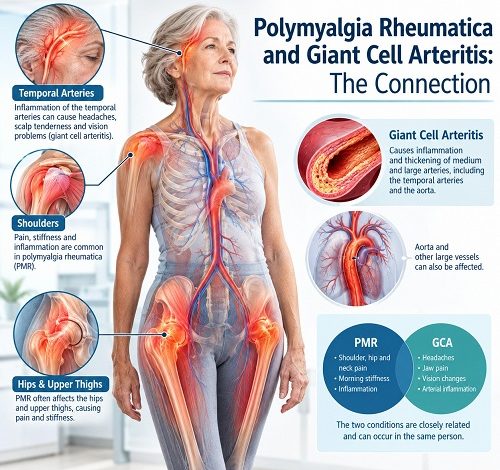
Polymyalgia rheumatica (PMR) and giant cell arteritis (GCA) are two inflammatory conditions that frequently occur in older adults. Although they are different disorders, they are closely connected and may occur in the same person. Understanding the relationship between Polymyalgia Rheumatica and Giant Cell Arteritis is important because GCA can cause serious complications if it is not recognised and treated promptly.
Polymyalgia rheumatica mainly causes pain, stiffness and inflammation around the shoulders, neck and hips. Giant cell arteritis, sometimes called temporal arteritis, affects medium and large arteries, particularly blood vessels around the head and scalp. Unlike PMR, GCA can threaten vision and, in rare cases, lead to other serious vascular complications.
Research suggests that both conditions involve abnormal inflammation of the immune system. They are also strongly associated with age and may share some biological and genetic factors. The connection between PMR and GCA, how their symptoms differ, when they can occur together, how doctors diagnose them and why prompt treatment is particularly important when GCA is suspected.
What Is Polymyalgia Rheumatica?
What Is Polymyalgia Rheumatica? Polymyalgia rheumatica is an inflammatory condition that typically develops in people over the age of 50. It causes inflammation around joints and soft tissues, particularly in areas such as the shoulders and hips.
Common Polymyalgia Rheumatica symptoms include:
- Pain and stiffness in both shoulders
- Pain or stiffness around the hips
- Neck discomfort
- Severe stiffness after waking
- Difficulty getting out of bed or a chair
- Reduced ability to move the shoulders or hips
- Tiredness
- A mild fever in some people
- Reduced appetite or unintended weight loss in some cases
Morning stiffness is often particularly noticeable. A person may find it difficult to perform ordinary activities such as getting dressed, reaching overhead or walking comfortably after sitting for a long period.
PMR does not usually damage the muscles themselves. Instead, inflammation affects tissues around joints, including bursae and other structures.
The exact cause remains uncertain, but the immune system appears to play a central role.
What Is Giant Cell Arteritis?
Giant cell arteritis is a condition in which certain arteries become inflamed. It most commonly affects branches of the external carotid artery, including the temporal arteries on the sides of the head.
Because these arteries supply blood to important structures, inflammation can sometimes reduce blood flow and cause serious complications.
Some of the most common giant cell arteritis symptoms include:
- New or severe headaches
- Tenderness over the scalp
- Pain around the temples
- Jaw pain while chewing
- Visual disturbances
- Blurred or double vision
- Unexplained fever
- Fatigue
- Weight loss
- General weakness
Some people develop symptoms outside the head. For example, inflammation can affect larger blood vessels and may cause pain in the arms or legs, particularly during activity.
GCA is also known as temporal arteritis, although the condition can affect blood vessels beyond the temporal arteries.
How Are Polymyalgia Rheumatica and Giant Cell Arteritis Connected?
The relationship between Polymyalgia Rheumatica and Giant Cell Arteritis is one of the most important aspects of understanding these conditions.
They are considered closely related inflammatory disorders and share several characteristics:
- Both predominantly affect adults over 50.
- Both involve abnormal inflammation.
- Both are associated with elevated inflammatory markers.
- Both generally respond rapidly to corticosteroid treatment.
- Both can occur in the same individual.
A significant proportion of people with GCA have symptoms of Polymyalgia Rheumatica, while a smaller proportion of people diagnosed with PMR develop GCA.
This does not mean that everyone with PMR will develop GCA. Most people with PMR do not develop the more serious vascular complications associated with GCA.
However, doctors commonly ask people with PMR about symptoms that could indicate GCA.
Why Can the Two Conditions Occur Together?
The exact reason PMR and GCA can occur together is not fully understood.
Both conditions appear to involve an exaggerated immune response. In GCA, immune cells enter the walls of affected arteries and cause inflammation. This can result in swelling and thickening of the arterial wall.
PMR also involves systemic inflammation, although the tissues primarily responsible for symptoms are different.
Researchers believe that environmental triggers, genetic susceptibility and age-related changes in the immune system may all contribute.
The overlapping biology helps explain why some people experience symptoms of both conditions.
Can Polymyalgia Rheumatica Lead to Giant Cell Arteritis?
PMR does not necessarily “cause” GCA. Instead, the two conditions appear to be related manifestations of inflammatory disease.
A person can develop PMR first and later develop GCA. GCA may also be present when PMR is initially diagnosed, even if there are no obvious vascular symptoms at first.
For this reason, people with PMR should be aware of warning signs associated with GCA.
New symptoms such as a persistent headache, scalp tenderness, jaw pain while eating or visual changes should be reported to a healthcare professional promptly.
Giant Cell Arteritis Symptoms to Watch For
Recognising giant cell arteritis symptoms is particularly important because some complications can develop quickly.
New Headache
GCA can cause a new headache, especially around the temples or forehead. The headache may be different from headaches a person has experienced previously.
Scalp Tenderness
Some people notice tenderness when brushing their hair, washing their scalp or resting their head on a pillow.
Jaw Pain
Jaw or tongue pain during chewing, sometimes called jaw claudication, can be an important symptom of GCA.
Vision Problems
Blurred vision, double vision, temporary loss of vision or sudden visual loss can occur when inflammation affects blood vessels supplying the eye.
Sudden or new visual changes require urgent medical assessment.
Fever and Fatigue
GCA can cause general symptoms such as fever, tiredness, weakness and reduced appetite.
Weight Loss
Unintentional weight loss can occur because of ongoing systemic inflammation.
What Is Temporal Arteritis?
Temporal arteritis is another name commonly used for giant cell arteritis because the temporal arteries are frequently involved.
The temporal arteries are located on either side of the head near the temples. When these arteries become inflamed, they may become tender or painful.
However, GCA is not restricted to the temporal arteries. It can involve other arteries, including larger blood vessels such as the aorta and its branches.
Therefore, the term giant cell arteritis more accurately describes the broader nature of the disease.
How Is the Connection Diagnosed?
Doctors usually diagnose Polymyalgia Rheumatica and GCA based on a combination of symptoms, physical examination, blood tests and, when necessary, imaging or biopsy.
Medical History
A doctor will ask about:
- Shoulder and hip pain
- Morning stiffness
- Headaches
- Scalp tenderness
- Jaw pain
- Vision changes
- Fever
- Fatigue
- Weight loss
The presence of PMR symptoms together with symptoms suggestive of GCA can be particularly significant.
Blood Tests
Blood tests may measure markers of inflammation, particularly:
- C-reactive protein (CRP)
- Erythrocyte sedimentation rate (ESR)
These tests can support the diagnosis but do not by themselves confirm GCA or PMR.
Imaging
Depending on the circumstances, doctors may use ultrasound of the temporal arteries or other imaging techniques to identify arterial inflammation.
Temporal Artery Biopsy
A temporal artery biopsy may be used to look for evidence of inflammation in the artery wall. In suspected GCA, treatment should not necessarily be delayed while waiting for diagnostic procedures because protecting vision is a priority.
Treatment of Polymyalgia Rheumatica
Corticosteroids are the main Treatment for Polymyalgia Rheumatica. Many people experience a noticeable improvement in pain and stiffness relatively quickly after starting treatment.
The dose is generally adjusted according to symptoms, inflammatory markers and the individual’s response.
Polymyalgia Rheumatica Treatment may continue for many months and sometimes longer. Doctors usually reduce the steroid dose gradually rather than stopping it suddenly.
Long-term corticosteroid treatment can cause side effects, so healthcare professionals may monitor:
- Blood pressure
- Blood glucose
- Bone health
- Weight
- Eye health
- Risk of infection
Patients should follow their prescribed tapering schedule and should not stop corticosteroids suddenly without medical advice.
Treatment of Giant Cell Arteritis
GCA generally requires prompt treatment with corticosteroids to reduce arterial inflammation and lower the risk of serious complications.
When visual symptoms or other features strongly suggest GCA, treatment may be started urgently.
The treatment approach can differ from PMR because the potential consequences of untreated GCA are more serious.
Depending on the individual’s condition, doctors may also consider steroid-sparing medicines or other targeted therapies to reduce disease activity and minimise prolonged corticosteroid exposure.
Treatment should be supervised by an appropriately qualified healthcare professional.
Polymyalgia Rheumatica Complications
PMR itself is generally treatable, but several issues can arise during the disease or its treatment.
Possible Polymyalgia Rheumatica complications include:
- Persistent pain and stiffness
- Reduced mobility
- Difficulty performing daily activities
- Relapses after reducing treatment
- Side effects from prolonged corticosteroid use
- Increased risk of osteoporosis and fractures
- Increased blood glucose
- High blood pressure
- Increased susceptibility to infections
One of the most important concerns is the possible development of GCA.
This is why people with PMR should remain alert to symptoms such as new headaches, jaw pain and visual disturbances.
Complications of Giant Cell Arteritis
GCA requires particular attention because inflammation of arteries can interfere with blood supply.
Potential complications include:
- Permanent visual loss
- Stroke
- Aortic inflammation
- Aortic aneurysm
- Damage to other large blood vessels
The risk of complications varies from person to person.
Vision loss is one of the most feared complications. Early diagnosis and treatment can significantly reduce this risk.
When Should Someone With PMR Seek Urgent Medical Care?
People diagnosed with PMR should seek urgent medical assessment if they develop symptoms that could indicate GCA.
These include:
- A new severe headache
- New scalp tenderness
- Jaw pain while chewing
- Tongue pain
- Double vision
- Blurred vision
- Temporary vision loss
- Sudden vision loss
Any sudden loss or significant change in vision should be treated as a medical emergency.
Prompt evaluation is important because GCA-related visual complications can become permanent.
Can You Have PMR Without GCA?
Yes. Most people with PMR do not develop GCA.
Although the conditions are closely associated, they remain separate diagnoses. PMR primarily produces pain and stiffness around the shoulders, hips and neck, whereas GCA primarily involves inflammation of arteries.
However, because symptoms can overlap and GCA can sometimes initially present with relatively subtle symptoms, clinicians remain alert to the possibility.
Regular medical follow-up is particularly important when symptoms change or new symptoms develop.
How Long Does Polymyalgia Rheumatica Last?
PMR often lasts for months to several years, although the duration varies considerably.
Many people improve substantially with treatment, but relapses can occur. A relapse may involve a return of shoulder or hip pain, morning stiffness or other inflammatory symptoms.
Doctors may adjust the corticosteroid dose if symptoms return.
Because treatment can be prolonged, regular monitoring helps balance disease control with the potential side effects of medication.
Living With Polymyalgia Rheumatica and Giant Cell Arteritis
Living with either condition can be challenging, particularly when pain, fatigue or medication side effects affect daily activities.
Several strategies can support overall wellbeing:
Stay Physically Active
Gentle physical activity can help maintain mobility and muscle strength. Walking, stretching and appropriately supervised exercises may be beneficial.
Protect Bone Health
Long-term corticosteroid treatment can increase the risk of osteoporosis. Doctors may assess bone health and recommend appropriate measures.
Attend Follow-Up Appointments
Regular appointments allow healthcare professionals to monitor symptoms, inflammatory markers and treatment side effects.
Report New Symptoms
Do not ignore new headaches, jaw pain or visual symptoms if you have PMR.
Follow Medication Instructions
Corticosteroids should generally be reduced gradually under medical supervision.
Key Differences Between PMR and GCA
| Feature | Polymyalgia Rheumatica | Giant Cell Arteritis |
| Main affected areas | Shoulders, hips and neck | Medium and large arteries |
| Typical symptoms | Pain and morning stiffness | Headache, jaw pain and visual symptoms |
| Also called | PMR | Temporal arteritis |
| Age group | Usually over 50 | Usually over 50 |
| Inflammatory condition | Yes | Yes |
| Can occur together? | Yes | Yes |
| Main concern | Pain, stiffness and treatment effects | Vision loss and vascular complications |
| Main treatment | Corticosteroids | Prompt corticosteroid treatment |
Frequently Asked Questions
Is Polymyalgia Rheumatica the same as Giant Cell Arteritis?
No. PMR and GCA are separate inflammatory conditions, although they are closely related and can occur together.
What is the connection between PMR and GCA?
Both conditions involve systemic inflammation and primarily affect adults over 50. People with one condition have an increased likelihood of developing the other compared with the general population.
What are the most important giant cell arteritis symptoms?
Important symptoms include a new headache, scalp tenderness, jaw pain when chewing and visual disturbances. These symptoms require prompt medical assessment.
Why is temporal arteritis dangerous?
Temporal arteritis, or GCA, can affect arteries supplying the eyes and other organs. Without timely treatment, it can cause permanent vision loss and other serious complications.
Can PMR turn into GCA?
PMR does not necessarily transform into GCA. However, the two conditions are closely associated, and some people with PMR subsequently develop GCA.
Can PMR be cured?
PMR can often be effectively controlled and may eventually resolve. However, treatment can take months or longer, and some people experience relapses.
Conclusion
The connection between Polymyalgia Rheumatica and Giant Cell Arteritis is important because the two inflammatory disorders frequently share underlying features and can occur in the same individual.
Polymyalgia Rheumatica primarily causes shoulder, hip and neck pain and stiffness, while GCA affects arteries and can cause headaches, scalp tenderness, jaw pain and visual disturbances. Although most people with PMR will not develop GCA, recognising warning signs is essential.
In particular, new headaches, jaw pain when chewing and changes in vision should never be ignored. Early medical assessment and appropriate treatment can reduce the risk of serious complications associated with GCA.
If you have been diagnosed with PMR or are experiencing symptoms that could suggest either condition, speak with a qualified healthcare professional for an accurate diagnosis and personalised treatment plan.