
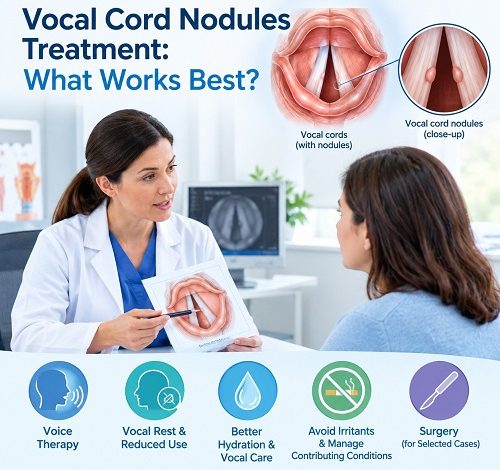
Vocal cord nodules can make speaking, singing and communicating more difficult. They often develop when repeated vocal strain or incorrect voice techniques place excessive pressure on the vocal folds. People who speak for long periods, sing regularly, teach, coach or frequently raise their voices may be more likely to develop these small, benign growths.
The good news is that vocal cord nodules treatment often begins with non-surgical approaches, particularly voice therapy and changes to everyday vocal habits. The right treatment depends on the size and condition of the nodules, the severity of symptoms and the person’s voice-related needs.
If you experience persistent hoarseness, a weak voice or difficulty reaching certain singing notes, an ear, nose and throat (ENT) specialist can examine your vocal folds and recommend suitable care.
The Vocal cord nodules treatment options, what may help your voice recover, when surgery may be considered and how to reduce the risk of future vocal problems.
What Are Vocal Cord Nodules?
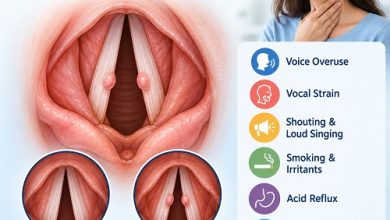
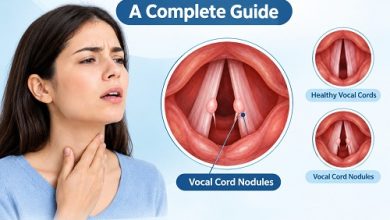
What Are Vocal Cord Nodules? Vocal cord nodules, also called vocal fold nodules, are small, non-cancerous growths that usually develop on both vocal folds. They commonly appear in areas that experience repeated contact during speaking or singing.
Your vocal folds are two flexible bands of tissue inside your larynx, or voice box. They vibrate as air passes through them to produce your voice. Repeated strain can irritate this tissue, contributing to the development of nodules.
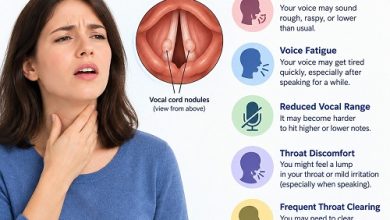
Common Vocal Cord Nodules symptoms include:
- Persistent hoarseness or a rough, raspy voice.
- Vocal fatigue after talking or singing.
- A breathy or weak voice.
- Difficulty reaching high or low notes.
- Frequent throat clearing.
- A voice that breaks or becomes tired quickly.
- Increased effort when speaking.
These Vocal Cord Nodules symptoms can resemble other voice disorders, including vocal fold polyps, cysts, inflammation and muscle tension dysphonia. An examination by an ENT specialist is important to identify the actual cause rather than assuming that every persistent voice problem is due to nodules.
What Is the Best Vocal Cord Nodules Treatment?
There is no single treatment that works best for everyone. For many people with confirmed vocal fold nodules, voice therapy combined with improved vocal habits is the preferred initial approach.
Treatment may include several measures:
- Voice therapy with a qualified speech-language pathologist.
- Temporary vocal rest or reduced voice use when recommended.
- Better hydration and everyday vocal care.
- Avoiding shouting, excessive singing and other sources of vocal strain.
- Managing relevant medical conditions, such as allergies or reflux.
- Surgery for selected cases that do not improve adequately with conservative treatment.
An ENT specialist and a voice-specialised speech-language pathologist can work together to develop an appropriate plan.
1. Voice Therapy for Vocal Cord Nodules
Voice therapy is one of the most important treatment options for vocal cord nodules. It helps people change the vocal behaviours that may have contributed to the problem and learn to produce sound with less unnecessary strain.
A speech-language pathologist who specialises in voice disorders assesses how you speak, breathe and use your vocal folds. Based on the assessment, the therapist develops exercises and practical strategies suited to your needs.
How does voice therapy work?
Voice therapy may help you:
- Reduce excessive pressure on your vocal folds.
- Improve breathing and coordination during speech.
- Speak with less throat tension.
- Use a comfortable volume and pitch.
- Improve vocal endurance.
- Recognise early signs of vocal fatigue.
- Develop healthier singing or speaking techniques.
The therapist may use approaches such as resonant voice techniques, semi-occluded vocal tract exercises and other structured vocal exercises. The particular approach depends on your voice, symptoms and clinical findings.
For example, a teacher who speaks loudly throughout the day may learn to project their voice more efficiently rather than forcing sound from the throat. A singer may work on technique, breathing and vocal load to reduce strain during rehearsals.
How long does voice therapy take?
The duration varies. Some people attend sessions for several weeks, while others require a longer programme depending on the severity of the problem and their progress.
Improvement may take time because the goal is not simply to make the voice sound better temporarily. Therapy also aims to establish habits that protect the vocal folds during everyday activities.
Practising prescribed exercises consistently is important. However, do not force your voice through pain, worsening hoarseness or fatigue. Ask your therapist how to practise safely.
Voice therapy should be supervised by a qualified professional rather than replaced with random exercises found online.
2. Vocal Rest and Reduced Voice Use
Vocal rest may form part of vocal cord nodules treatment, particularly when the vocal folds are irritated or symptoms have worsened after heavy voice use.
However, vocal rest does not always mean complete silence for an extended period. Your clinician may recommend temporary voice reduction, specific periods of rest or another approach based on your examination.
When may vocal rest help?
Reducing voice use may be useful when you have:
- Spoken for unusually long periods.
- Shouted or sung excessively.
- Developed increased hoarseness after a demanding day.
- Experienced vocal fatigue during repeated speaking tasks.
During recovery, avoid shouting, whispering forcefully and speaking over loud background noise. Whispering is not automatically gentler than normal speech and may increase strain for some people.
If your job involves extensive speaking, plan regular breaks and consider using a microphone or voice amplification system.
Important: Do not rely on prolonged vocal rest alone without professional advice. Nodules associated with harmful vocal habits may require voice therapy to address the underlying problem.
3. Improve Your Everyday Vocal Hygiene
Vocal hygiene refers to daily habits that help protect the vocal folds. These measures can support voice therapy and reduce further irritation.
They may not eliminate established nodules on their own, but they can help create better conditions for recovery.
Drink enough water
Adequate hydration supports normal vocal function. Drink water regularly throughout the day, particularly if you speak for long periods or spend time in dry environments.
You do not need to force excessive amounts of water. Follow your clinician’s advice if you have a medical condition that requires fluid restriction.
Avoid shouting and unnecessary vocal strain
Repeatedly raising your voice can increase the mechanical stress placed on your vocal folds.
Try to move closer to the person you are addressing, reduce background noise or use amplification when speaking to a large group. Singers should avoid pushing their voices beyond a comfortable range.
Take regular breaks
Plan short breaks between lengthy conversations, classes, meetings or rehearsals. If your voice becomes tired or rough, reduce unnecessary speaking and follow your treatment plan.
Avoid smoke and other irritants
Smoking and exposure to second-hand smoke can irritate the larynx. Avoid smoky environments and seek support if you need help quitting tobacco.
Strong airborne irritants may also aggravate symptoms in some people.
Use a humidifier when appropriate
Dry indoor air can make your throat feel uncomfortable. A clean humidifier may help improve comfort in a dry room, although it does not directly remove nodules.
Keep the device clean according to the manufacturer’s instructions to prevent mould or microbial growth.
4. Manage Reflux, Allergies and Other Contributing Conditions
Some people with vocal fold problems also have gastro-oesophageal reflux, allergies, chronic coughing or sinus-related symptoms. These conditions may contribute to irritation or increase the need to clear the throat.
Managing a confirmed contributing condition may support recovery, but treatment should be based on the person’s symptoms and medical assessment.
Acid reflux
Reflux occurs when stomach contents move backwards into the oesophagus. In some people, reflux may also irritate the throat or laryngeal area.
If reflux has been diagnosed, your clinician may recommend appropriate dietary or lifestyle changes and medication when indicated.
Possible measures include avoiding meals shortly before bedtime, identifying personal food triggers and discussing persistent symptoms with a healthcare professional.
Acid-suppressing medication is not necessary for every person with hoarseness. Reflux should not automatically be assumed to be the cause of a voice problem.
Allergies and nasal symptoms
Allergies may contribute to coughing, throat irritation or frequent throat clearing. A clinician can help identify appropriate treatment if these symptoms are present.
Avoid repeatedly clearing your throat with force. When possible, try swallowing gently or taking a sip of water, and discuss persistent throat-clearing habits with your voice therapist.
Avoid unnecessary medication
Antibiotics do not treat ordinary vocal nodules, and steroids should not be used without appropriate medical guidance. Medication may be necessary for a separate condition, but it does not replace voice therapy when harmful vocal habits are contributing to the problem.
A careful assessment helps distinguish the treatment of nodules from the treatment of other conditions that affect the voice.
5. Can Surgery Remove Vocal Cord Nodules?
Surgery may be considered when nodules persist despite an appropriate course of conservative treatment, symptoms significantly affect communication or professional voice use, or the Vocal Cord Nodules diagnosis needs further clarification.
However, surgery is not usually the first choice for typical vocal fold nodules. Many people improve with voice therapy and behavioural changes without needing an operation.
What happens during vocal cord nodule surgery?
When surgery is appropriate, an ENT surgeon may perform a procedure called microlaryngoscopy. The surgeon examines the vocal folds using specialised instruments and may remove the abnormal tissue while taking care to preserve the delicate surrounding tissue.
The precise procedure depends on the lesion and the findings during examination. Surgery is generally performed under anaesthesia.
Because vocal fold tissue plays an essential role in voice production, unnecessary injury or scarring can affect voice quality. The decision to operate should therefore consider the potential benefits, risks and alternatives.
When might surgery be recommended?
An ENT specialist may discuss surgery when:
- Nodules remain troublesome after appropriate voice therapy.
- Voice limitations significantly interfere with work or daily life.
- The diagnosis is uncertain or another type of vocal fold lesion is suspected.
- The clinician identifies a specific reason why conservative treatment is unlikely to be sufficient.
It is important to distinguish nodules from other lesions. Polyps and cysts may respond differently to conservative treatment, and some require surgery depending on their characteristics.
Is surgery enough on its own?
Not always. Surgery removes or treats the lesion, but it does not automatically correct the vocal behaviours that caused the original problem.
Voice therapy before or after surgery may help reduce strain, improve vocal technique and support recovery. Your surgeon will explain whether therapy is needed and when it should begin.
Like any procedure, vocal fold surgery has potential risks, including bleeding, scarring, persistent voice changes and recurrence of symptoms. Your specialist can explain the risks relevant to your individual case.
6. How to Support Recovery After Treatment
Recovery depends on the severity of the nodules, the treatment used and how well you follow your clinician’s advice.
After a diagnosis or procedure, you may need to make temporary or long-term changes to how you use your voice.
Follow your voice-care plan
Follow the instructions provided by your ENT specialist and speech-language pathologist. These may include vocal rest, gradual return to speaking, prescribed exercises and follow-up appointments.
Do not restart strenuous singing or prolonged speaking before you have been advised that it is appropriate.
Return to speaking gradually
If your clinician recommends a gradual return to normal voice use, begin with manageable speaking periods and increase your vocal workload according to the treatment plan.
Pay attention to hoarseness, discomfort and fatigue. If symptoms return or worsen, reduce your vocal load and contact your clinician for advice.
Give your voice time to recover
There is no universal recovery timeline. Some people notice improvement within weeks, while others need several months of treatment and practice.
Cleveland Clinic notes that vocal nodules may improve over approximately two to six months with voice therapy or vocal rest, although individual outcomes vary.
Avoid comparing your progress with someone else’s experience. The appropriate pace depends on your diagnosis, vocal demands and response to treatment.
7. Natural Ways to Support Vocal Cord Health
People often search for Natural Remedies for Vocal Cord Nodules when they experience persistent hoarseness. Certain everyday measures may relieve discomfort and support vocal health, but they should not be presented as proven methods for removing vocal nodules.
Warm drinks and soothing fluids
Warm water or a caffeine-free drink may soothe an irritated throat and make swallowing more comfortable. The liquid does not directly reach the vocal folds, but staying hydrated can support normal vocal function.
Avoid drinks that are uncomfortably hot.
Avoid throat irritants
Reduce exposure to smoke, dust and other irritants that trigger coughing or throat discomfort. If your environment is dusty, consider suitable ventilation and protective measures.
Use gentle breathing techniques
Your voice therapist may teach breathing and sound-production techniques that reduce unnecessary muscular effort. Practise only the exercises recommended for your condition.
Avoid forceful humming, repeated high-pitched sounds or strenuous singing exercises if they cause discomfort.
Maintain healthy sleep habits
Adequate sleep supports general wellbeing and may help you manage the demands of speaking and singing. Plan rest periods around particularly voice-intensive days.
Be cautious with herbal remedies
There is insufficient evidence that herbal products, essential oils, honey or other home remedies can reliably shrink or remove vocal cord nodules.
Some products may also trigger allergies, irritate the throat or interact with medication. Do not inhale essential oils or place unapproved substances directly on your vocal folds.
Natural measures are best viewed as supportive care, not substitutes for examination and evidence-based treatment.
8. Which Treatment Options Work Best for Different People?
The best approach depends on the diagnosis, symptom severity and how much the voice is used in everyday life.
| Situation | Treatment approach to discuss |
| Newly diagnosed nodules | Voice therapy, vocal hygiene and appropriate voice-use changes |
| Hoarseness after heavy voice use | Clinical assessment, reduced strain and an individualised recovery plan |
| Teacher or professional speaker | Voice therapy, amplification and workplace vocal breaks |
| Singer with reduced vocal range | Specialist voice assessment and singing-specific rehabilitation |
| Persistent symptoms despite therapy | Reassessment by an ENT or laryngologist; discuss further treatment |
| Lesion suspected to be a polyp or cyst | Specialist evaluation to determine whether a procedure is appropriate |
| Nodules treated surgically | Surgeon-directed recovery plan and voice therapy when recommended |
These are general examples, not a substitute for an individual treatment plan. An examination is important because similar symptoms can arise from different conditions.
9. How to Prevent Vocal Cord Nodules From Returning
After your voice improves, continue using the habits you learned during treatment. Nodules may recur if excessive strain or harmful vocal techniques return.
You can reduce avoidable vocal stress by following these practices:
- Warm up appropriately before demanding singing or speaking.
- Avoid shouting and prolonged speaking at high volume.
- Drink water regularly throughout the day.
- Use a microphone when addressing a large group.
- Take breaks during lengthy conversations, classes and rehearsals.
- Avoid smoking and second-hand smoke.
- Seek advice for persistent allergies, coughing or reflux symptoms.
- Learn healthy vocal techniques from a qualified voice professional.
- Avoid forcing your voice when you are ill or unusually hoarse.
- Arrange follow-up assessments if symptoms return.
Teachers, singers, coaches, call-centre workers and other people who rely heavily on their voices may benefit from preventive voice training even after symptoms improve.
Prevention is not about avoiding all voice use. It is about using your voice efficiently and recognising when it needs rest.
10. When Should You See an ENT Specialist?
Persistent voice changes should not be ignored, particularly if your work depends on speaking or singing.
Arrange an assessment if you experience:
- Hoarseness lasting longer than two to three weeks.
- Repeated loss of your voice.
- Difficulty speaking without strain.
- A persistent change in singing range.
- Voice symptoms that repeatedly return after rest.
- Ongoing throat discomfort associated with voice use.
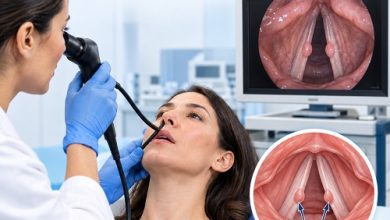
An ENT specialist may perform laryngoscopy to examine your vocal folds. This helps identify nodules and distinguish them from other causes of hoarseness.
Seek urgent medical attention if you develop difficulty breathing, noisy breathing or an inability to swallow saliva.
Early assessment can help identify the problem and reduce the risk of continued vocal strain.
Frequently Asked Questions
1. What is the most effective vocal cord nodules treatment?
Voice therapy combined with healthy vocal habits is often the preferred initial treatment for confirmed vocal fold nodules. Surgery may be considered if conservative treatment does not provide sufficient improvement or if there is another clinical reason to intervene.
2. Can vocal cord nodules disappear without surgery?
Yes. Many nodules improve with voice therapy, appropriate changes in voice use and management of contributing conditions. The outcome depends on the nature of the lesion and the person’s response to treatment.
3. How long does it take for vocal cord nodules to heal?
Recovery varies. Improvement may occur over several weeks or take a few months. Some cases require longer treatment and monitoring by an ENT specialist and voice therapist.
4. Is voice therapy better than surgery?
For typical vocal cord nodules, voice therapy is commonly recommended before surgery because it addresses the vocal habits that contribute to the problem. Surgery may be appropriate in selected cases, and voice therapy can remain important afterwards.
5. Can I continue singing with vocal cord nodules?
You may need to reduce or temporarily stop demanding singing while your vocal folds recover. Ask an ENT specialist and a voice therapist when and how to resume singing safely. Singing through persistent hoarseness may worsen the problem.
6. Do home remedies remove vocal cord nodules?
There is no reliable evidence that ordinary home remedies or herbal products can directly remove established nodules. Hydration, avoiding irritants and following a professional voice-care plan may support recovery.
7. Do vocal cord nodules always require surgery?
No. Many people improve without surgery. The appropriate approach depends on the diagnosis, symptoms and response to conservative treatment.
8. Can vocal cord nodules come back after treatment?
Yes. They may recur if excessive vocal strain or harmful voice techniques continue. Voice therapy and ongoing vocal hygiene can help reduce the risk.
Conclusion
Vocal cord nodules treatment works best when it addresses both the vocal fold problem and the habits that contribute to it. For many people, voice therapy, appropriate vocal rest and healthier speaking or singing techniques provide the foundation of treatment.
Managing contributing conditions and reducing exposure to irritants may also support recovery. Surgery is an option for selected cases, but it is not routinely necessary for every person with nodules.
If you have persistent hoarseness or changes in your voice, consult an ENT specialist for an accurate diagnosis. With appropriate treatment and consistent follow-up, many people can improve their voice quality and return to their usual speaking or singing activities.
Medical disclaimer
This article is for educational and informational purposes only. It does not replace professional medical advice, diagnosis or treatment. Vocal cord nodules and other voice disorders can cause similar symptoms, so consult a qualified healthcare professional for an accurate diagnosis and personalised care. Do not start, stop or change medication or undertake vocal exercises that worsen your symptoms without appropriate guidance. Seek urgent medical attention for breathing difficulties or an inability to swallow saliva.
Medical references
The following reputable medical resources support the article’s discussion of diagnosis, treatment, voice therapy and vocal health.
- Cleveland Clinic — Vocal Cord Lesions: Nodules, Polyps and Cysts. Overview of symptoms, causes, conservative treatment, surgery and recovery. Read the clinical overview.
- American Speech-Language-Hearing Association (ASHA) — Voice Disorders. Clinical information on voice therapy, treatment approaches and collaboration between speech-language pathologists and medical specialists. Read the ASHA clinical resource.
- Cleveland Clinic — Voice Therapy. Information about voice therapy, vocal exercises and professional voice rehabilitation. Read about voice therapy.
- ENT Health — Voice Therapy FAQs. Patient information on voice therapy and its role in treating vocal fold lesions. Read the voice therapy FAQs.
- American Academy of Otolaryngology–Head and Neck Surgery — Consensus Statement on the Use of Voice Therapy in the Treatment of Dysphonia (3 March 2026). Professional consensus on the role of voice therapy in medical and surgical management of voice disorders. Read the consensus statement.