
Your voice plays an important role in everyday communication, whether you speak at work, teach students, sing professionally, or talk with family and friends. However, repeated strain on your voice can sometimes lead to changes in the vocal folds. One condition associated with persistent voice strain is the development of vocal cord nodules.
Vocal cord nodules are small, usually non-cancerous growths that develop on the vocal folds inside the larynx, commonly called the voice box. They often occur when repeated pressure and friction affect the vocal folds over time. Teachers, singers, actors, call centre workers, coaches, and other people who use their voices frequently may be particularly vulnerable.
These nodules can make the voice sound hoarse, rough, breathy, weak, or strained. Some people also experience vocal fatigue, difficulty reaching higher singing notes, or a sensation of effort when speaking. The severity of symptoms varies, and some people may not recognise the problem until their voice begins to affect their work or daily activities.
The good news is that many people improve with appropriate voice care, professional voice therapy, and changes to the habits that contribute to vocal strain. Some cases require additional medical treatment, depending on the size of the nodules, the symptoms, and the underlying cause.
Vocal Cord Nodules symptoms, the causes of vocal cord nodules, diagnostic procedures, available treatments, recovery expectations, and practical approaches to prevention.
What Are Vocal Cord Nodules?
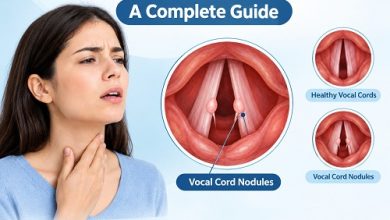
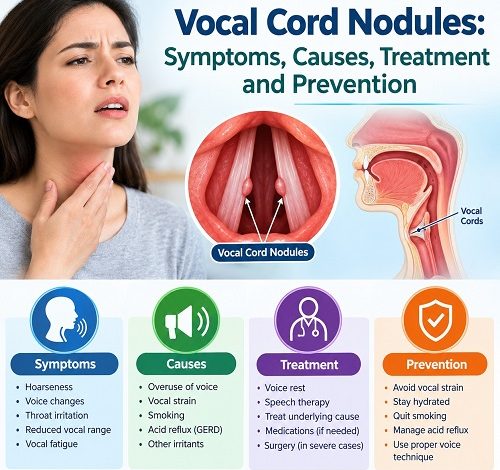
What Are Vocal Cord Nodules? Vocal cord nodules are small areas of thickened tissue that usually develop on both vocal folds. The vocal folds are two flexible bands of tissue inside the larynx that vibrate as air passes through them from the lungs. These vibrations create the sound of your voice.
During normal speech, the vocal folds come together and vibrate in a coordinated way. Repeated excessive pressure, forceful voice use, or inefficient speaking techniques can irritate and injure the delicate tissue along their edges. Over time, the tissue may thicken, producing nodules.
Vocal cord nodules are sometimes compared with calluses that develop on the hands after repeated friction. Although the comparison is not exact, it helps explain why these growths often occur after prolonged vocal overuse.
Nodules are generally benign, meaning they are not cancerous. However, other conditions can cause similar symptoms or visible changes to the vocal folds, including vocal polyps, cysts, inflammation, and, less commonly, serious disease. A healthcare professional must assess persistent voice changes rather than assuming that every hoarse voice results from nodules.
Vocal cord nodules can affect adults and children. Their development depends on several factors, including vocal habits, occupational demands, exposure to irritants, and individual susceptibility.
Vocal Cord Nodules Symptoms
The symptoms of vocal cord nodules often develop gradually. You may initially notice that your voice becomes tired after a long conversation or that singing high notes requires more effort. As the condition progresses, voice changes may become more noticeable and persistent.
Recognising vocal cord nodules symptoms early can help you seek an appropriate assessment before the problem significantly affects your daily life.
1. Persistent hoarseness
Hoarseness is one of the most common symptoms. Your voice may sound rough, raspy, breathy, or unusually weak. It may also lose its normal clarity.
You might notice that your voice sounds worse after a day of teaching, a long telephone conversation, or a singing performance. Persistent hoarseness should not automatically be attributed to overuse, especially when it continues despite rest.
2. Vocal fatigue
Vocal fatigue occurs when speaking becomes increasingly tiring. You may find that you need to make more effort to maintain your usual volume or that your voice becomes weaker as the day progresses.
People who rely on their voices professionally may notice this symptom particularly early.
3. A breathy or weak voice
Nodules can interfere with the way the vocal folds close during speech. When they do not meet efficiently, air may escape while you speak, making your voice sound breathy or less powerful.
You may feel that you cannot project your voice as easily as before.
4. Difficulty reaching high notes
Singers may experience a reduced vocal range, particularly when trying to produce high notes. Their voices may crack, become unstable, or sound less clear during certain pitches.
These changes can be frustrating for singers and performers who depend on consistent vocal control.
5. Voice breaks and changes in pitch
The vocal folds must vibrate smoothly to produce a stable sound. Nodules can interfere with this vibration, causing occasional voice breaks, unexpected pitch changes, or difficulty maintaining a note.
6. Throat discomfort or a strained sensation
Some people experience throat tightness, discomfort, or a feeling that speaking requires excessive effort. These symptoms may occur because they compensate for inefficient vocal fold vibration by tightening the surrounding muscles.
Pain is not a defining symptom of vocal cord nodules, so persistent or severe pain deserves medical assessment.
7. Frequent throat clearing
Repeated throat clearing may accompany irritation, mucus, allergies, reflux, or other throat conditions. Although it does not specifically identify nodules, frequent forceful throat clearing can increase mechanical stress on the vocal folds.
Try sipping water or swallowing gently instead of repeatedly clearing your throat.
8. Reduced speaking endurance
You may be able to speak normally for a short time but struggle during long meetings, lessons, or social conversations. Your voice might deteriorate as the day continues and improve somewhat after rest.
This pattern can suggest a voice-use problem, although it cannot confirm the presence of nodules.
When should you seek medical advice?
Arrange an assessment if hoarseness persists for around four weeks, or sooner if you have significant risk factors or concerning symptoms. Seek urgent medical attention for breathing difficulty or noisy breathing. A neck lump, coughing up blood, progressive swallowing difficulty, or unexplained weight loss also warrants prompt evaluation.
Causes of Vocal Cord Nodules
The main cause of vocal cord nodules is repeated mechanical stress on the vocal folds. When you speak or sing, the folds repeatedly come together and separate. Excessive pressure, poor vocal technique, or insufficient recovery time can irritate the tissue and contribute to nodule formation.
However, vocal strain is not the only factor that may affect vocal health.
1. Excessive speaking
Talking for long periods without adequate breaks can place considerable stress on the vocal folds. People who work in classrooms, offices, shops, customer service departments, and other communication-heavy environments may be at increased risk.
Speaking continuously throughout the day can become particularly problematic when you need to raise your voice to be heard.
2. Shouting and screaming
Shouting at sporting events, speaking over loud music, or frequently calling out across large rooms can force the vocal folds to collide with greater pressure.
Repeated forceful vocalisation may contribute to tissue irritation and injury. If you already have hoarseness or vocal fatigue, continuing to shout can make your symptoms worse.
3. Incorrect singing techniques
Singing requires coordinated breathing, airflow, pitch control, and vocal fold movement. Poor technique may place unnecessary strain on the voice, particularly when you attempt high notes, sing loudly, or perform for extended periods.
Singers who regularly perform without warming up or taking appropriate breaks may be more vulnerable to vocal problems.
4. Occupational voice demands
Some professions require people to use their voices for several hours each day. Teachers, singers, actors, tour guides, fitness instructors, coaches, and public speakers may experience repeated vocal strain.
The risk can increase when workplaces have poor acoustics, high background noise, limited access to microphones, or few opportunities for vocal rest.
5. Speaking while ill
A cold, respiratory infection, or episode of laryngitis can make the vocal folds swollen and sensitive. Continuing to speak loudly or sing while your voice is affected may increase the risk of further irritation.
Allow your voice to recover when you are ill rather than attempting to push through persistent hoarseness.
6. Smoking and environmental irritants
Cigarette smoke, second-hand smoke, dust, chemical fumes, and polluted air can irritate the respiratory tract and larynx. Smoking also increases the risk of several other vocal fold disorders, including potentially serious disease.
Avoiding smoke and reducing exposure to workplace irritants can support better vocal health.
7. Allergies and postnasal drip
Allergies may cause nasal congestion, mucus accumulation, coughing, and frequent throat clearing. These symptoms can make you repeatedly clear your throat or strain your voice.
Managing allergies with guidance from a healthcare professional may reduce irritation. Avoid assuming that every throat symptom is caused by an allergy, as several conditions can produce similar effects.
8. Acid reflux
Gastro-oesophageal reflux occurs when stomach contents flow back into the oesophagus. Some people also experience throat symptoms associated with reflux.
Reflux may contribute to irritation in certain patients, but it is not the explanation for every case of hoarseness or vocal cord nodules. A clinician should assess whether reflux is actually contributing before recommending long-term medication or restrictive diets.
9. Dehydration and inadequate vocal recovery
Dryness can make speaking feel uncomfortable and encourage additional effort. Insufficient fluid intake, dry indoor air, and certain medicines may contribute to a dry throat or mouth.
Dehydration alone does not establish the cause of nodules, but maintaining adequate hydration and allowing recovery between periods of heavy voice use are sensible preventive measures.
These factors can interact. For example, a teacher who speaks loudly in a noisy classroom while experiencing allergies may face several sources of vocal stress at the same time. Addressing the combination of risk factors is often more helpful than focusing on one habit alone.
Vocal Nodules Diagnosis
An accurate diagnosis is essential because several voice disorders produce similar symptoms. Vocal cord nodules cannot be reliably diagnosed from hoarseness alone, and self-diagnosis may delay appropriate treatment.
A healthcare professional, usually an ear, nose and throat (ENT) specialist, can assess your symptoms and examine your vocal folds.
1. Medical history
Your clinician will ask when the voice changes began, whether they are constant or intermittent, and whether speaking makes them worse.
They may also ask about your occupation, singing habits, smoking history, respiratory infections, allergies, reflux symptoms, medications, and previous voice problems.
If you use your voice professionally, explain how the symptoms affect your work. This information can help the clinician understand your vocal demands and plan appropriate treatment.
2. Physical examination
The clinician may examine your mouth, throat, neck, and surrounding structures. They may check for tenderness, swelling, or other signs that help guide further investigation.
However, a routine examination of the mouth and throat cannot reliably confirm or exclude vocal cord nodules.
3. Laryngoscopy
Laryngoscopy is a key examination used to assess the vocal folds. A specialist passes a small viewing instrument through the nose or mouth to examine the larynx.
A flexible laryngoscope is commonly passed through the nose while you are awake. The procedure allows the clinician to observe the vocal folds and identify visible abnormalities, including nodules, polyps, swelling, or other lesions.
The examination may cause temporary discomfort or a sensation of needing to swallow, but it is generally well tolerated.
4. Videostroboscopy
Videostroboscopy uses specialised lighting and imaging to assess the vibration of the vocal folds during phonation. It can provide a more detailed view of how the folds move and whether their vibration is affected by a lesion.
This test may be particularly useful when symptoms persist or when a detailed assessment is important for singers and other professional voice users.
5. Voice assessment
A speech and language therapist or speech-language pathologist specialising in voice may evaluate vocal quality, pitch, loudness, breathing, speaking habits, and vocal endurance.
Depending on the clinical setting, the assessment may include recordings or acoustic measurements of the voice. These findings help establish a baseline and guide voice therapy.
6. Distinguishing nodules from other conditions
The specialist may consider several alternative diagnoses, including:
- Vocal polyps: Benign growths that often occur on one vocal fold and may follow acute or repeated vocal injury.
- Vocal cysts: Enclosed lesions that can affect vocal fold vibration.
- Laryngitis: Inflammation of the larynx that may cause temporary hoarseness.
- Vocal fold paralysis: Reduced or absent movement of one or both vocal folds.
- Other laryngeal lesions: Abnormalities that require further assessment to determine their nature.
Biopsy is not routinely needed for typical vocal nodules. If a lesion appears suspicious or its diagnosis remains uncertain, the specialist may recommend further investigation.
Important: Persistent dysphonia (a change in voice quality) should be evaluated rather than repeatedly treated with Natural Remedies for Vocal Cord Nodules. Professional guidelines recommend laryngeal visualisation when hoarseness fails to improve within four weeks, or sooner when concerning features or risk factors are present.
Vocal Cord Nodules Treatment
The most suitable vocal cord nodules treatment depends on the appearance of the nodules, the duration of symptoms, the extent of voice impairment, and the factors contributing to the problem.
Voice therapy and changes to vocal habits are usually the first-line approach. Surgery is reserved for selected cases when conservative treatment is insufficient or the diagnosis indicates another type of lesion.
1. Voice therapy
Voice therapy is often the main treatment for vocal cord nodules. It is delivered by a qualified speech and language therapist or speech-language pathologist with expertise in voice disorders.
Therapy helps you learn to produce sound with less unnecessary tension and collision between the vocal folds. Your therapist may work with you on:
- Using breath support more efficiently.
- Maintaining a comfortable speaking pitch and volume.
- Reducing throat and neck tension.
- Improving vocal resonance and coordination.
- Avoiding habitual shouting and forceful speech.
- Developing safer techniques for singing or professional speaking.
Your therapist may also give you exercises to practise at home. Regular practice is important because improved vocal habits need to become part of your everyday communication.
Do not start strenuous vocal exercises independently when your voice is significantly hoarse. A professional assessment can help determine which exercises are appropriate.
2. Vocal rest and modified voice use
Temporary reduction in voice use can help reduce irritation and prevent further strain. Your clinician may recommend modified vocal rest, which means limiting prolonged conversations, shouting, singing, and other demanding activities.
Complete silence is not necessary in every case. Follow the specific instructions provided by your specialist or voice therapist.
Whispering is not always a safe alternative to normal speech because some forms of whispering create additional tension. When you need to communicate, use an easy, comfortable voice or consider writing messages during periods of rest.
If your job involves speaking throughout the day, ask whether you can temporarily reduce your workload, schedule breaks, or use a microphone.
3. Treating contributing medical conditions
If allergies, reflux, chronic nasal symptoms, or another medical problem contributes to irritation, treating that condition may help improve overall vocal health.
For example, a clinician may recommend appropriate allergy management when symptoms suggest an allergic trigger. Reflux treatment may be suitable when the clinical assessment supports reflux as a contributing factor.
Medication should be selected according to the underlying problem rather than prescribed automatically for every case of hoarseness.
Antibiotics do not treat vocal cord nodules themselves, and acid-suppressing medicines are not appropriate for every person with a voice disorder. Avoid taking steroids or other prescription medicines without medical guidance.
4. Hydration and environmental changes
Drinking adequate water supports general hydration and may make voice use more comfortable. A humidifier may also help when indoor air is very dry, provided you clean and maintain it correctly.
Avoid smoking and minimise exposure to dust, fumes, and other irritants. If you regularly speak in a noisy environment, reduce background noise where possible instead of continually increasing your volume.
These measures support treatment, but they do not replace an appropriate examination or voice therapy when nodules are present.
5. Surgery for vocal cord nodules
Surgery is not usually the first choice for typical vocal cord nodules. Many cases improve with voice therapy and appropriate changes in vocal behaviour.
A specialist may consider surgery if the nodules remain significantly troublesome despite a suitable course of conservative treatment, or if the diagnosis suggests a different lesion that is unlikely to respond adequately to therapy.
When surgery is appropriate, a procedure called phonomicrosurgery may be used to remove the abnormal tissue while preserving the delicate structures needed for normal vibration.
The potential benefits and risks should be discussed with a laryngologist or experienced ENT surgeon. As with any procedure, surgery may cause complications, and voice quality is not guaranteed to return to its previous state in every case.
Voice therapy may be recommended before and after surgery to improve vocal technique and reduce the chance of recurrence.
6. Are medicines or natural remedies effective?
There is no single medicine, herbal supplement, or home remedy proven to eliminate vocal cord nodules reliably.
Some treatments may help manage an underlying condition, such as an appropriately diagnosed allergy. However, medicines cannot be assumed to remove the tissue changes associated with nodules.
Warm drinks may soothe a dry or irritated throat, but they do not directly reach the vocal folds in the way people sometimes imagine. Similarly, steam inhalation has not been established as a cure and can cause burns if hot water is used unsafely.
Avoid relying on herbal preparations or supplements as a substitute for laryngoscopy and professional treatment. Some products may cause side effects or interact with medicines.
For most people, the most useful approach is to identify the cause of vocal strain, follow an individualised voice therapy plan, and allow adequate time for recovery.
Vocal Cord Nodules Recovery: What to Expect
Vocal cord nodules recovery varies from person to person. The time needed to improve depends on the size and maturity of the nodules, the duration of symptoms, the demands placed on your voice, and how consistently you follow your treatment plan.
Many people improve with voice therapy and changes to their vocal habits. However, recovery is not always immediate, particularly when nodules have been present for a long time.
1. Early recovery
During the early stages of treatment, your clinician may recommend reducing demanding voice activities and identifying the habits that contribute to vocal strain.
You may notice that speaking feels easier when you avoid shouting, take regular breaks, and use a comfortable speaking volume. However, symptoms can fluctuate, and temporary improvement does not necessarily mean that the nodules have disappeared.
2. Progress with voice therapy
As you continue therapy, you may gradually develop better breath support, vocal control, and speaking endurance. Your voice therapist can help you increase voice use safely as your symptoms improve.
People with demanding occupations or singing commitments may require additional support to return to their previous level of performance.
3. How long does recovery take?
There is no fixed recovery period for everyone. Improvement may occur over several weeks, while some people need several months of consistent treatment. The National Library of Medicine’s patient information resource explains that many nodules improve with vocal rest or voice therapy, while surgery is considered only in selected persistent cases.
Your clinician can monitor progress and determine whether further examination or a change in treatment is needed.
4. Recovery after surgery
If surgery is necessary, follow your surgeon’s instructions about voice rest, hydration, follow-up visits, and returning to normal activities.
Do not resume singing, shouting, or prolonged speaking until your clinical team advises that it is safe. Voice therapy may still be important after surgery because removing a nodule does not automatically correct the habits that contributed to its development.
5. What can slow recovery?
Several factors may delay improvement, including:
- Continuing to shout or speak loudly for long periods.
- Returning to demanding vocal activities too soon.
- Smoking or continued exposure to irritants.
- Unmanaged medical conditions that contribute to irritation.
- Inconsistent participation in recommended voice therapy.
If your symptoms worsen or fail to improve as expected, contact your healthcare professional rather than repeatedly increasing vocal exercises or trying unproven treatments.
Vocal Nodules Prevention: How to Protect Your Voice
Vocal nodules prevention focuses on reducing unnecessary stress on the vocal folds and developing healthy voice habits. These steps are especially important if you speak or sing frequently for work.
1. Drink enough water
Maintain regular fluid intake throughout the day. Your needs depend on your activity level, climate, and general health.
Keep water nearby during lessons, meetings, rehearsals, or other activities that require extended speaking. Hydration supports vocal comfort but does not guarantee that nodules will never develop.
2. Avoid shouting
Try not to shout across rooms, compete with loud music, or raise your voice over background noise.
Move closer to the person you are speaking with, choose a quieter environment, or use a microphone when addressing a group.
3. Take regular vocal breaks
Give your voice opportunities to recover during demanding days. Alternate periods of speaking with quieter activities, particularly if you teach, perform, or speak on the telephone for long periods.
If your voice becomes tired, hoarse, or strained, reduce your vocal demands instead of pushing through the discomfort.
4. Learn proper singing and speaking techniques
Singers and professional speakers can benefit from working with a qualified voice coach or voice therapist.
Learn how to use breath support, maintain a comfortable pitch, and produce sound without unnecessary throat tension. Warm up appropriately before demanding singing or speaking sessions.
5. Avoid smoking
Smoking and exposure to second-hand smoke can irritate the larynx and increase the risk of other vocal fold disorders.
Avoid tobacco products and seek professional support if you need help stopping smoking.
6. Manage allergies and reflux when appropriate
If allergies cause frequent coughing, throat clearing, or postnasal drip, discuss suitable treatment with your healthcare professional.
If reflux is suspected, seek an assessment rather than assuming that every throat symptom comes from stomach acid. Follow treatment recommendations that are appropriate for your individual symptoms.
7. Avoid excessive throat clearing
Frequent, forceful throat clearing can place additional stress on the vocal folds.
When possible, try swallowing gently or taking a small sip of water instead. If you frequently feel mucus in your throat, ask a clinician to investigate the underlying cause.
8. Use amplification at work
Teachers, fitness instructors, public speakers, and other professionals may benefit from microphones or voice amplification systems.
Reducing the need to speak loudly can help limit vocal strain, especially in large rooms or noisy environments.
9. Do not ignore persistent hoarseness
If your voice remains hoarse or noticeably different from normal, arrange an assessment rather than repeatedly using home remedies.
Early evaluation can identify vocal cord nodules and other conditions before they interfere further with your ability to speak or sing.
10. Build a sustainable vocal routine
A healthy vocal routine includes adequate rest, appropriate hydration, good technique, and sensible limits on demanding voice activities.
The aim is not to avoid speaking or singing altogether. It is to use your voice efficiently and allow enough recovery between periods of heavy use.
When Should You See an ENT Specialist?
You should seek medical advice if you experience persistent hoarseness, repeated voice loss, unexplained changes in your singing range, or increasing difficulty speaking comfortably.
An ENT specialist may recommend earlier evaluation if you smoke, have a neck lump, or experience other concerning symptoms.
Seek urgent medical care if you develop difficulty breathing or noisy breathing. Coughing up blood, progressive difficulty swallowing, or unexplained weight loss also requires prompt medical assessment.
Do not assume that a persistent voice change is harmless simply because you use your voice frequently. Although vocal cord nodules are generally benign, other conditions can produce similar symptoms and need different treatment.
Frequently Asked Questions About Vocal Cord Nodules
1. Are vocal cord nodules cancerous?
Typical vocal cord nodules are benign, non-cancerous growths. However, other laryngeal lesions can resemble them, so a specialist should confirm the diagnosis when symptoms persist.
2. Can vocal cord nodules disappear naturally?
Some nodules improve or resolve when excessive vocal strain is reduced. Voice therapy can help address the behaviours that contribute to their development. Not every case resolves without professional treatment.
3. What is the best treatment for vocal cord nodules?
Voice therapy and changes to vocal habits are usually the first-line treatments. Surgery may be considered when symptoms remain significant despite appropriate conservative management or when the diagnosis indicates a different type of lesion.
4. Can I continue singing with vocal cord nodules?
You may need to reduce or temporarily stop demanding singing activities, depending on the severity of your symptoms. Ask an ENT specialist or voice therapist when and how to return to singing safely.
5. Do vocal cord nodules cause throat pain?
Pain is not a defining symptom. Some people experience throat discomfort or muscle tension from straining to produce sound. Persistent or severe pain should be assessed by a healthcare professional.
6. Can children develop vocal cord nodules?
Yes. Children who frequently shout, scream, or use their voices forcefully can develop nodules. A paediatric ENT specialist or qualified voice therapist can advise on suitable treatment and age-appropriate vocal habits.
7. Can vocal cord nodules return after surgery?
Yes. Nodules may recur if the vocal behaviours that contributed to their development continue. Appropriate voice therapy and preventive habits can help reduce the risk.
8. Are herbal remedies effective for vocal cord nodules?
No herbal remedy has been established as a reliable way to remove vocal cord nodules. Hydration and soothing drinks may improve comfort, but they do not replace diagnostic examination or evidence-based treatment.
Conclusion
Vocal cord nodules are generally benign growths that can affect the clarity, strength, and endurance of your voice. They commonly develop after repeated vocal strain and may cause hoarseness, vocal fatigue, a breathy voice, and difficulty reaching certain pitches.
The most effective approach begins with an accurate diagnosis, followed by appropriate voice therapy, modified voice use, and management of contributing conditions. Surgery is necessary only in selected cases.
You can also protect your voice by drinking enough water, avoiding shouting, taking regular breaks, using proper speaking and singing techniques, and seeking help for persistent hoarseness.
If your voice has changed and does not return to normal, arrange an assessment with an ENT specialist. Early evaluation and consistent care can help you protect your vocal health and return to comfortable communication.
Medical disclaimer
This article is for educational purposes only and does not replace professional medical advice, diagnosis, or treatment. Vocal changes can have several causes, and only an appropriate clinical assessment can determine whether you have vocal cord nodules or another condition. Consult a qualified healthcare professional about persistent symptoms, and seek urgent medical attention for breathing difficulties.